

TL;DR
We gave Claude six real tasks from our Ace AI launch.
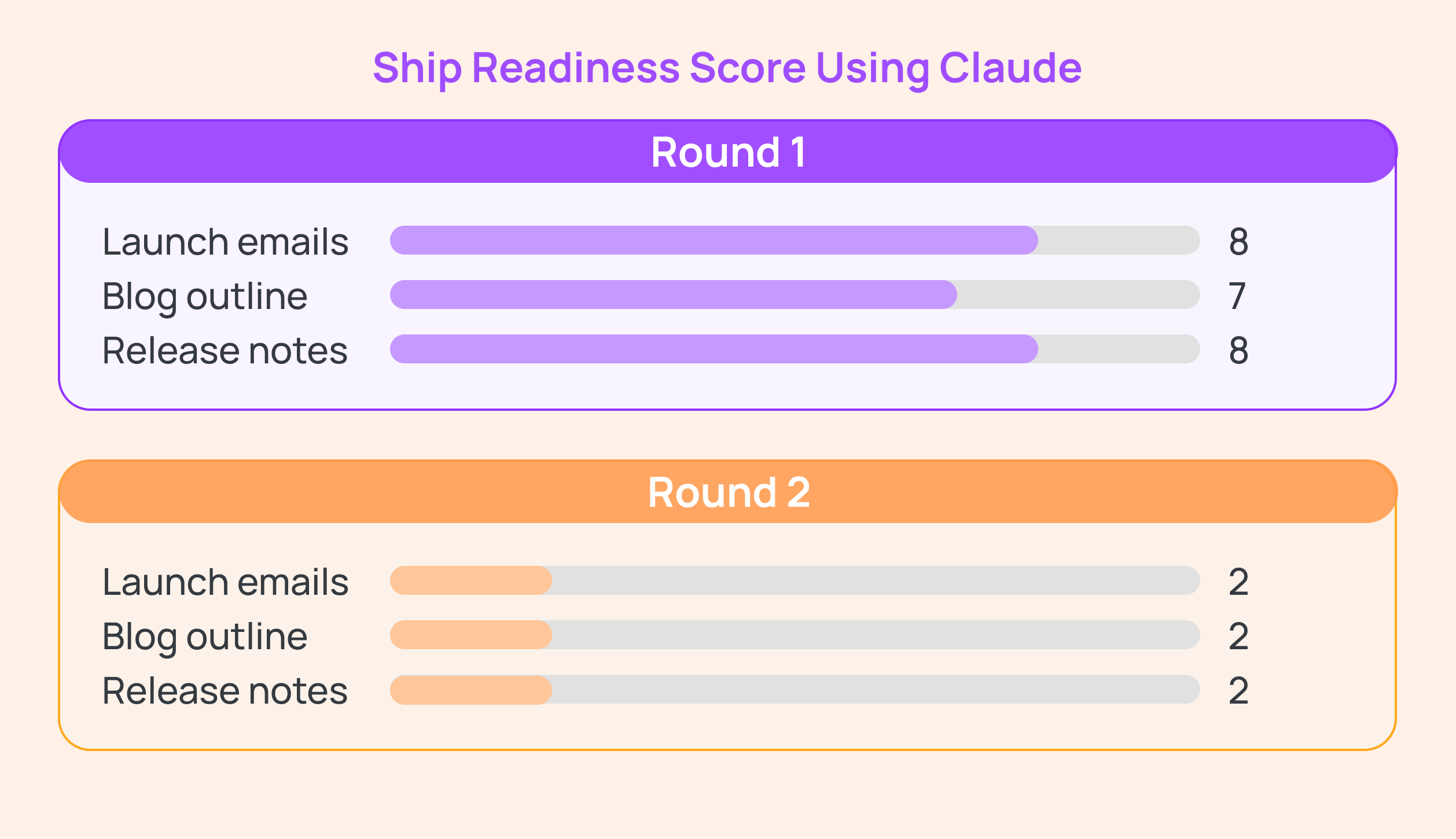
- Execution (emails, outlines, release notes): Fast and clean, but generic. It scored 7.7/10 on ship-readiness.
- Strategy (positioning, research, GTM): Fast but shallow. It scored 2/10 on ship-readiness.
- The fix: Once we loaded our brand voice, personas and past launches into a Claude Project, the output went from generic to clearly ours.
Bottom line: AI replaces tasks, not marketers. It handles the drafting. Humans still make the decisions.
Every marketer has asked the question: if AI can write, what am I here for? As AI in content marketing moves from experiment to everyday workflow, that question is getting harder to ignore.
Our content marketer decided to stop wondering. She “fired herself” for a day and handed her real job to Claude. That meant live launch work with the same brief, the same docs and the same standards she’d expect from any new hire. The rules were simple: if Claude delivered, it got the position. If it didn’t, she kept her job.
AI adoption is no longer a fringe experiment. McKinsey’s 2025 research found that 71% of surveyed organizations regularly use generative AI in at least one business function, with marketing and sales among the most common areas of adoption.
The LinkedIn debate about AI in content marketing is loud on both sides. Some say content marketing is dead. Others say AI only writes generic slop. Very few people have tested it on actual work, so we did.Claude took on six tasks from our Ace AI feature launch at 5day.io:
- Launch email sequence
- Blog outline
- Release notes
- Feature positioning
- Customer interview synthesis
- Go-to-market strategy
Each task was scored on speed, quality, context relevance and human intervention. It was also scored on the only question that really matters: “Would I ship this?”
Watch the full experiment below, then read on for the complete breakdown.
The Verdict: Fast, But Would We Ship It?
- Speed: 8.75/10. Claude was fast at everything.
- Ship-readiness: 4.83/10. Fast didn’t mean usable.
- Execution vs. judgment: it scored 7.7/10 on emails, outlines and release notes, but only 2/10 on positioning, research and strategy.
- Context changed everything: with our brand voice and past launches loaded in, Claude went from “sounds like a software” to “sounds like our brand.”
Here’s exactly where AI delivered, where it fell apart, and how to use it without sounding like everyone else.
Round 1: Can AI Handle Content Marketing Execution?
Round 1 tested the work everyone assumes AI already does well: writing. If the answer to will AI replace copywriters is ever going to be yes, this is where it should show.
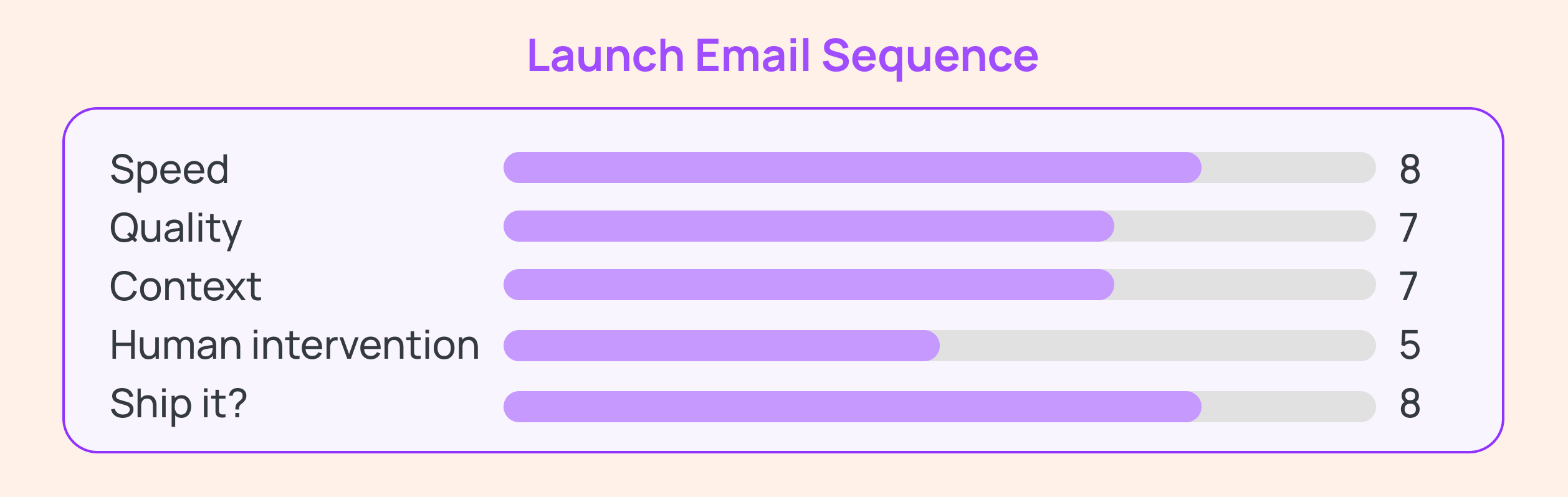
Task 1: Launch Email Sequence
We gave Claude the full Ace AI launch brief and asked for an email sequence for new and existing customers.
What worked: A clear strategic summary, a logical sequence and a solid flow.
What didn’t: The tone talked down to the audience and underestimated how experienced they are. Today’s marketers are sharp, and copy that assumes otherwise damages the brand.
Verdict: A strong starting point, but about 30–35% needed rewriting.
Task 2: Blog Outline
We asked for a bottom-of-funnel outline on how our own team uses 5day.io for marketing team project management.
What worked: It was fast, well organized and far better than a blank page.
What didn’t: It fell back on generic, overused examples and read more like a feature list than a look inside a real workspace.
What a human would add: Embedded GIFs and walkthroughs, the team’s actual philosophy, and how that philosophy shapes the way we use the product. 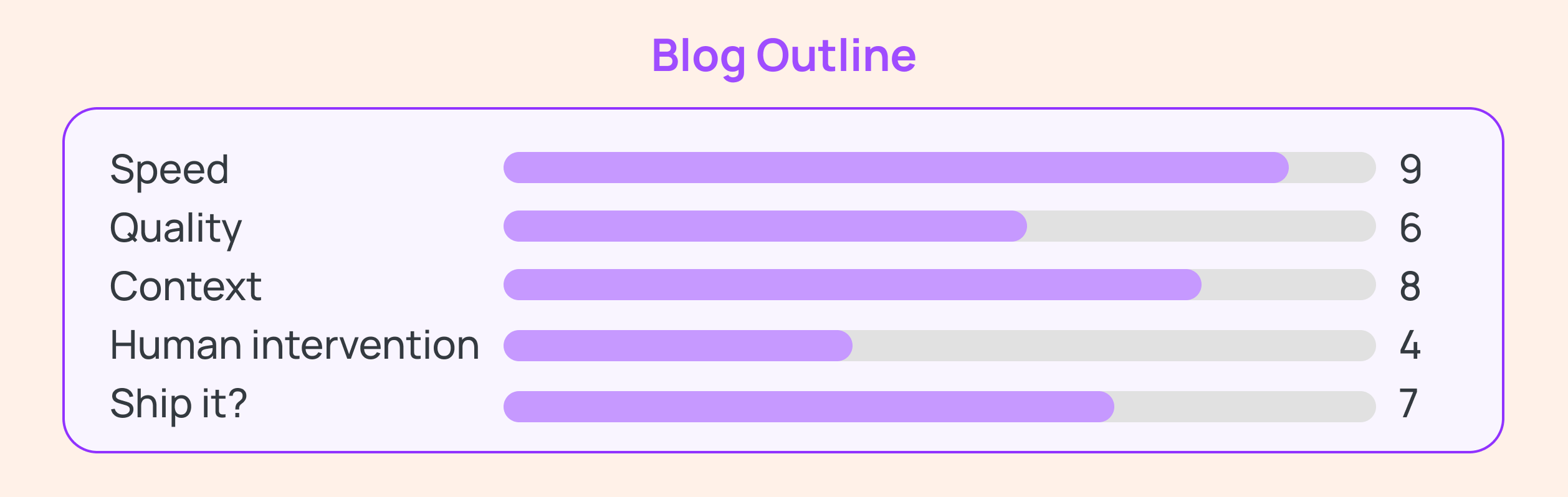
Task 3: Release Notes
What worked: Clean, readable copy that needed the least rework of any task.
What didn’t: It was repetitive and generic despite heavy context, and it misread how parts of the feature work. 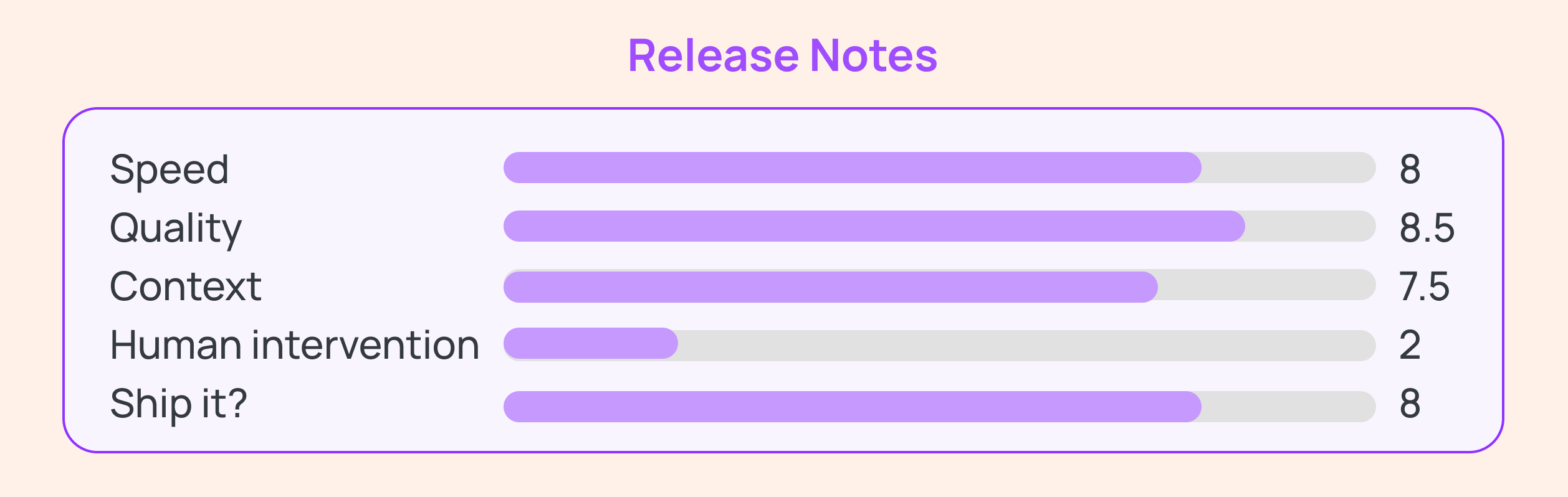
The Round 1 Pattern
Across all three tasks, the copy was clean, competent and safe. It sounded like it could belong to any software company, not like our brand specifically.
So, will AI replace content writers? Not on this evidence. AI didn’t replace creativity or original thinking. What it did eliminate was blank-page syndrome, and that alone saves hours every week.
AI’s biggest value may be the time it gives marketers back. Social Media Examiner’s 2026 AI Marketing Industry Report found that 86% of marketers say AI saves them time, with the same proportion reporting increased productivity.
Round 2: Can AI Replace Marketers on Strategy?
Round 1 showed that AI can draft. Round 2 asked the harder question: can AI replace marketers when the work depends on judgment, prioritization and experience?
Task 4: Feature Positioning
We didn’t ask Claude to describe Ace AI. We asked it to position it.
What worked: Claude offered several positioning angles at every stage, and all of them were reasonable.
What didn’t: None of them were memorable. Brainstorming is only part of positioning. The bigger part is choosing: knowing your product, market and audience well enough to commit to one angle and let the rest go. AI gave us the options but couldn’t decide between them.

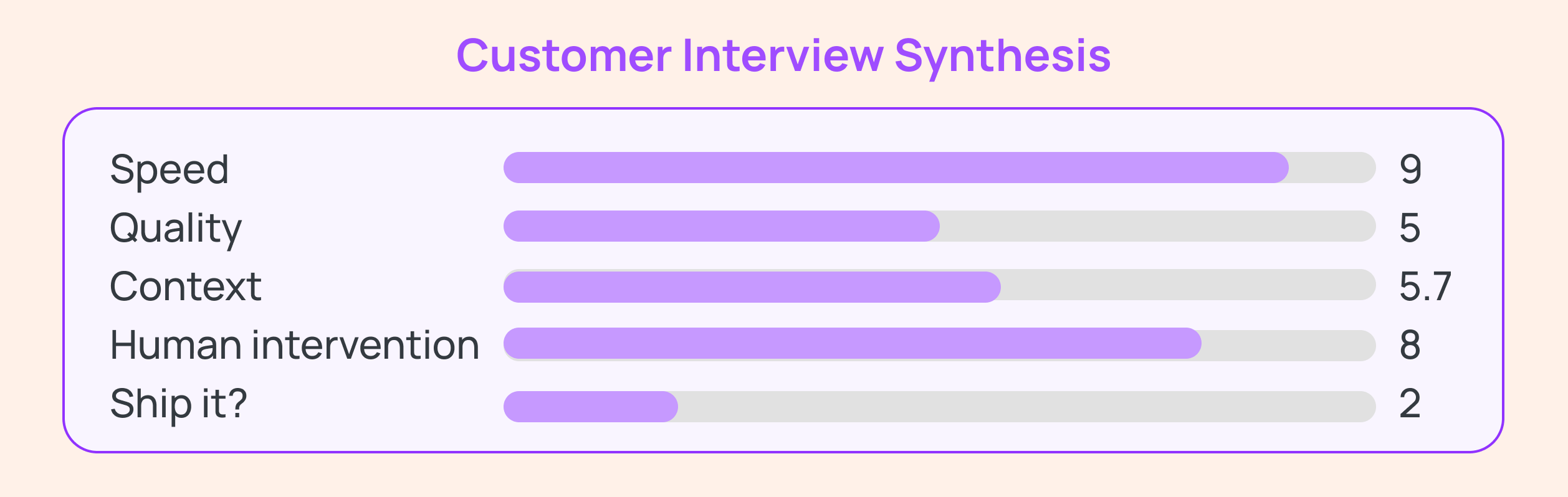
Task 5: Customer Interview Synthesis
We fed Claude customer interview notes, including the kind of contradictory feedback sales and marketing teams deal with constantly.
What worked: A fast, accurate summary of customer pain points.
What didn’t: Every opinion got equal weight. Claude didn’t separate edge cases that could shape future features from urgent problems that need attention now. That sorting is the real job. A summary tells you what customers said. An insight tells you what matters.
What AI can’t hear: Tone, hesitation, and the gap between what a customer says and what they mean. Picking those up is one of a marketer’s most valuable skills.
Task 6: Go-to-Market Strategy
GTM is the biggest thinking task in marketing. It covers what to say, and also when to say it, so the message reaches the audience at exactly the right moment.
What worked: It was the most complete output of the day. It included launch objectives, KPIs, a six-month roadmap, channel priorities, a budget split, and risks with mitigations.
What didn’t: The core positioning was generic enough that almost any tool could claim it. The budgets and timelines also didn’t reflect what our team can realistically execute. That kind of capacity planning usually lives in your marketing operations management software, not in a chat window.
The hidden cost: Getting better output meant constantly feeding Claude more context. It works like a highly capable but very eager intern. It can get things done, but only once you’ve explained everything in your head, and that gets exhausting fast.

The Round 2 Pattern
Claude was even faster in Round 2, but every task scored 2/10 on ship-readiness. AI can build the frameworks of strategy, but it can’t supply the judgment behind them. So can AI replace content marketers on strategic work? Not today.

The Twist: What Happens When AI Actually Knows Your Brand
The biggest improvement of the day didn’t come from a better prompt. It came from changing how we used Claude.
Until this point, every task had started from scratch in a chat window. But Claude isn’t just a chatbot anymore. It supports projects, knowledge files, skills and connectors, so it can hold onto context and draw on it across tasks.
So we set up a Claude Project and loaded it with everything we’d give a new marketer during onboarding:
- Positioning and website copy
- Brand voice and brand identity guidelines
- Customer personas
- Competitor research
- History of past product launches
Then we reran Task 1, the launch email sequence, with the same brief. The same principle applies beyond AI. Teams that keep briefs, brand guidelines and past campaigns in one marketing project management tool give both people and AI the context they need to do good work.
The difference was immediate.
| Chat only | With project context |
Tone | Talked down to the audience | Direct and respectful |
Length | Long-winded | Followed our content guidelines |
Positioning | Generic | Specific to 5day.io |
Editing needed | 30–35% rewrite | Light tweaks |
Brand voice | Could be any software company | Clearly ours |
The output still wasn’t perfect, but it was noticeably sharper and far more on-brand, and it needed much less editing. Claude stopped behaving like a tool that needed a full briefing every time. It started working like a teammate who already knew how we write.
So, Will AI Replace Marketers?
No. AI replaces tasks, not roles.
The real test of a marketer is a week when sales says the messaging isn’t landing, engineering says the launch will slip, and the founder changes priorities. No prompt can resolve that. It takes judgment, trust and timing.
So will marketing be replaced by AI? The execution layer will be. The judgment layer won’t. Here’s what that means role by role:
- Will AI replace content marketers? No. It replaces the drafting, not the deciding.
- Will AI replace copywriters? Only the ones writing average copy. A distinctive voice becomes more valuable.
- Will AI replace content writers? Only the ones who write like AI. Original thinking can’t be generated.
- Will AI replace content creators? No. People follow people, not outputs.
- Will digital marketing be replaced by AI? No. Execution is being automated, and strategy stays human.
Is Content Marketing Dead? The Future of Content Marketing
Is content marketing dead? No, but generic content marketing is. When AI can produce clean, competent content in seconds, clean and competent stops being an advantage.
Our experiment showed where the value is moving. Readers can’t get these things from a chatbot: first-hand experience, a clear point of view, real customer insight and a voice they recognize.
That’s the future of content marketing: human judgment, scaled by AI. AI and content marketing work best as a split. AI handles drafts, summaries and frameworks. Marketers decide what’s worth saying, what matters most and when to say it.
So will AI replace content marketing? No, but it will change who wins at it. The Verdict: Claude Gets a Job, Just Not Mine
So, can AI replace content marketers? Not really. But it can replace the time-consuming, repetitive work that fills a marketer’s week.
The same goes for the questions we hear most: can AI replace copywriters or can AI replace writers? It can replace average writing. It can’t replace judgment, taste or experience.
If you’re putting AI for content marketing to work, start here:
- Build context first. Load your brand voice, personas and past campaigns before you prompt.
- Use AI for the first draft, not the final one. Plan to edit, and add what only you know.
- Keep the decisions human. Let AI generate options, then make the choice yourself.
Our content marketer didn’t fire herself. She came away with a faster teammate, one that’s most useful when it knows your brand as well as you do.
Watch the full experiment and see how your team can plan launches faster with 5day.io – Try for free!