

Most marketing risk forms quietly in the ‘execution blind spot’. That’s the space between planning a campaign and delivering it. Often, teams sit on too many small decisions without anyone stepping back to look at the impact.
Running deliveries teaches you one thing fast that risk doesn’t arrive as a single failure. It shows up as timing trade-offs and task dependencies that everyone thinks someone else is handling. The work still ships, but the margin gets thinner, and the pressure increases.
Marketing risk management gives teams a way to slow those moments down just enough to make better calls. It keeps agencies deliberate about scope and resourcing. Instead of reacting late, teams manage uncertainty as part of delivery.
In this article, you’ll learn all about marketing risk management during real agency workflows. We’ll also break down why it matters as agencies scale, and how teams reduce risk without slowing execution.
What is marketing risk management?
Marketing risk management is how agencies stay steady when campaigns meet reality. It focuses on where delivery tends to wobble in day-to-day execution.
The goal here is to prepare. Teams identify where pressure usually shows up and decide in advance how they will respond. This includes spotting potential risks across marketing activities and defining clear actions to reduce their impact.
Most agencies follow a simple risk cycle:
- Identify risks
- Evaluate likelihood and impact
- Plan mitigation
- Track during delivery
- Review and adapt
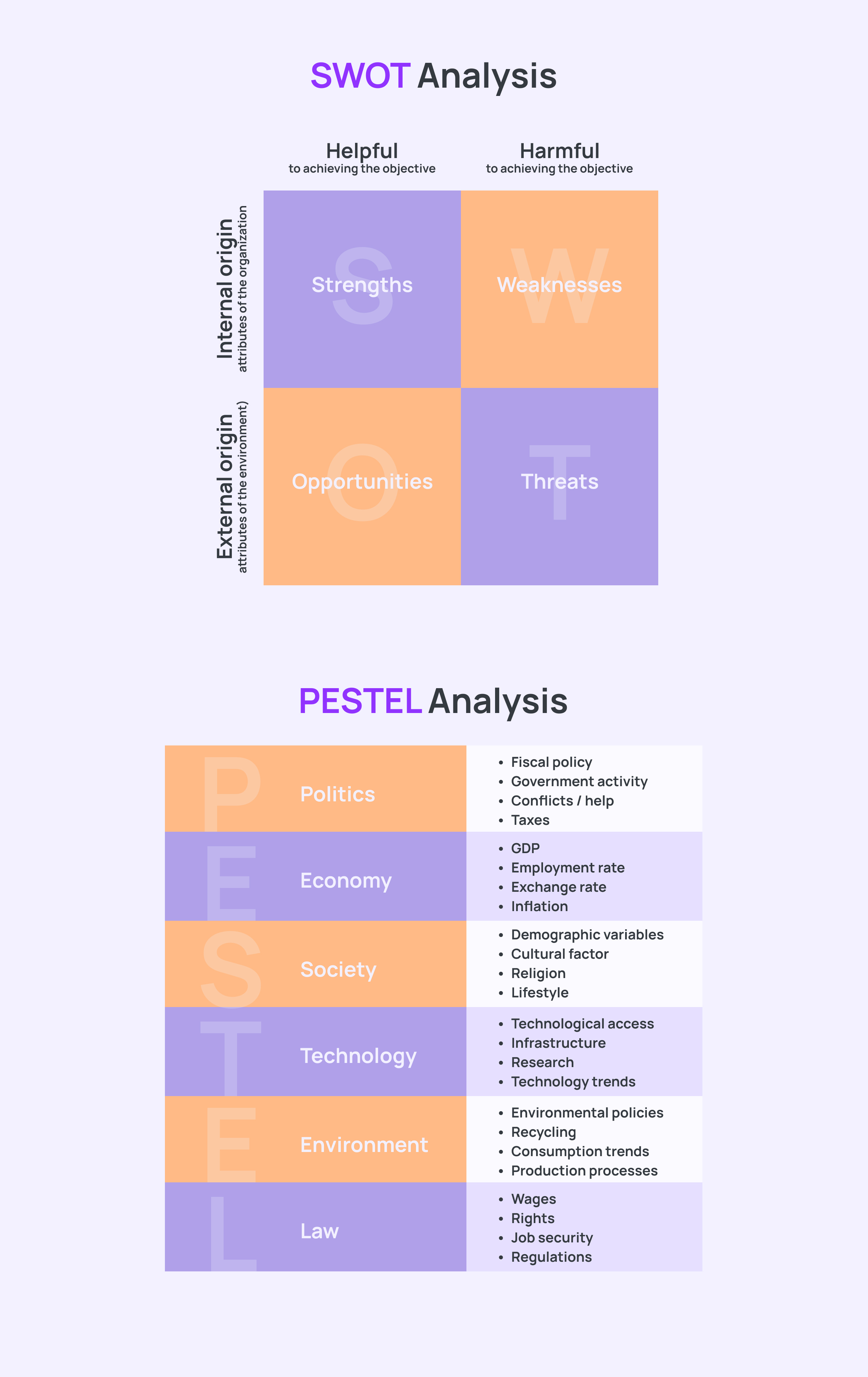
Tools like risk registers, SWOT or PESTLE frameworks, and risk matrices support this process. Used well, they turn uncertainty into something manageable. Agencies can still hit KPIs, even when conditions are less than ideal.
Why marketing risk management matters for agencies
Agency leaders make decisions under pressure every day. Not big, dramatic calls. But small decisions, like which scope change to absorb and when to trust performance data versus instinct, quietly shape outcomes.
Marketing risk management sharpens those decisions. It makes trade-offs visible early, while there’s still room to act.
Below are the reasons why marketing risk management is important as agencies scale.
1. Protect ROI and budgets
Campaign costs rarely explode all at once. They creep in the form of an extra revision here and a delayed approval there. Risk management puts guardrails around spend, so teams catch overruns before they lead to losses.
2. Ensure on-time delivery
Most agency delays come from dependency blind spots. Missed approvals and overlapping launches slow work down. A structured agency risk management puts those pressure points into the plan.
3. Safeguard brand reputation
Reputation risk shows up as rushed copy or unclear compliance checks that go unchallenged. A disciplined approach protects both client’s brand and the agency’s own credibility.
4. Improve client trust
Clients don’t expect zero risk. They expect control. When agencies can explain where risk exists and what’s being done about it, conversations shift.
5. Adapt to change faster
Marketing is volatile, and as platforms update and competition increases. A risk-aware agency can adjust its campaigns quickly.
Types of marketing risks that affect project success
Agencies face marketing risks in a few recurring areas. Knowing where they arise helps teams respond faster. Let’s look at different types of marketing risks that impact project success.
- Financial and budget risk: Underestimated effort, aggressive media bids, or unclear scope, pushing budgets off track
- Reputational and brand risk: Messaging misses context, or partners create exposure, social media backlash
- Operational and execution risk: Production delays or dependencies outside the team’s control
- Legal and compliance risk: Data privacy rules or trademark issues surface late
- Market risk: Shifts in customer behavior or competitive pressure can weaken campaign performance
- Technical or platform risk: Algorithm changes or policy updates can reduce reach overnight
- Strategic risk: Slow adoption of new channels or creative formats can make campaigns obsolete
Common risk triggers in marketing projects
Once teams understand the common risks in marketing campaigns, the next step is recognizing what sets them in motion. Typically, these risks follow a set of familiar triggers that happen during planning or delivery.
- Scope creep without clear change control expands timelines and costs
- Unrealistic timelines and small delays quickly cascade into missed milestones
- Budget cuts or spikes force rapid reallocations
- Poor brief or shifting goals dilute focus and pushes teams to meet activity targets instead of progress
- Data and compliance changes disrupt targeting and measurement
- Resource turnovers create delays and rework
- Heavy reliance on a single channel increases exposure when algorithms or policies change.
- Market shocks can reshape context overnight
Most delivery risks show where scope, time, and cost fall out of balance. That’s why balancing these constraints is important for proper project risk management.
Read more: What is Project Management Triangle? An Easy Guide
Risk strategies for agencies that hold up under delivery pressure
Identifying risk only creates awareness. Control comes from what teams do next. Once agencies detect delivery or scope of risks, they need clear responses that fit into active projects.
The most effective agencies rely on a small set of repeatable actions that reduce exposure but not the pace. The following strategies are how to manage marketing risks during delivery pressure.
1. Formal change-control
At project start, define a clear scope of work and agreement. For example, use a contractual zoning approach to list core tasks, optional extras, and off-scope items with a formal change-request process.
This ensures that any new request triggers a written review and client sign-off, preventing unnoticed scope creep.
2. Create and track scenario budget
Teams can avoid relying on one fixed budget. Prepare optimistic, baseline, and pessimistic budget plans for campaigns. Break the budget into short tranches (like weekly or monthly).
This way, if costs spike, maybe due to ad auctions becoming more competitive, you have a buffer and can reallocate before funds run out. Continually track spend with the help of dashboards in real time, so you catch any overspend soon.
3. Frequent planning cycles
Instead of creating a single annual plan, review and revise plans every 4–6 weeks. Adaptive sprint planning makes your strategy elastic. So, if market conditions change because of a new competitor or an economic shift, you can pivot quickly.
Tools like short sprint reviews or regular audit gates keep plans aligned with the current environment.
4. Maintain a creative asset backlog
Build an asset bank of ready-to-go content well before launch. Have several months of ads, copy, images, and videos prepared.
Also, break approvals into micro-stages with set deadlines. If the client doesn’t reply in time, assume approval and move on. This buffer means an absent designer or delayed client feedback won’t derail your campaign launch.
5. Diversify channels
It’s unwise to bet on one channel alone. If Facebook or Google changes its algorithm, it shouldn’t halt all marketing. Invest in different channels and build your owned channels, like email lists and brand communities.
Produce evergreen quality content that can run anywhere. This multi-channel presence and strong creative insulate you from platform-specific shocks.
6. Put data and compliance safeguards in place
Use technology to automate compliance checks. For example, ad platforms or social tools often flag prohibited content. Keep legal and privacy experts in the loop early.
For data security risks, ensure marketing and IT coordinate to protect customer data and follow storage/consent rules to avoid fines.
7. Regular audits and “what-if” drills
Perform periodic risk audits (some firms do this annually) to test your plans. Run tabletop exercises for crises, such as simulating a PR disaster or site outage. So, the team knows the response playbook.
According to the PR News article, only 49% of companies have a crisis plan. Doing these drills gives you a head start when real issues hit.
8. Use quality-control gates
Combine checks into your workflow. For example, set automated alerts (in a work tool or via email) for overdue tasks, or need QA reviews before content goes live.
These mechanisms catch errors or omissions, like missing images or an unfinished translation, before they become larger problems.
Each strategy should be tailored to the severity of risks. High-impact risks (like compliance) might need multi-layered safeguards, while minor risks (like routine delays) may only need simple buffers.
Pro tip: Use proactive risk mitigation strategies for marketing teams. List prevention tactics and backup plans before the campaign starts to avoid a mishap.
Tools and technology for managing marketing risks
The right tools make risk management in marketing work in reality and not just on paper. As agencies scale, they need systems that keep risk visible without adding process overhead. This is why many teams rely on integrated work and project management platforms to manage complexity in one place.
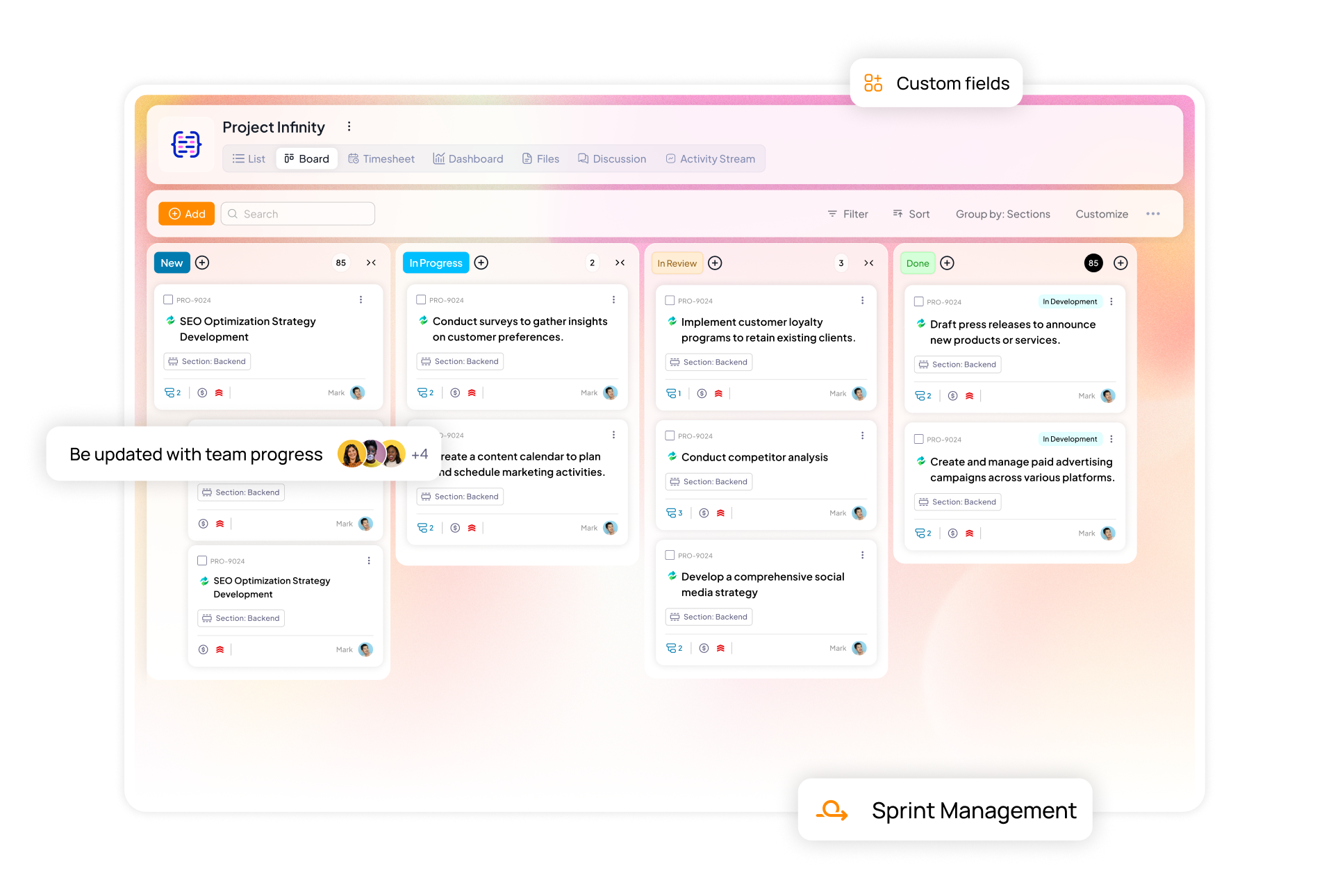
A marketing-focused agency project management software brings this visibility into one place. Tools like 5day.io connect tasks, projects, time tracking, and reporting inside a single workflow.
Many types of other tools support marketing risk management for agencies, too. These include:
1. Data analytics and dashboards
BI tools and real-time dashboards give visibility into campaign performance and resource use. Agencies use analytics to spot anomalies, such as sudden CTR drops or cost spikes.
Advanced solutions with AI/ML can even predict problems. Data-driven risk alerts help you act on warning signs.
2. Tools for social listening and monitoring
Other best tools to reduce marketing risks include Brandwatch or Mention. These tools help teams track brand mentions and sentiments online. They can catch emerging PR issues, say negative viral posts or misinformation, instantly.
Such tools give teams a chance to respond or pause a campaign. Teams may consider such monitoring a core part of risk assessment for marketing.
3. Collaboration platforms

Centralized communicationensures teams do not lose context in email. Imagine comments, feedback, files, and media all tied to specific tasks.
This traceability prevents errors. Using 5day.io, marketing teams can integrate tools like Slack and Teams for seamless client collaboration.
4. Time-tracking and resource tools
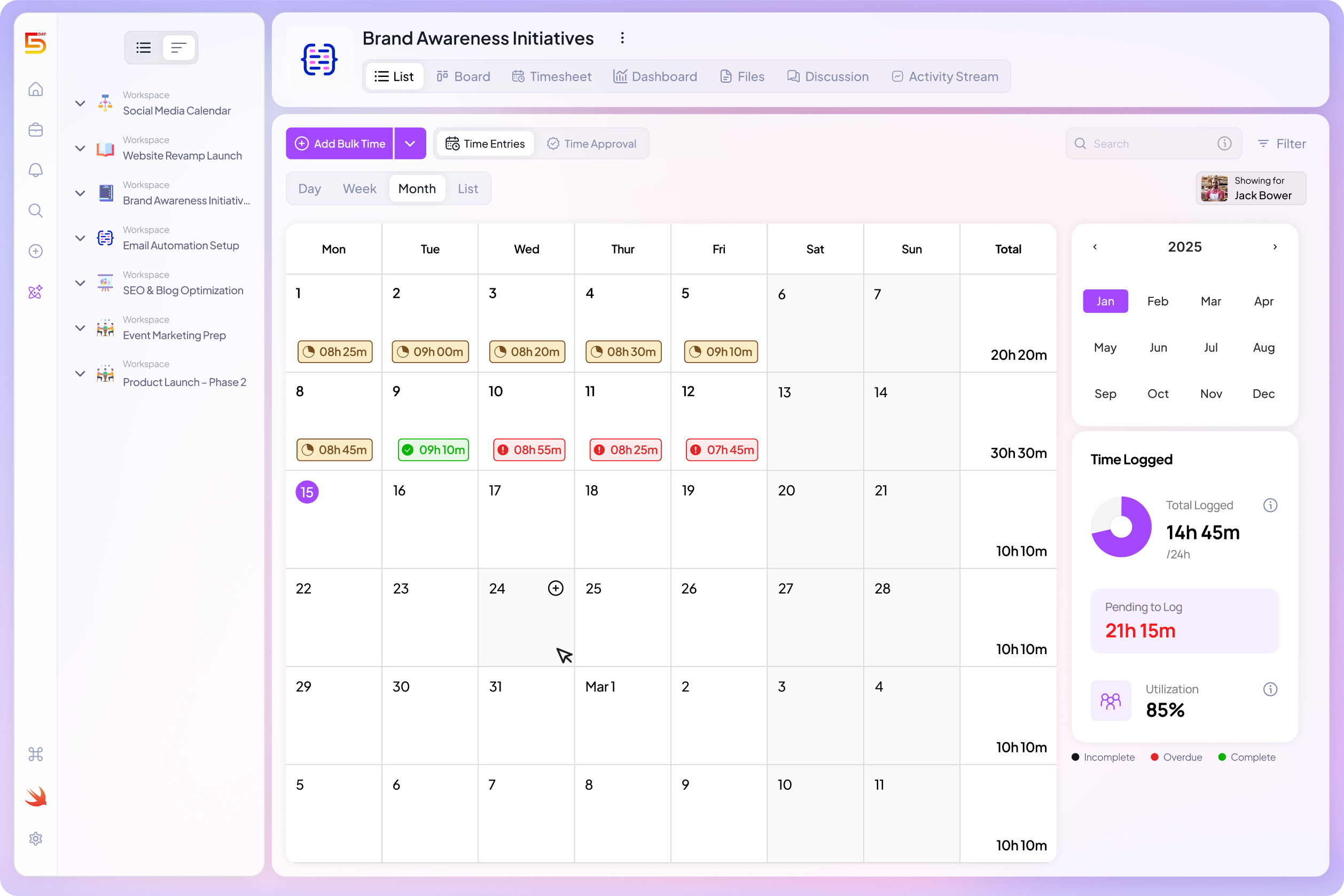
These help managers create precise time logs (as in 5day.io project management software) that make the budget impact of scope creep visible. With accurate time estimates, managers can spot when a 10-hour task suddenly takes 25 hours, triggering a review.
Resource planning tools also assist managers in preventing burnout by flagging team overallocation.
5. Compliance and security software
Platforms such as OneTrust or DataGrail help manage privacy consents. Project tools often integrate file-sharing apps (such as Google Drive and OneDrive integration in 5day.io) with permissions. This ensures teams do not leak sensitive content due to a complex file-sharing system.
6. Marketing automation
Automation tools for email, ads, and CRM (like HubSpot, Marketo) often include built-in risk features. They involve automated tasks, say unsubscribe cleanup to protect reputation and data-cleaning wizards. Automating repetitive tasks also reduces human error.
7. Project risk management modules
Some project systems include risk modules or integrate with risk apps (like Risk Register). These let teams log risks and track mitigation status in one place.
Marketing agencies can connect analytics platforms (Google Analytics, ad accounts) and communication tools with your project management tool for marketing. It means teams can create an early-warning system.
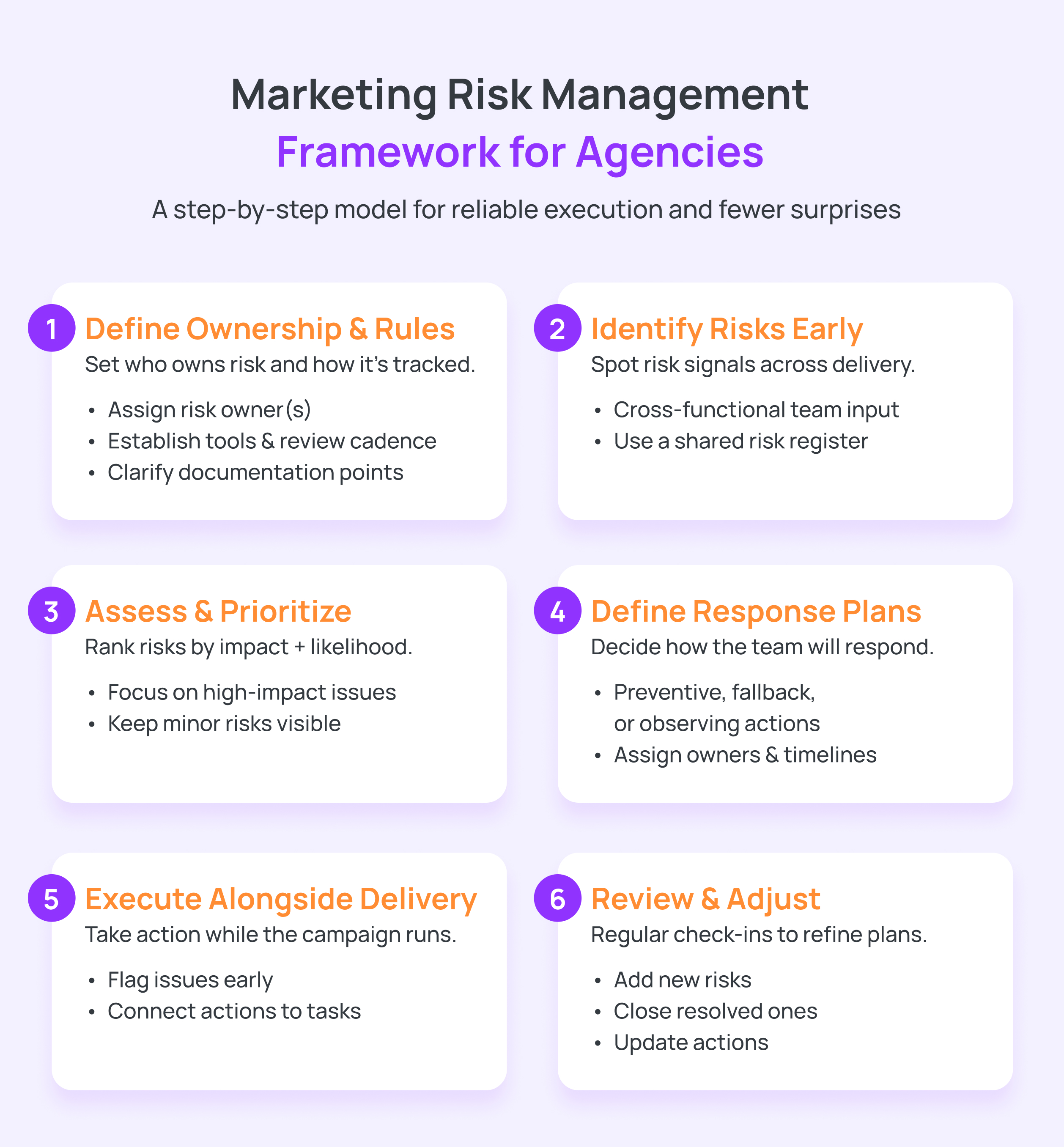
Step-by-step model to create a risk management framework
How 5day.io helps agencies manage marketing risk?

Marketing risk management only works when risks surface early and stay visible throughout execution.
5day.io marketing agency project management software brings risk management into everyday work. Here’s how agencies use 5day.io to reduce marketing project risks in real workflows:
- Teams view all projects and task dependencies in one centralized place
- The system flags overdue tasks and shifting priorities via automations, so teams act sooner
- Teams track time directly against tasks and projects, which exposes scope creep and budget pressure early
- Project health dashboards highlight overdue tasks at a glance
- Clear task ownership and activity logs reduce execution errors and compliance gaps
- Built-in discussions capture decisions and changes in one place
- Client reporting and access increase transparency and reduce escalation during delivery
Agencies using 5day.io report fewer last-minute surprises and stronger client confidence because it helps manage risk before it turns into a fire drill.
Try a free trial of 5day.io’s project management tool for marketing and see how its templates and analytics keep your campaigns on track. With 5day.io, your agency can manage marketing risk and deliver campaigns every time.