
Marketing automation is not new. It has been around for a long time now. In a survey done by Zapier in 2021, where 1500 marketers participated, 83.3% said they used automation either daily or sometimes in some form. But that was for basic email triggers and nominal workflows.
One fundamental thing has shifted since then, is the way marketers can connect with their audience. The mere possibilities of reaching them now, with the introduction of AI and how it has molded user behavior cannot be ignored. Thus, marketers now need smarter workflows that reach their intended audience and go beyond email triggers. And with this, marketing workflow automation has evolved.
In this article, I am going to explain this evolution in workflow automation and how you can get ahead of the curve with it.
What is marketing workflow automation
Workflow automation in marketing is a process to automate repetitive work. It operates on a simple principle: a trigger action, when performed, automatically starts a series of intended tasks without manual intervention. This is the core idea.
And in many ways, this is exactly how it still operates.
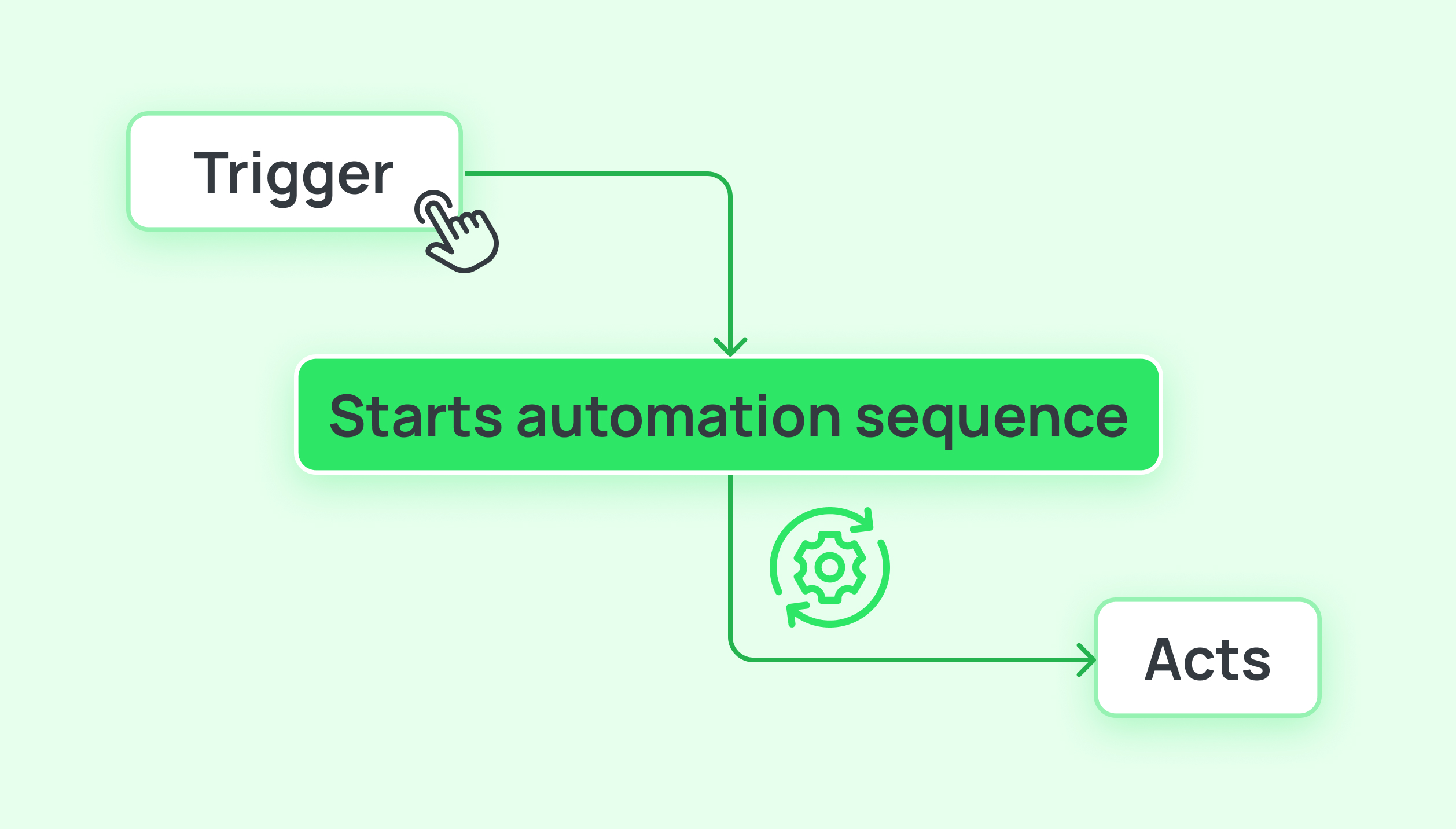
- Trigger event: Your contact takes an action (visiting page, clicking a link, filling a form)
- Automation sequence: Your system identifies the trigger and starts the sequence
- Action as needed: An action is taken based on the data and your parameters
What has changed are the ways in which you can apply these automations into different aspects. Before we get into the nitty-gritty of it, let’s see how marketing automation can be beneficial over manual workflows.
Benefits of workflow automation in marketing teams + why is it more effective than manual workflows
When we compare this to manual workflows, the impact of automating your workflows is huge.
Manual Marketing | Marketing Automation |
Send individual emails manually | Set up workflows that send thousands of personalized emails automatically |
Post to social media in real time | Schedule and publish weeks of content across multiple platforms |
Manually track every lead interaction | Automatically score, segment, and prioritize leads based on engagement |
Guess the best time to reach contacts | Use AI-driven data to optimize send times for each contact |
Spend hours on repetitive, time-consuming tasks | Focus on strategy while automation handles execution |
Rely on inconsistent follow-ups and human reminders | Maintain consistent, timely communication with automated triggers |
Create reports manually from scattered data | Generate real-time analytics dashboards for actionable insights |
Coordinate campaigns across multiple tools manually | Manage all campaigns from a unified, integrated marketing platform |
In fact, the workflow automation process has a massive impact on the business as a whole. According to the Marketing Automation Report 2021, automation has a direct revenue impact with time savings, high-quality leads, and higher conversation rates.
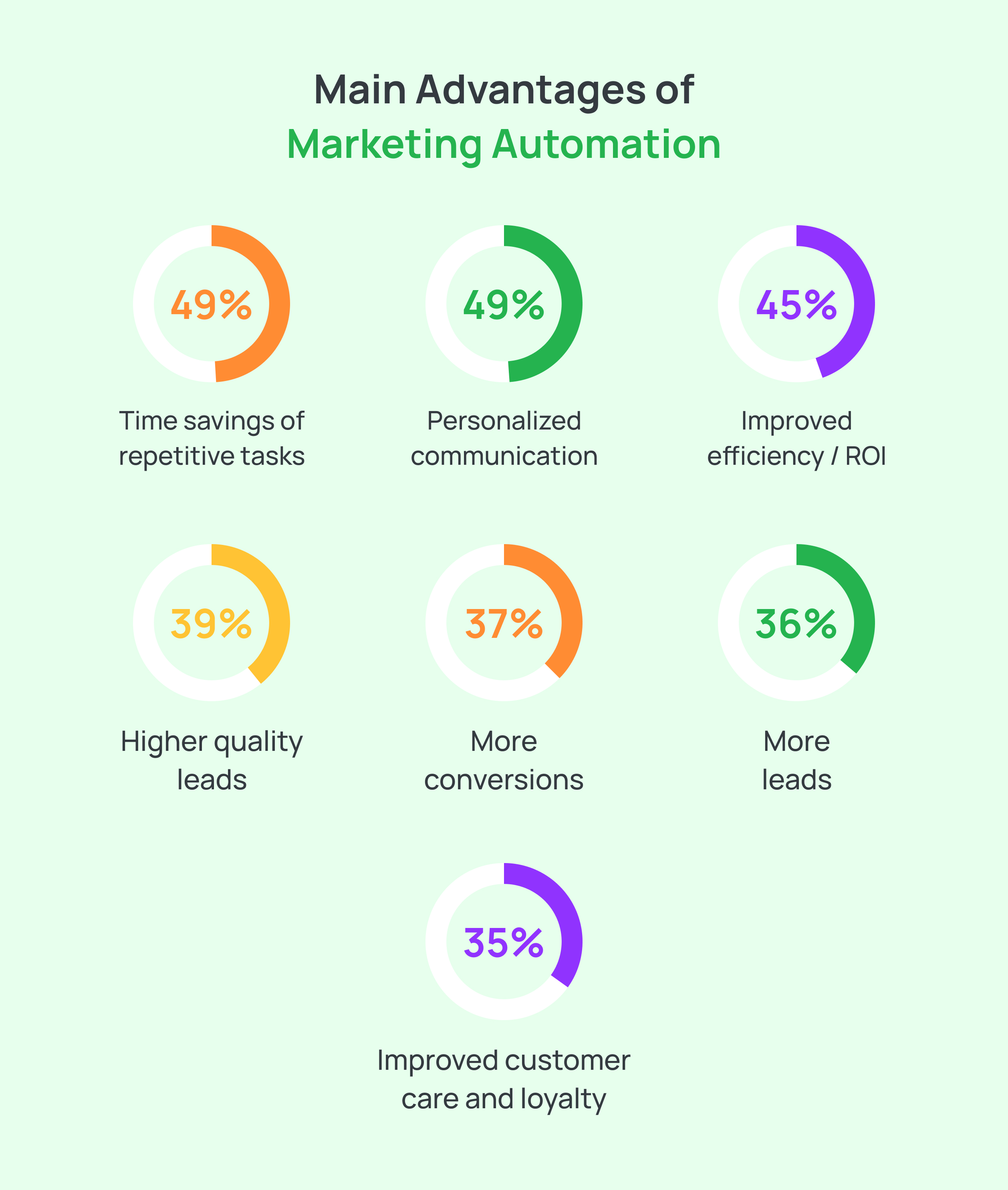
Let’s look at some of these benefits of workflow automation for marketing teams in a little more detail.
Better productivity
Automating repetitive tasks like sending follow-up emails, updating spreadsheets, or posting to social media saves significant time. This allows teams to focus on higher-level work like strategy, creative tasks, and client relationships.
Higher quality
Automation standardizes processes and reduces manual errors, ensuring tasks are completed the same way every time. This leads to a consistent quality of work across all projects and campaigns.
Better project and campaign management
Structured workflows help manage multiple projects and deadlines, reduce bottlenecks, and ensure tasks move forward smoothly and on time. Automation can also improve collaboration and accountability among team members and with clients.
Improved client satisfaction
Streamlined operations lead to faster project completion and higher-quality deliverables. When you automate your workflow for processes like client onboarding, it creates a better first impression in new clients and thus, a long lasting impact on client retention.
Support for growth
By handling routine tasks, automation allows agencies to scale their services and manage more clients without a proportional increase in staffing, which supports business growth.
Data-driven decisions
Automation tools often leverage real-time data, providing insights that help agencies make smarter decisions and optimize strategies to improve campaign performance.
Types of marketing workflow automations and top workflow automation software for each type
The workflow automation process spans across multiple areas in marketing. Each one plays a different role in helping teams deliver better outcomes. Here’s a breakdown of the core categories, and an additional newer one that has become increasingly important as teams scale.
Lead management workflows
These help you capture, score, categorize, and nurture leads without manual effort. Whether its assigning points based on engagement or launching a nurture sequence when someone downloads a resource, these workflows always keep your prospects shift closer to a conversion without manual intervention.
Top tools for lead management workflows:
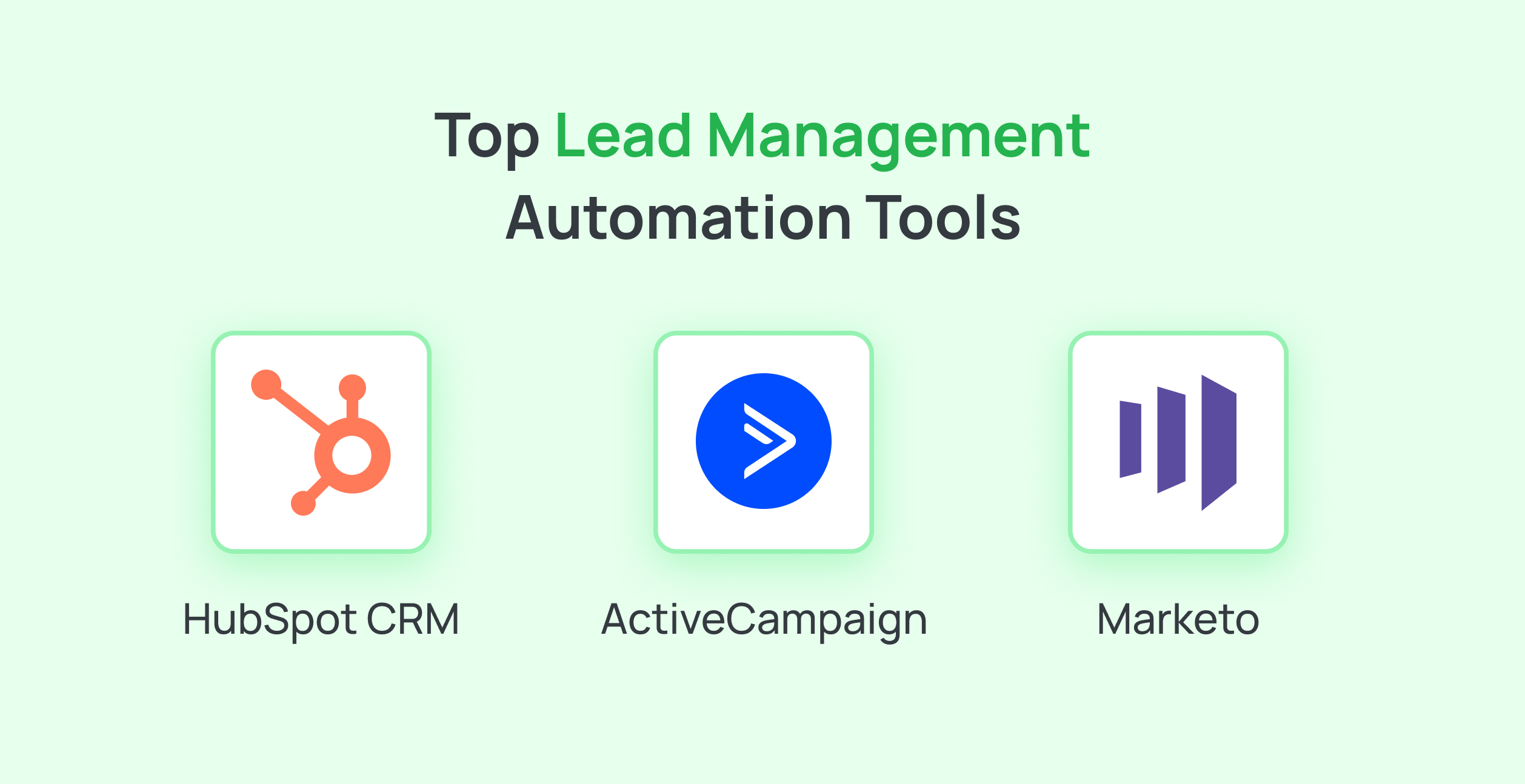
- HubSpot CRM – For lead scoring, automated nurturing sequences, and form tracking
- ActiveCampaign – For strong behavioural triggers and advanced segmentation
- Marketo – Enterprise-grade lead management with deep scoring and attribution
Customer lifecycle workflows
From onboarding to post-purchase follow-ups, these workflows keep your communication timely and relevant. They help you guide customers through each stage consistently without missing a beat.
Top tools for customer lifecycle workflows:

- Mailchimp – Simple onboarding and lifecycle automations for small teams
- Klaviyo – Great for ecommerce onboarding, abandoned cart, and post-purchase flows
Re-engagement and retention workflows
These workflows focus on bringing back inactive users or retaining current users. You can set up sequences to reward loyal customers and maintain ongoing relationships. Triggered sequences, personalized greetings, and targeted offers all fall under this umbrella.
Top workflow platforms for re-engagement and retention:
- Iterable – Strong for cross-channel lifecycle journeys at scale
- Brevo – Re-engagement campaigns and automated email personalization
- Braze – Cross-channel re-engagement using push, SMS, email, and in-app messaging
Project management workflows
This is a relatively new area in workflow automation that has quickly risen in importance, especially for marketing teams handling multiple campaigns and moving parts.
Project management workflows automate operational tasks wonderfully. Things like assigning work when a campaign is created, moving tasks between stages, notifying stakeholders of updates, or generating reports when a project wraps.
Automating work on a project management software for marketing industries leads to clearer ownership and smooth execution of work. Instead of chasing updates or manually coordinating handoffs, automation keeps projects in motion and ensures every piece of the process is aligned and on schedule.
Top project workflow automation platforms:
- 5day.io – Automated task assignment, status updates, deadline adjustments, and reporting triggers
- Asana – Solid automation sequences for task-related progress
Top marketing workflow automations for agencies in 2026
For agencies, the real power of automation is when you move beyond basic email triggers and start streamlining the day-to-day operations that typically drain time and focus. This is where marketing agency workflow automation becomes a genuine competitive advantage.
With the right setup, and the right marketing agency management software, you can eliminate repetitive busywork, keep projects on track, and deliver a consistently better client experience.
Here are the workflow automations that make the biggest impact for agencies today.
Client onboarding workflows
From collecting brand assets to sharing initial questionnaires or creating project folders, onboarding can be messy when done manually. Automating these steps ensures every new client enters a clean, structured process with zero delays or loose ends.
Campaign production workflows
Agencies juggle multiple campaigns across multiple clients, and each one includes dozens of micro-tasks. Automated workflows help assign tasks, set deadlines, generate briefs, notify stakeholders, and move work forward without the constant internal follow-ups.
Content creation and review workflows
Content approvals are often a bottleneck. Workflow automation lets you assign creators automatically and notify clients when drafts are ready so your team never has to dig through email threads again.
Reporting and analytics workflows
Instead of rebuilding reports from scratch each month, automated dashboards pull data in real time and generate client-ready reports of performance summaries. This frees up your team to focus on insights rather than manual data gathering.
Lead management and nurturing workflows
Agencies managing inbound marketing for clients can automate lead scoring, segmentation, follow-ups, and CRM updates. This keeps client pipelines active and ensures no lead gets lost due to manual oversight.
Billing and client communication workflows
Recurring tasks, payment reminders, meeting scheduling, and task updates can all run automatically. Not only does this save time, but it also creates smoother, more consistent communication for your clients.
When these workflows come together inside the right marketing agency management software, agencies unlock the kind of operational efficiency that supports real scalability. You get more time for strategy and creative work, while automation handles the predictable, repeatable tasks that used to stall momentum.
Manage your marketing automation workflows with 5day.io
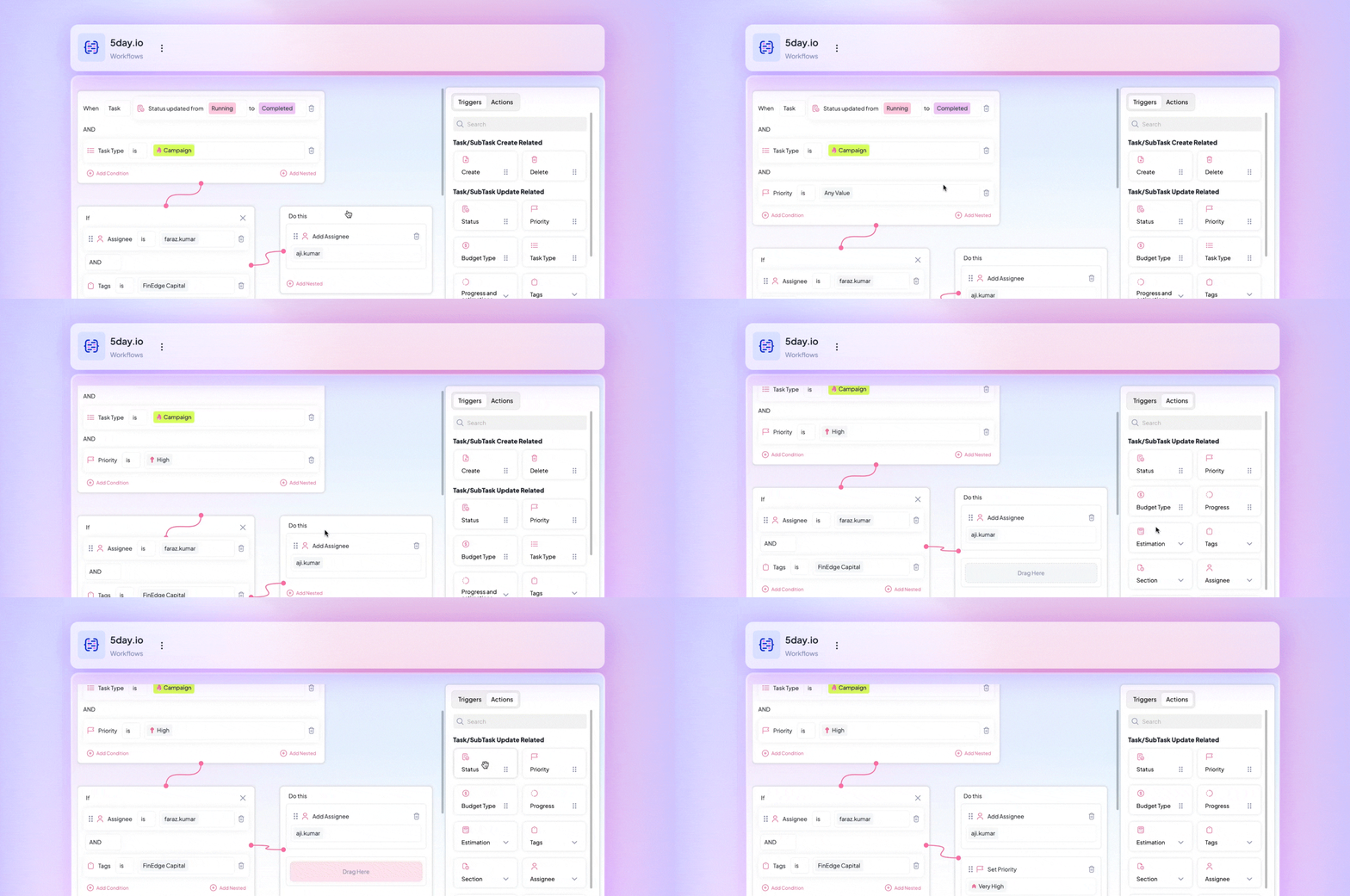
As agencies take on more clients and more complex campaigns, what becomes a real challenge is keeping everything organized and moving without constant manual coordination. This is where 5day.io shines. It’s a marketing project management software that has automation woven into the core. This way, your workflows operate on their own once they’re set up.
Here’s how 5day.io supports agency operations.
Campaign workflows that stay aligned
Campaigns involve many moving parts. With automated handoffs between stages, teams don’t have to manually notify each other or wait for reminders. Each step activates the next, ensuring momentum is maintained throughout the project.
Reporting workflows that save time
Monthly or weekly reporting can be set to trigger automatically. Teams receive reminders, data is organized in a predictable structure, and clients receive updates on schedule. This reduces manual effort and keeps reporting consistent.
Clear visibility across operations
Because every workflow is system-driven, agencies get a clearer view of where work stands, what’s coming next, and where bottlenecks may appear. There is also a record of every step in the activity stream to review the automation and any changes made to a task. This helps improve planning and workflow optimization over time.
In short, 5day.io gives agencies a more organized way to operate. It replaces repetitive coordination with structured automation, so teams can spend more time doing the work that drives results.