

For a marketing agency, client onboarding is not just an admin step. It is the first real test of how organized the agency feels for a new client.
At this stage, the client is still building trust. Even small gaps in progress updates, access collection approvals or next steps can create doubt. If the process feels loose, the client may start questioning the agency before the first campaign has even gone live.
A strong onboarding process brings every moving part into one clear flow. It helps the team ask the right intake questions, collect access on time, set expectations, and show the client what the first win should look like.
HubSpot says 86% of customers are more likely to advocate for a brand after a prompt response and educational onboarding. That shows how much the early phase can shape long-term client confidence.
Let’s break down a practical marketing agency client onboarding process that helps your team start every new relationship with more clarity, control, and trust.
What Is Client Onboarding for a Marketing Agency?
A marketing agency onboarding process is the structured sequence that moves a client from signed contract to active delivery.
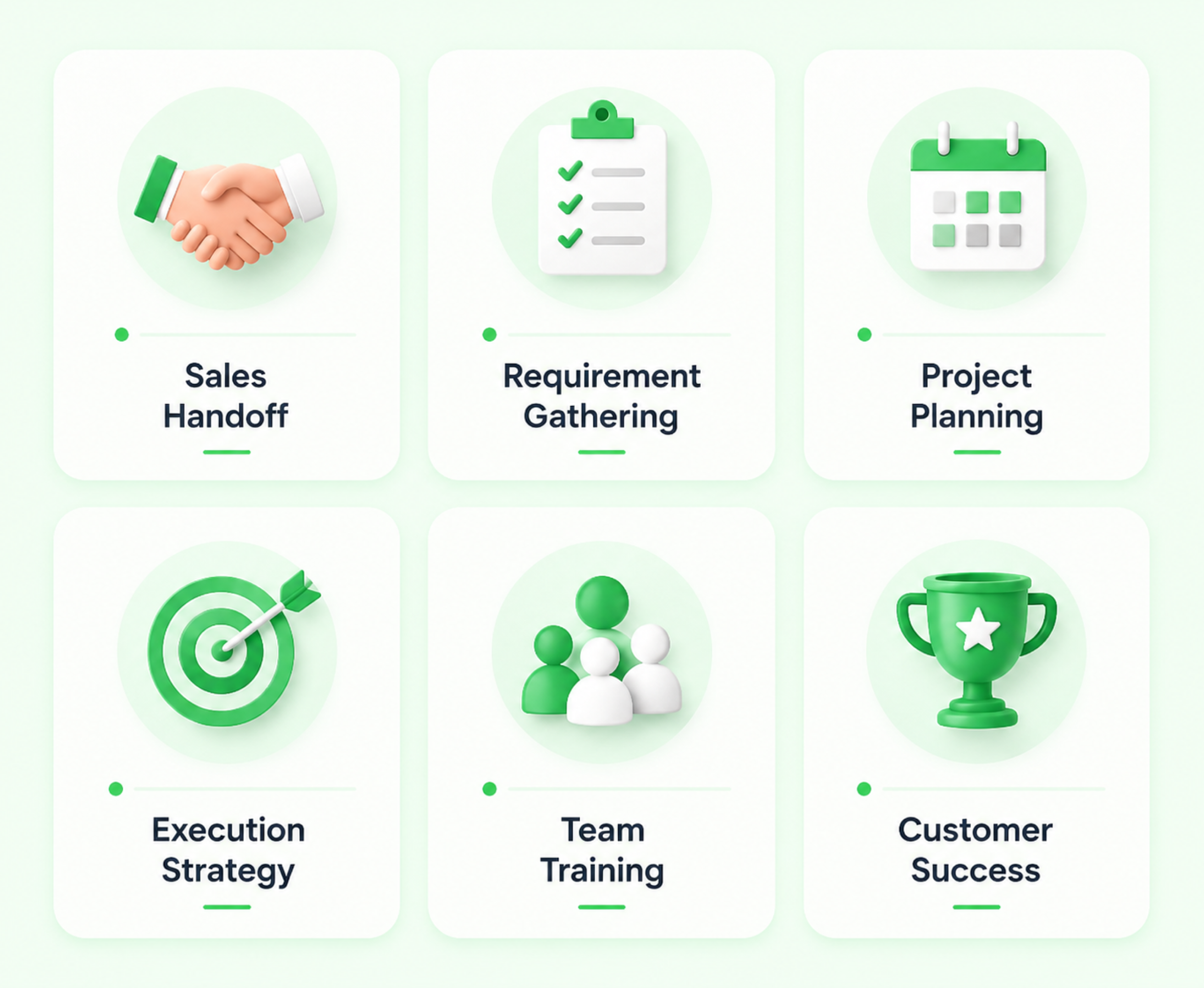
In simple words, client onboarding is the transition from a signed contract to successful adoption. It includes various parts. For example:
- Sales handoff
- Requirement gathering
- project planning
- Execution strategy building
- Training the team to match client’s expectations
- Transition to customer success
For agencies, it is not going to be a single kickoff meeting, and that’s it. A marketing team must ensure a full setup that makes delivery count.
Therefore, onboarding should answer these five very important questions fast:
- What are we doing first
- Who owns what
- What access do we need
- How will approvals work
- When will the client see the first useful output
If those answers are not that clear in the initial phase, there are surely chances of delays. The initial introduction and kickoff structure are the pillars of the foundation for the whole client onboarding process.
The 7 Stages of Client Onboarding for Marketing Agencies
The easiest way to make onboarding repeatable is to break it into stages. We’ve created a seven-step frame that can assist your marketing team ensure a very smooth client onboarding process successfully.
Let’s begin with a quick overview:
Stage | What happens | Main output |
1. Contract and commercial handoff | Confirm scope, payment, point of contact, and internal owner | Signed agreement and internal handoff |
2. Welcome and expectation setting | Send welcome email, timeline, and next steps | Clear onboarding roadmap |
3. Intake and discovery | Gather business goals, audience, tools, and brand context | Client intake form and discovery notes |
4. Access collection | Collect logins, ad accounts, analytics, CMS, and asset access | All required permissions in place |
5. Kickoff and workflow setup | Align on goals, roles, communication, and approvals | Shared workflow and meeting cadence |
6. Strategy and first-deliverable setup | Build the first plan, brief, or deliverable | Approved first action plan |
7. First-win review | Review early progress, answer concerns, and confirm next milestones | Stronger confidence and clearer next steps |
Why Does This Structure Work Every Time?
This framework helps because each stage has a clear purpose. It stops agencies from trying to collect access, explain reporting, promise first deliverables, etc. all in one rushed call. Always remember that strong onboarding is staged and milestone-based, not improvised.
Contract and commercial handoff
This is where the sales conversation turns into an active project. Before the work starts the agency should confirm the final scope and commercial terms. The billing model should also be clear. The client’s main point of contact and the internal owner should be agreed at this stage.
What should be locked here
The team should know what services were sold and what is out of scope. They should also know who approved the deal and who will manage the relationship on both sides. If this is not clear, the first few weeks can quickly become confusing.
Why it matters
A rushed handoff creates avoidable problems later. The strategist may plan for one thing while the client expects something else. Good onboarding starts with commercial clarity, not assumptions.
Welcome and expectation setting
This is the client’s first real experience after signing up. It should include a welcome email with a simple timeline. Also, it should cover the next steps, and a clear explanation of what the onboarding process will look like.
What the client should receive
The client should know their main contact and kickoff timeline. They should also know what information the agency needs next and what the first milestone will be. This makes the process feel guided and professional.
Why it matters
Clients often judge agency organizations very early. If this stage feels messy or delayed, then confidence can drop before the agency gets a chance to do meaningful work.
Intake and discovery
This is where the agency collects the real working context behind the project. The team should understand the client’s business goals and audience. Then, learn about service priorities and brand tone. Competitors and current tools should be reviewed at this stage. Success expectations should also be made clear.
What the agency should learn
The team should understand what the client wants to achieve. They should also know what has already been tried and what matters most in the next 30 to 90 days. Thus, ensure how the client prefers to work.
Why it matters
A discovery stage reduces guesswork. It also makes the kickoff meeting more useful because the team is not spending the whole call collecting basic information.
Access collection
Once the agency understands the client, it needs access to the systems required for delivery. This can include ad accounts and analytics. It may also include CMS access and social accounts. File storage and brand assets should be covered too.
What should be collected
The agency should collect the right permissions. It should not collect random access without a clear purpose. Thus, the team must confirm who owns each platform and who can approve access requests quickly if something is missing.
Why it matters
Access delays can slow onboarding very quickly. If the team cannot enter accounts or review data, then the timeline starts slipping early. Asset updates can also get delayed before real execution even begins.
Kickoff and workflow setup
This is where the client and agency align on how the work will run in practice. The kickoff should cover goals, responsibilities, communication channels, reporting, approval flow, milestones, etc. If you want to know more, read our details about the marketing project kickoff checklist.
What should be agreed here
Both sides should know who will join recurring meetings. They should also know how feedback will be shared and who will approve deliverables. The process for urgent requests should also be agreed so the team does not lose time later.
Why it matters
A kickoff should create working clarity, not just a good conversation. If the workflow is unclear after this stage, the team will spend the next few weeks chasing updates and fixing avoidable confusion.
Strategy and first-deliverable setup
This is where the agency turns collected information into the first real output. The first output could be a strategy brief or campaign outline. It could also be an onboarding report or content roadmap based on the service.
What the client should see
The client should start seeing proof that the process is moving toward useful work. The output does not need to be huge. It should feel relevant and structured. It should also connect clearly with earlier discoveries.
Why it matters
This stage connects planning to execution. It shows the client that onboarding is not just a series of meetings and forms. It is building toward something practical.
First-win review
This final onboarding stage is about checking early progress and strengthening confidence. The agency should review what has been completed, answer open questions, confirm what comes next, and make sure the client feels clear on the direction.
What should happen here
The team should highlight early wins and confirm the next milestone. Then, make space for feedback before the account fully moves into the ongoing delivery flow.
Why it matters
Clients do not only remember the work. They remember how the process felt. A good first-win review makes the relationship feel steady and forward-moving, which is exactly what strong onboarding should do.
Client Onboarding Checklist for Marketing Agencies

A good client onboarding checklist marketing agency teams can use should be practical and easy to assign.
Phase | Checklist item |
Before kickoff | Confirm signed contract, billing terms, point of contact, and service scope |
Welcome | Send welcome email, onboarding timeline, and kickoff booking link |
Intake | Send client onboarding form and collect missing business details |
Access | Request analytics, ads, CMS, social, and file access |
Discovery | Review goals, audience, competitors, and success metrics |
Workflow | Set communication rules, approval path, and reporting cadence |
Kickoff | Run kickoff meeting with agenda and next steps |
First 30 days | Deliver first meaningful asset or insight and book a review |
This is the core client onboarding checklist for marketing agencies. You can expand it by service line later, but the base process should stay stable. Onboarding needs a clear checklist because early consistency improves confidence and reduces confusion.
You can also read about how to write a clear project communication plan to ensure the collaboration with clients stay smooth.
What to Include in a Marketing Agency Welcome Kit
A welcome kit should reduce uncertainty. It should not be a branded PDF full of vague agency values. It should help the client understand what happens next.
A useful welcome kit should include:
- welcome note
- client team contacts
- onboarding timeline
- communication channels
- approval process
- access checklist
- reporting schedule
- first 30-day milestones
Onboarding works better when clients understand the process early. They should know the communication lines and key expectations. They should also know what information the agency needs next.
Keep the welcome kit short and practical. Most clients will not read a 20-page onboarding deck. A one-page summary with linked resources works better. Keep clarity at the centre every time your team creates a welcome kit.
Onboarding feels smoother when clients know where to give feedback and how approvals happen. Improving client collaboration for marketing agencies connects well with your approval and reporting setup.
Intake Form Questions That Save Time Later
This is one of the biggest missed opportunities in agency client onboarding. A strong intake form reduces repeated questions and gives the team better context before kickoff.
A well-structured form should collect project goals, timelines, budget expectations, role clarity, etc. early to avoid delays and miscommunication.
So, focus on gathering the following:
- Brand guidelines
- Stakeholders
- Social handles
- Access needs
- Past performance
- Core messages
- Audience data up front
High-value intake questions
Ask these before or right after the welcome email:
- What are your top business goals for the next 90 days?
- Who is your ideal customer?
- What services or channels matter most right now?
- Who gives final approval?
- Which tools and platforms are already in use?
- What reporting cadence do you expect?
- What deadlines or launch dates already exist?
- What brand guidelines, assets, or past campaigns should we review?
These questions help you avoid weak kickoff calls. They also make it easier to create a clean first strategy document or action plan.
Client Onboarding Templates for Marketing Agencies

Templates are useful because they remove hesitation and make the early client experience feel more consistent. Instead of writing every message or checklist from scratch, the team can use a clear structure for welcome communication and intake follow-ups. Also, they can access requests and do kickoff confirmation while knowing the exact next steps.
This is helpful when onboarding clients across different services or teams. A repeatable template keeps the process steady while still giving enough room to personalise the message for each client.
For a ready-to-use structure, agencies can also explore 5day.io’s customer onboarding template. It can help teams organize onboarding stages, tasks, responsibilities, and handoffs in a more practical way.

Welcome Message
Subject: Welcome to Agency Name
Hi Client Name,
We’re excited to get started and look forward to working with you.
To make onboarding smooth, we’ve shared your onboarding roadmap. It includes the next steps, your main point of contact, and the expected kickoff timeline.
Please review the intake form and complete it by date. Once we receive it, we’ll confirm the kickoff agenda and share the access checklist.
Here’s what happens next:
- Complete the intake form
- Review the onboarding timeline
- Confirm a kickoff time
- Prepare any brand files or existing assets you want us to review
If you have any questions before kickoff, feel free to reply here.
Warm Regards,
Name
Intake Form Follow-Up
Subject: Quick follow-up on your onboarding form
Hi Client Name,
Just a quick follow-up on the onboarding form we shared earlier.
The form helps us understand your goals, audience, current tools, and reporting expectations. Any brand or campaign context you share will help us prepare better before kickoff.
Please complete it by date so we can stay on track with the onboarding timeline.
If anything in the form feels unclear, let us know and we’ll help right away.
Best,
Name
Access Request
Subject: Access needed to begin setup
Hi Client Name,
To begin setup, we need access to the platforms listed below:
- Google Analytics or GA4
- Google Ads or Meta Ads
- CMS or website platform
- Social media accounts
- File storage or shared drive
We’ve attached a simple checklist so your team can complete this without back-and-forth.
Once access is in place, we’ll move into final kickoff prep. We’ll also begin setting up the workflow, reporting structure, and first project steps.
If someone on your team usually handles permissions, feel free to loop them into this thread.
Best Regards,
Name
Kickoff Confirmation
Subject: Kickoff confirmed for date
Hi Client Name,
Thanks for confirming the kickoff session.
Here are the details for the meeting:
- Date: date
- Time: time
- Meeting link: link
In this call, we’ll cover:
- Business goals and priorities
- Communication and approval flow
- Reporting cadence
- Immediate next steps
- First deliverables or focus areas
Please bring any stakeholders who will be involved in reviews, approvals, or regular communication. That helps us make the process smoother from the start.
Looking forward to speaking with you.
Best,
Name
Kickoff Recap and Next Steps
Subject: Kickoff recap and next steps
Hi Client Name,
Thanks again for your time today.
Here is a quick summary of what we aligned on:
- Primary goals: insert goals
- Reporting cadence: weekly / biweekly / monthly
- Approval flow: name / team / timeline
- First priority deliverable: deliverable
- Communication channel: email / Slack / platform
Next action items:
- Agency task by date
- Client task by date
- Shared milestone by date
We’ll send the first working project view and timeline by date. If anything needs to be corrected or added based on today’s discussion, please reply here and we’ll update it.
Warm Regards,
Name
A Quick Tip Before Using These Templates
Keep the structure consistent, but adjust the language based on the client. A startup founder may prefer a simple and direct message. An in-house marketing manager may need more detail. A larger brand team may need clearer steps, defined owners, and approval timelines.
That is how templates save time while still making onboarding feel personal. They give the team a repeatable base without making the client experience feel generic.
Also read solving communication breakdowns in marketing if after the emails, your team wants to strengthen communication.
How to Automate Your Client Onboarding with AI and PM Tools

Automation is the biggest scaling opportunity in this topic, but it should be used carefully.
Agencies can automate repetitive parts of onboarding such as data collection, meeting scheduling, document handling, project-management triggers, etc.
AI can cut time-to-value by 30 to 50 percent onboarding workflows as well.
What should be automated?
The best automation targets are:
- welcome email sequences
- intake-form reminders
- access request tracking
- kickoff scheduling
- internal task creation
- recap generation after meetings
- status reminders before deadlines
What should stay human?
Keep these human-led:
- discovery conversations
- expectation setting
- difficult scope conversations
- first strategic recommendations
- emotionally sensitive client moments
Use Project Management Software for Easy Automation
A project management software offers easy to use templates for client onboarding, email launches, content production, and a lot more.
For controlled client visibility and faster approvals, there must be a structured setup with clear timelines, briefs, client access, time tracking, reporting, etc. in one place.
A project management platform like 5day.io can make onboarding easier by turning repeated tasks into a clear workflow with simple automations.
The team does not need to mark every update manually. They also do not need to chase reviewers in separate inboxes. For example, when a task is completed, it can automatically move to “In Review.” The right reviewer can also be notified at once.
This reduces the manual work of changing statuses and sending reminders. Also, checking if the next person has seen the task. Instead of creating a custom process each time, the team can use project management automations to keep onboarding smooth and consistent.
Common Client Onboarding Mistakes Marketing Agencies Make
- Rushing access collection and discovery into one call
- Skipping intake questions and hoping the team can figure out the details later
- Leaving approval steps unclear
- Managing onboarding across email docs and chat with no central view
- Missing a clear first-win milestone for the client
Thus, weak onboarding creates delays early and lowers client confidence. So, If the process is inconsistent, templatize it. If the process is already templated but still messy, centralize it.
How to Measure Client Onboarding Success
You cannot improve onboarding if you only ask, “Did the client seem happy?”
A better measurement set includes:
- onboarding completion time
- access completion rate
- kickoff attendance and follow-up completion
- time to first deliverable
- time to first visible win
- client feedback after 30 days
Consider milestone completion and time-to-value as useful ways to judge onboarding quality. Faster time-to-value as one of the main benefits of a better onboarding system.
How 5day.io Can Help Make Client Relationships Stronger

5day.io helps marketing agencies move client relationships in a clear working system after the deal is signed. It gives teams one place to manage onboarding, task ownership, approvals, timelines, files, feedback, automations, reporting, and much more.
Build a Clear Client Onboarding Workflow
Agencies can create a dedicated client onboarding project in 5day.io with tasks for intake forms, access collection, kickoff prep, first deliverable planning, and approval follow-ups.
Each task can include:
- Task owner
- Deadline
- Status
- Files
- Comments
- Next action
This makes onboarding easier to follow because the client relationship is not dependent on scattered emails or solely on memory. The workflow itself shows what is complete and what is pending while also indicating fields where client input is needed.
Give Clients Controlled Project Visibility
5day.io can help agencies build trust by giving clients controlled access to the live project view. Clients can see progress, timelines, approval tasks, key updates, milestones, etc. without asking for constant status calls.
This visibility reduces the common “what is happening now?” gap. It also makes the agency feel more organised because clients can clearly see that work is moving.
Make Approvals Easier to Manage
Approvals often become messy when feedback is spread across emails and chats. In 5day.io, each deliverable can stay connected to its task, brief, file, feedback thread, and next step.
For example, when a task moves to the review stage, the right reviewer can be notified. This helps teams collect feedback faster and keeps approvals attached to the actual work.
Improve Account Control With Workload and Time Tracking
5day.io also helps agency leads understand how work is moving behind the scenes. They can track workload, time spent, and delivery progress across client projects.
This helps account managers spot delays and overloaded team members. Thus, they can have clearer client conversations before small delivery issues turn into relationship problems.
Create a More Reliable Client Experience
In short, 5day.io strengthens client relationships by making the agency’s process visible and repeatable while being easier to trust.
Clients get more clarity. Teams get fewer follow-ups. Account managers get better control over delivery. Together, this helps agencies in onboarding clients smoothly and ensure stronger long-term client confidence.
Final Advice
Marketing agency client onboarding is not about making a great first impression only. It is about building a better working system before the first deliverables go live.
The agencies that do this well tend to move faster and reduce confusion while building trust earlier as the client can see what is happening and what comes next.
The process works best when it is structured and visible while being easy to repeat.