

When marketing drives customer acquisition, operations drives customer fulfillment and retention. If your processes cannot handle a sudden influx of sales, that marketing victory quickly becomes a costly operational failure. After all, achieving scalable marketing success hinges entirely on the quality of your operations strategies.
Any operations management strategy serves as a blueprint meant to ensure sync between resources and business goals.
The answer to questions like ‘how to execute successful operations management strategies?’ now involves technology, such as scalable project management software, to move from planning to execution. This guide will show you how to build and master a strategy that turns your processes into the future of operations management.
Designing your future-proof strategy
Future-proofing your operations strategy is about making deliberate choices that align every process with your primary competitive advantage.
McKinsey research indicates that even high-performing companies experience a 30% gap between their strategy’s full potential and what is actually delivered, attributing this to shortcomings in their operating models.
Therefore, before you draw up any execution frameworks or invest in new project management software, you must first decide how you will choose to compete. This decision sets the direction for everything that follows: from process flow to technology investment.
This brings us to the first critical element here: defining your operational priority.
Types of operations strategies: Choose your competitive edge
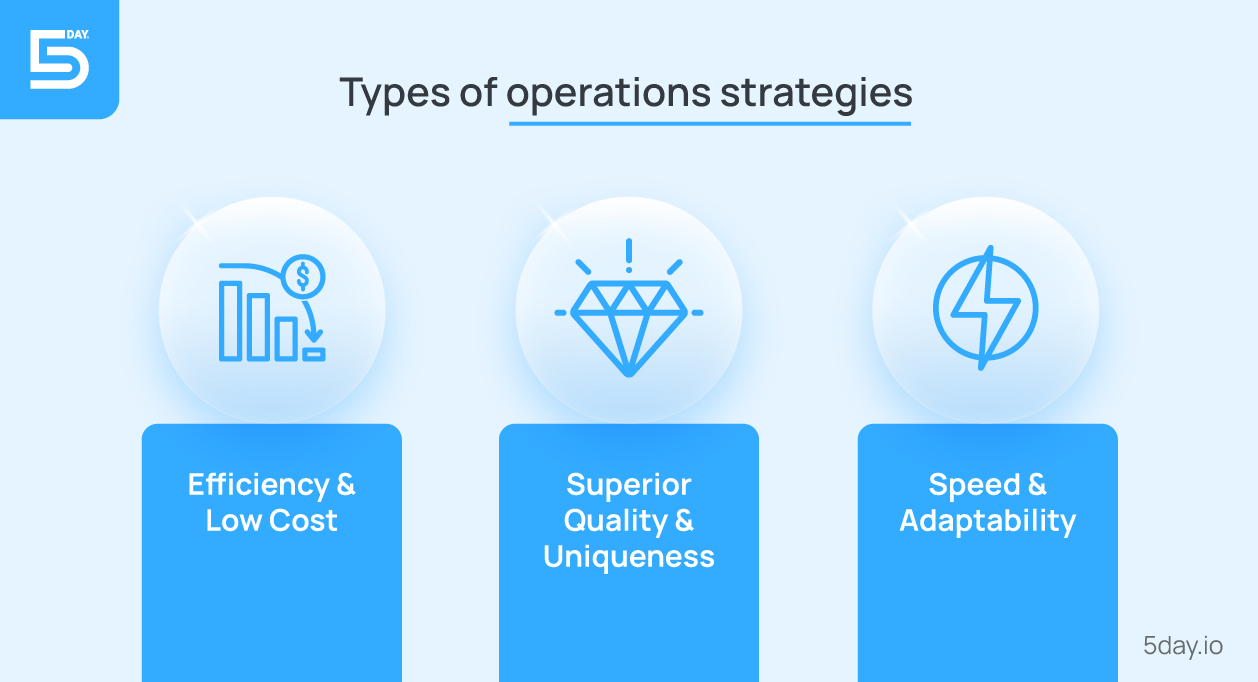
The decision you make here, i.e. what your operational priority will be, is the core of your competitive stance. You cannot excel at everything simultaneously; you must choose the one dimension your operations management strategies will champion.
Traditional operations management competitive priorities provide three fundamental choices in this context:
Cost leadership
This strategy prioritizes delivering one’s offerings at the lowest possible operating expense albeit without compromising baseline quality. The operations focus must be on:
- Standardization of all processes
- High-volume delivery
- Flawless supply chain management
- Use of automation and centralized systems
Note that this strategy requires meticulous tracking and a streamlined system, making a unified project management software essential for identifying bottlenecks. And as for the trade-offs: you must sacrifice flexibility and speed-to-market.
Differentiation
This particular approach focuses on superior value through unique features or excellent quality. Even an exceptional customer experience counts since it allows you to charge a premium price. The operational focus here must be on quality control and specialized expertise. Continuous feedback loops are also essential, then.
Response/ Flexibility
This foundation of this strategy is built on speed and agility. You rapidly adapt to changing customer demands, market trends, etc. In terms of priorities, this translates into short lead times and on-time delivery for starters.
Operationally, you will need flexible resource allocation and cross-trained employees. A highly responsive logistics also plays a key role. It must be noted that this strategy is highly dependent on effective task management software to coordinate rapid activity.
You must select one primary focus. Once you’ve determined your primary competitive advantage (cost, quality, or speed), the rest of your operations management strategy must align to reinforce the chosen priority.
The strategy-to-execution link: Defining your execution framework
The most common failure point for companies is the strategy/execution disconnect. It means leadership goals are not translating into daily work. An interesting stat from Atlassian’s State of Teams 2025 further demonstrates this: disconnected workflows and data silos across Fortune 500 companies cause them to lose 2.4 billion hours per year.
The execution framework is the necessary bridge to close this gap. It’s a standardized, repeatable set of operational-level strategies that ensures every task and deliverable is directly related to your chosen competitive priority. Aside from standardized processes and repeatable workflows, this framework establishes clear roles and accountability.
Simple spreadsheets cannot manage this framework. You will need dedicated tools to execute successful operations management strategies. The complexities of coordinating resources, tracking time, etc. necessitate robust project management software.
Basically, without the right tools for managing a defined execution framework, your chosen strategy is wishful thinking.
A 4-step guide to creating your operations strategy
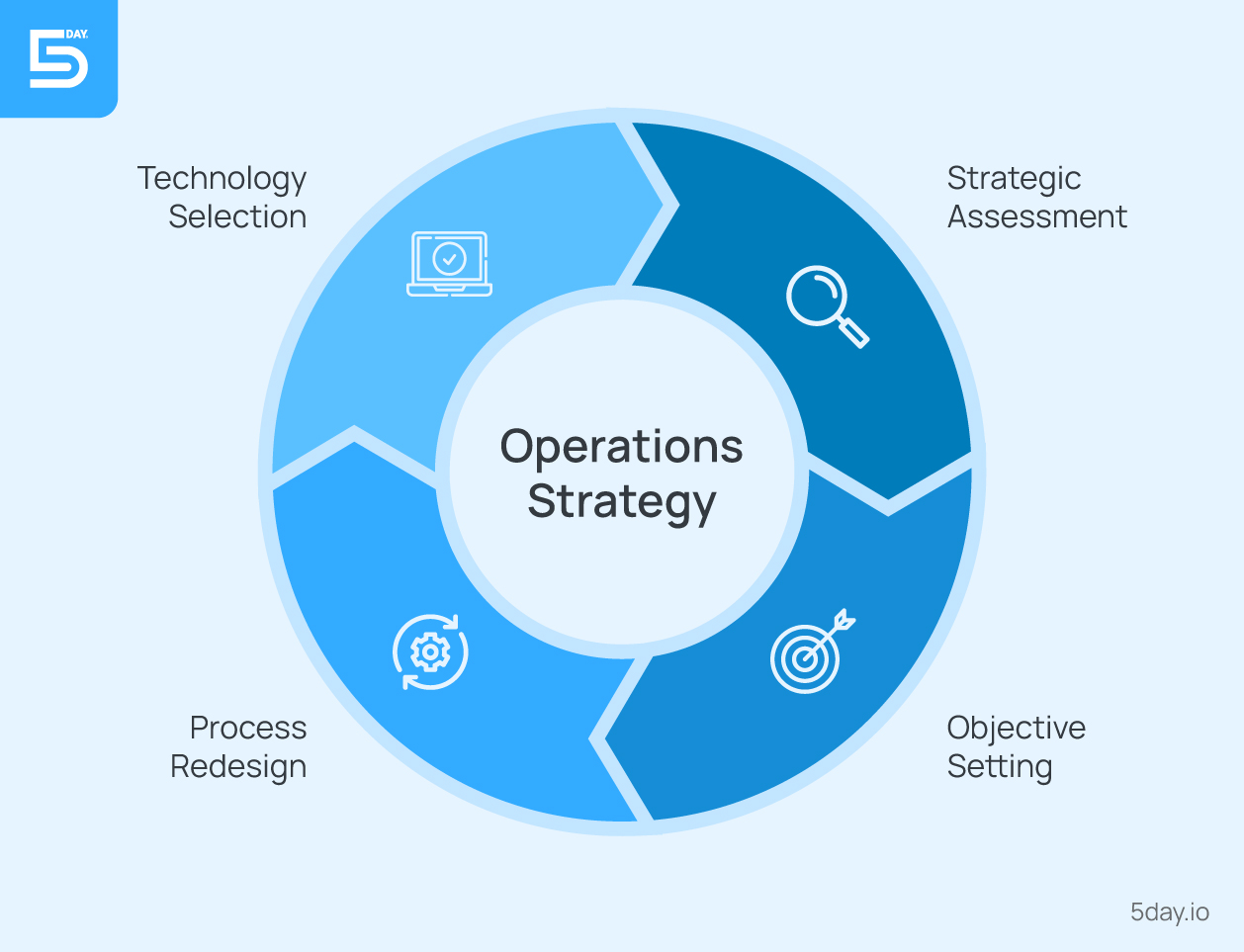
A future-proof operations strategy demands more than just good intentions; it necessitates a systematic and analytical approach. We now break down the complex process into four manageable steps.
Step 1: Assessment and diagnostic audit
This step starts with a thorough examination of current operations to identify pain points and true capabilities. Create a map of your core value chain processes to assess the current state. Then, compare your current performance to your chosen competitive edge. Finally, identify specific activities or areas that slow down your execution or jeopardize quality. This identifies areas where new operational strategies are most needed.
Step 2: Goal setting
This step converts high-level business objectives into measurable operational management strategies and metrics. You start by establishing a handful of key objectives that are directly related to your chosen competitive priority. You then define the metrics that will be used to track these objectives. Conclude this step by determining the resource levels required to meet the new objectives consistently.
Step 3: Process redesign
This is the “build” phase a.k.a. where you formalize the Execution Framework defined earlier. Start off with optimizing the core workflows you identified in the audit. Then it is time to formalize the new standardized workflows. For successful strategies in operations management, every team member must understand and consistently follow the new process. You must identify potential failure points and implement relevant controls.
Step 4: Technology selection and integration
The final step in this journey focuses on how technology will help you achieve your strategic goals. You must select tools that directly support your operational priorities. So, if speed is critical, look for high automation capabilities. Have your PM solution manage resource allocation, enforce standardized workflows, and provide the real-time data required for the KPIs established in Step 2. The final task on this list is to integrate all new and existing tools to ensure visibility and data integrity throughout the operation.
Best practices for operational excellence in 2026
The future of operations management will be automated and data-driven. Implement the following best practices to transform your strategy into consistent results:
Leverage intelligent automation
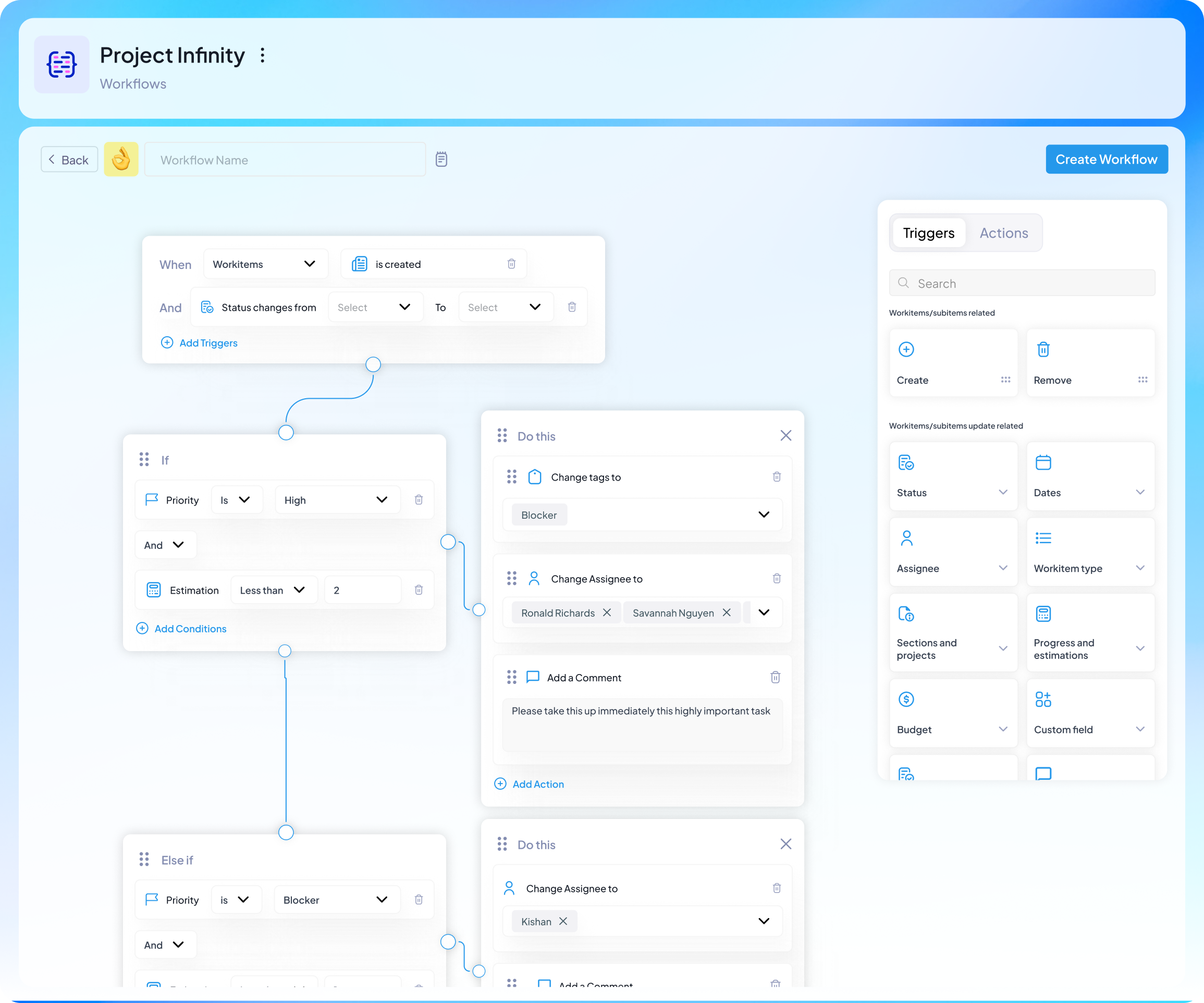
Automation is currently the single most important driver of operational efficiency strategies. And this does not imply expensive robotics, but rather workflow automation.
It involves using tools such as project management software to automatically assign tasks, initiate follow-up steps based on project completion status, and so on. 5day.io makes for a good solution in this context. The next critical aspect is data sync: data should flow seamlessly between your CRM, finance, and operations tools.
Prioritize data-driven decision making
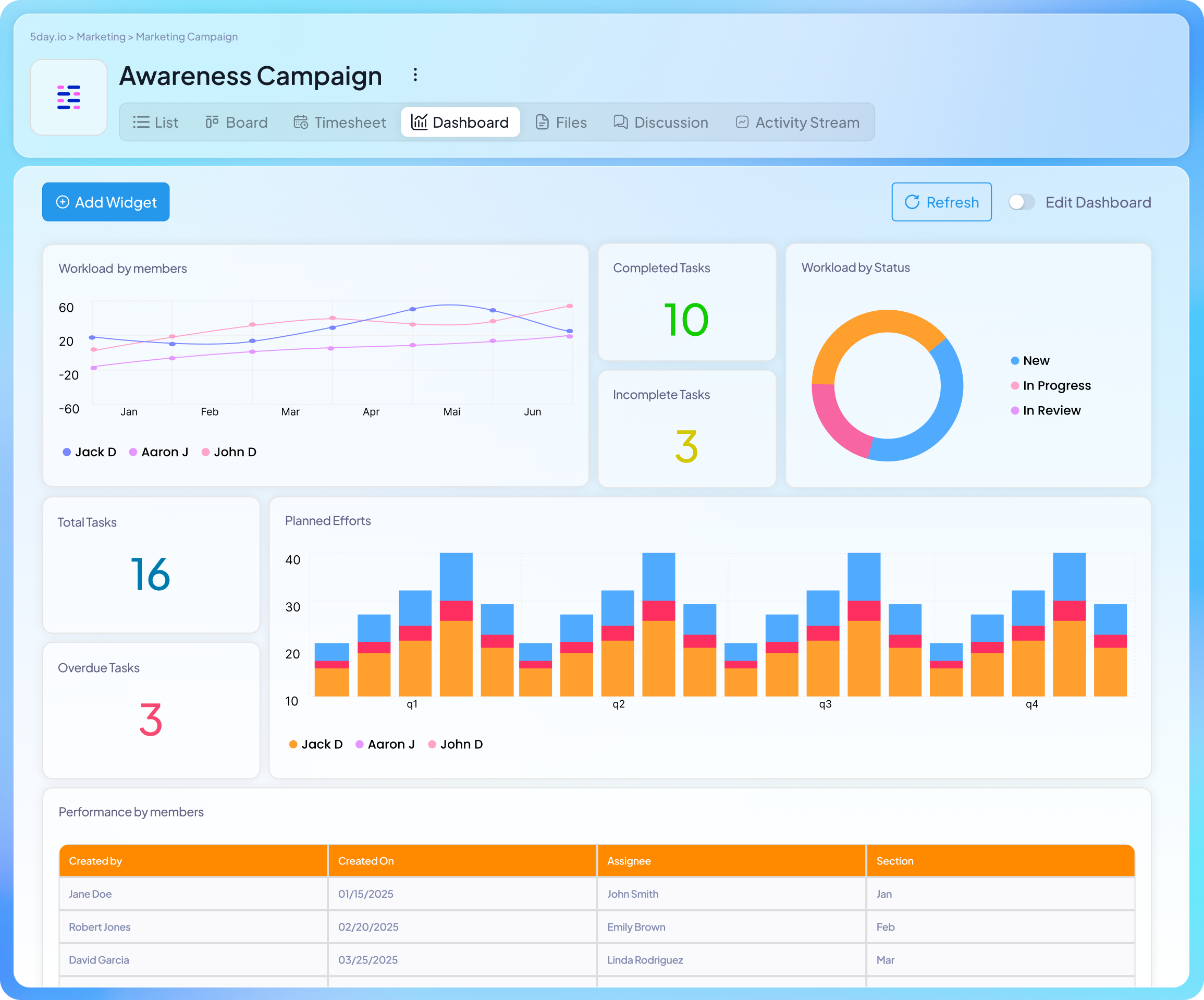
Operational mastery requires predictive capability in addition to reactive fixes. Use your execution framework tools (such as project management software) to visualize KPIs in real time. This helps you identify bottlenecks and capacity issues before they cause delays. Historical data on project timelines and resource availability is also quite useful to accurately predict and avoid overload.
Foster operational agility
An excellent operation is adaptable. To accomplish this, you must empower your front-line teams to make quick, process-aligned decisions without requiring constant managerial approval. It is also recommended that short reviews be scheduled on a regular basis to focus on process friction points rather than just project outcomes.
Common pitfalls of operations management and how to ensure success
Many businesses fail when it comes to operations management, not because of a flawed strategy, but because of difficulties during the execution or change management phase. Recognizing these common pitfalls allows you to proactively strengthen your system.
Pitfall 1: The “try-to-do-it-all” trap
The most common operational error is attempting to pursue all three competitive dimensions, i.e. cost, quality, and speed at the same time. When your operational priorities are split, your resources are diluted. Also, it causes your teams to become disoriented. You can deal with this by reworking your core strategic decision.
A truly successful operations strategy is based on trade-offs; you must sacrifice excellence in one dimension to achieve mastery in another, resulting in a focused competitive advantage.
Pitfall 2: Disconnected technology and data silos
You cannot make data-driven decisions if your data is spread across multiple spreadsheets and siloed systems. Data silos also increase manual labor and reduce confidence in your metrics. So, you must focus your execution on a single source of truth. The right project management software, such as 5day.io, could serve as the hub, integrating with your sales and finance tools.
Pitfall 3: Failing to manage change
Bringing in new strategies in operations management requires a cultural shift rather than just updated documents. Employees will return to their old habits if the new process is not clearly easier or better. This is why you must communicate the ‘why’: explain how the new standardized workflows will help the company maintain its competitive edge. You should also invest in appropriate training.
Pitfall 4: Treating strategy as a one-time project
There is simply no denying that a static operations strategy will be irrelevant in 18 months. Safeguard yourself against this eventuality by implementing the continuous improvement loop. Schedule regular strategic assessment meetings. You should also use real-time data from your execution systems to evaluate your KPIs and then use those findings to inform planned changes to your operational level strategies and workflows.
The execution engine: How 5day.io supports modern operations management
You’ve developed your operations management strategy, determined your competitive priority, and established the necessary execution framework.
The final step toward true operational mastery is now to choose the engine that will consistently drive that strategy every day. Your plan’s strength can only be realized through flawless execution: so, you need a unified platform that eliminates the friction of manual labor.
This is where 5day.io becomes an indispensable partner. It acts as the central nervous system for your operations, preventing the dreaded Strategy/Execution disconnect. Start mastering your operations management strategy today with our free 30-day trial.