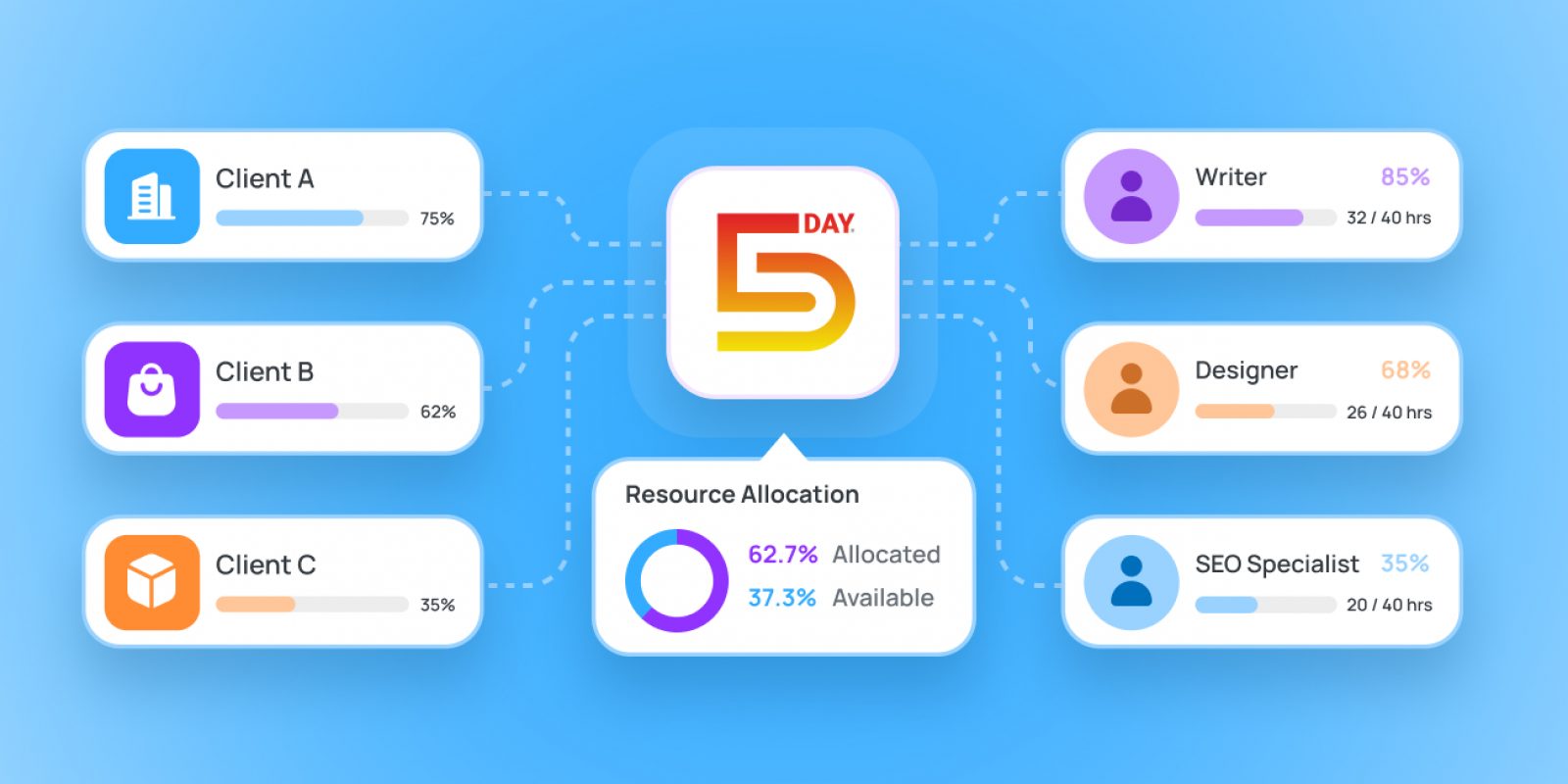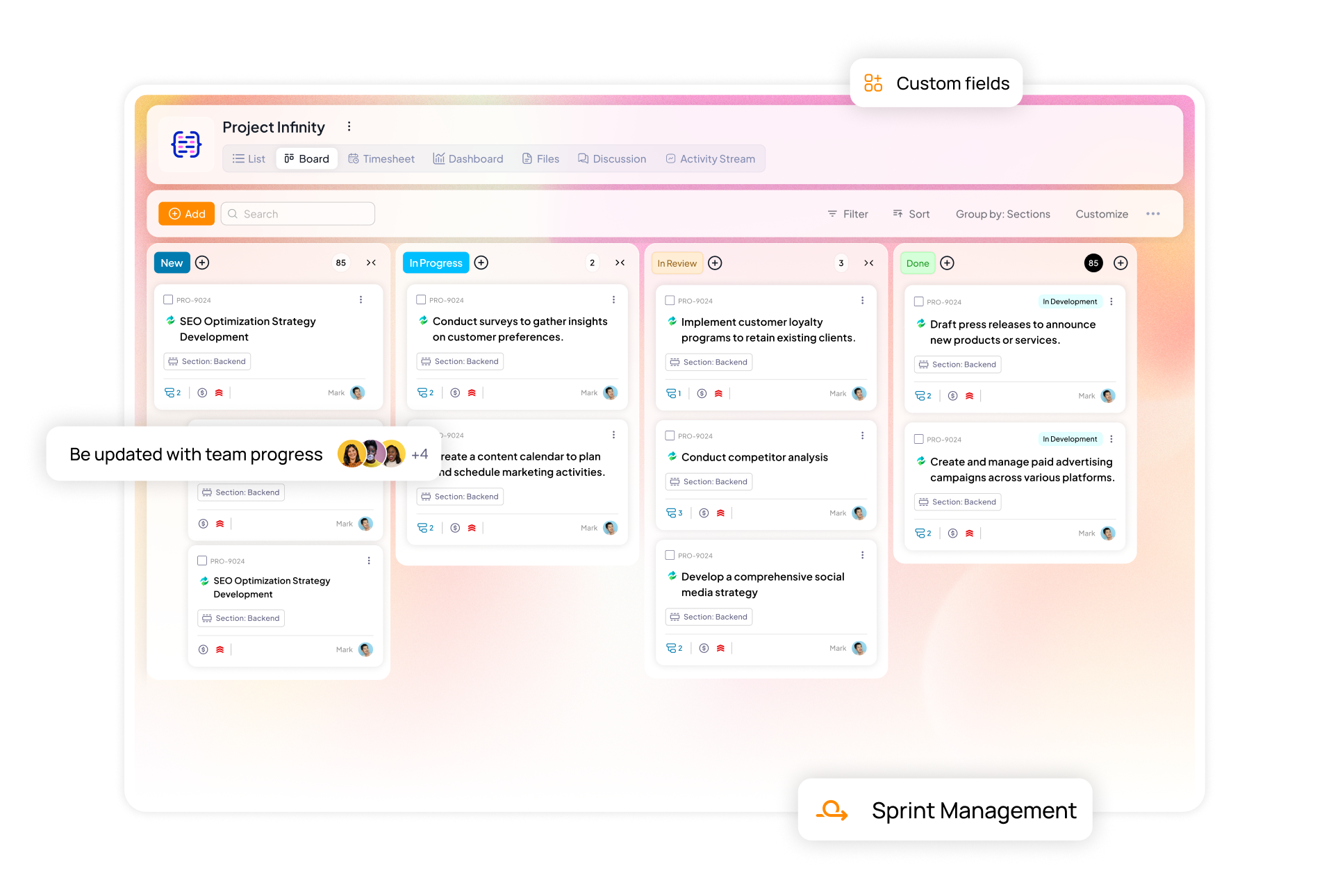


Productive.io is a tool for software studios where billing runs the operation, and resource utilization is a daily conversation.
But you already know what Productive.io is. You’ve been using or researching it long enough to have a clear sense of what it’ll cost you, and you’re here because that cost has started to feel worth examining.
Most guides on the internet for this search treat it like a generic project management comparison. They score ten tools against the same eight criteria regardless of who’s buying and call it a review.
This one takes a different approach.
We reviewed ten top Productive.io alternatives, evaluated against criteria specific to how marketing agencies operate; and assigned a Marketing Agency Fit Score out of ten. Think of it as a compass for the decision, not a verdict on it.
One thing this guide will not do: pretend the answer is always to switch. If switching is the right call for your agency, you’ll know the answer by the end of it.
What is Productive.io, and why are marketing agencies looking for alternatives?
Productive.io is an all-in-one agency management platform that combines project management, resource planning, time tracking, budget management, and invoicing in a single system. Unlike general project management tools, it targets service-based agencies that need to track project profitability and manage billable hours alongside task delivery.
That distinction matters.
Most project management tools treat billing as something you handle in QuickBooks after finishing the work. Productive.io makes it the core operational function. It helps teams with:
- Time logging against a task that flows directly into a billable hours report
- Resource utilization, making it visible at the project and team level in real time
- Profit margins per project as a live number inside the platform
For agencies where those three things are core operations, Productive.io delivers something genuinely difficult to replicate. That is worth saying clearly before getting into where it falls short.
Why marketing agencies switch from Productive.io?
The agencies leave Productive when the workarounds needed to bridge its gaps start costing more than switching tools. These are the six reasons why marketing agencies switch from Productive.io.
The per-seat pricing becomes a margin problem at scale
Productive.io has no free plan, and its per-seat pricing feels manageable at first but creates real friction once a team grows.
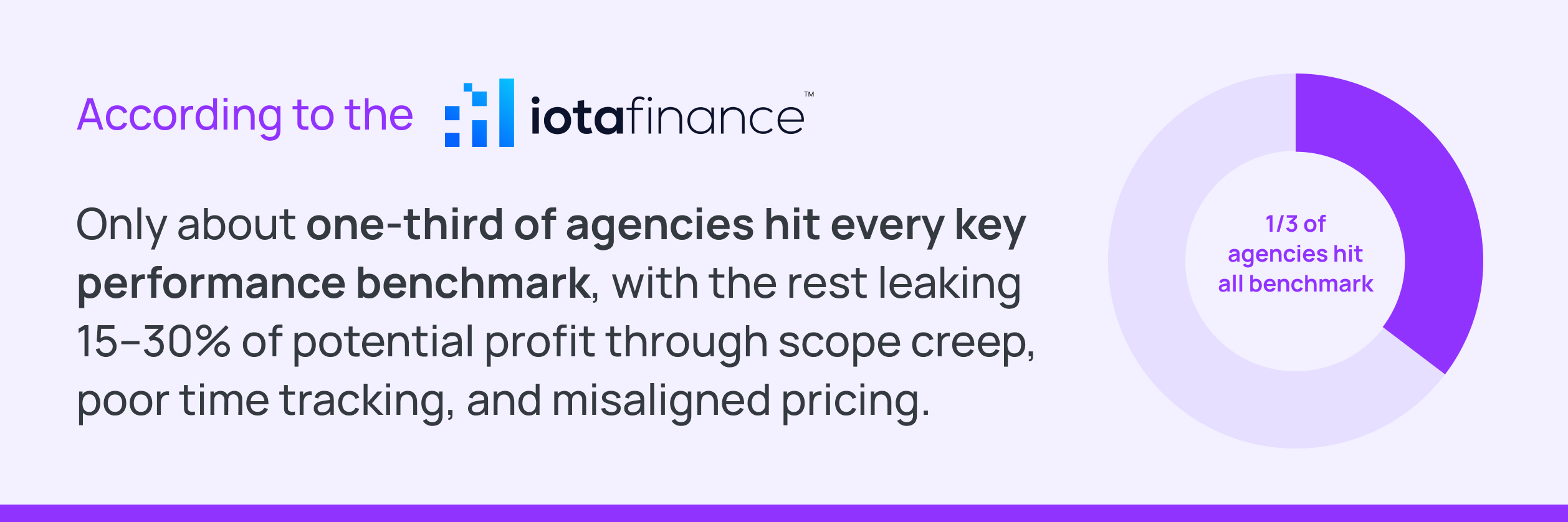
For marketing agencies running lean retainer margins, a pricing jump at that inflection point is a business model problem.
There is no native content calendar
Productive organizes work around projects and tasks. That structure works well for delivery-based agencies running defined scopes. It does not translate naturally to the way marketing agencies plan and execute. Teams end up building their content calendar in a separate tool, meaning context is always split between two places.
Marketing stack integrations are thin
The tools marketing agencies live in daily, like HubSpot, Google Analytics 4, SEMrush, and social scheduling platforms, are either absent from Productive’s native integration layer or available only through Zapier workarounds.
For agencies where campaign data, CRM records, and project status need to connect, that gap disrupts workflows.
New hires take too long to get productive on the platform
Marketing agencies tend to have more team movement than design or development studios. When someone new joins, the timeline to full productivity on Productive.io is longer than most comparable tools.
The interface carries the weight of its financial and resource planning features. For a team onboarding two or three people a year, that ramp-up time and cost adds up.
Reporting available in higher-tier plans
The data that the agencies need to manage their margins is only available with Productive’s Essential plan. Teams that signed up for the platform specifically to get that financial visibility often upgrade to Professional or Ultimate, at a meaningful jump in per-seat cost.
No client portal at entry-level pricing
Clients need to see work status and sign off on outputs without being handed over a full platform login. Productive.io’s client-facing access is not available on lower-tier plans. So, the agencies either upgrade to unlock it or send clients PDFs and Loom links instead, which defeats a large part of the point.
Here’s a quick table of Productive.io limitations and why it matters to marketing agencies.
Productive.io limitation | Why does it matter to marketing agencies? | The best alternative that fixes it | Trade-off to expect |
Steep per-seat pricing at scale | Agencies growing from 8 to 15+ users face significant cost jumps that erode margins on lower-value retainer clients | ClickUp (flat-rate pricing), Monday.com (volume tiers) | Less integrated billing (invoicing typically needs a third-party tool) |
No marketing-native content calendar | Marketing agencies need integrated content planning — Productive.io treats all tasks generically with no channel or format context | 5day.io (marketing-native), Monday.com (with setup), Asana (with templates) | Slightly less financial depth on entry plans |
Thin marketing stack integrations | Integrates with generic tools but lacks deep connections to HubSpot, SEMrush, Google Analytics 4, and social scheduling platforms | Monday.com (250+ integrations), 5day.io (marketing-native integrations + n8n for tech stack integrations) ClickUp (broad API), Teamwork (HubSpot native) | Integration breadth varies by plan tier |
Steep learning curve for new hires | 2–3 week ramp-up vs. 3–5 days on simpler tools is a real cost for teams with turnover | 5day.io, (fast onboarding for marketing-native teams) Asana (cleanest UX), Monday.com (visual and intuitive), Basecamp (simplest) | Simpler tools trade depth for usability, fewer financial features |
Reporting locked to higher tiers | Budget, profitability, and utilization reports are available with the Essential plan | Teamwork (reporting on core plans), Scoro (most complete financial reporting) 5day.io (reporting in core plans) | Scoro is more expensive at similar seat counts |
No client-facing portal on entry plans | Agencies need clients to review deliverables without full platform access — Productive.io’s client view is limited on lower tiers | Teamwork (dedicated client portal), Wrike (external collaborators), 5day.io (client-facing customizable roles and permissions) | Portal sophistication varies, some are view-only, not approval-workflow capable |
Who should stay on Productive.io?
Not every marketing agency should switch, and this guide would not be much use if it pretended otherwise.
If your agency is under 12 people, bills clients hourly against fixed team structures, relies on resource planning as a daily operational function, and does not run marketing-specific campaign workflow, Productive.io remains a good choice.
Its integrated billing and capacity management are effective at this price point. Design studios and project-delivery firms that happen to do some marketing work are not suitable for this guide.
For them, Productive.io works.
The case for switching only becomes compelling when marketing workflows are not an occasional function but the core of what the agency delivers.
How did we evaluate these Productive.io alternatives?
Most software comparison guides use the same eight criteria for every category, like ease of use, pricing, integrations, and customer support, regardless of who is buying. For a marketing agency evaluating a Productive replacement, that list misses the point almost entirely.
We evaluated these tools against criteria considering marketing workflows. The eight criteria that matter the most for marketing agency PM tools include:
- Resource planning depth
- Billing and invoicing integration
- Client portal quality
- Marketing tool integrations
- AI features in 2026
- Pricing at 10 users
- Onboarding ease
- Support quality and response time
The 10 best Productive.io alternatives for marketing agencies in 2026
No single tool replaces everything Productive.io does for every agency. What follows is an honest assessment of which tools replace which parts of it, and what each trade-off costs in practice.
Here’s a quick snapshot of the 10 best Productive.io alternatives for marketing agencies in 2026.
5day.io – Best for marketing-native content and campaign workflows
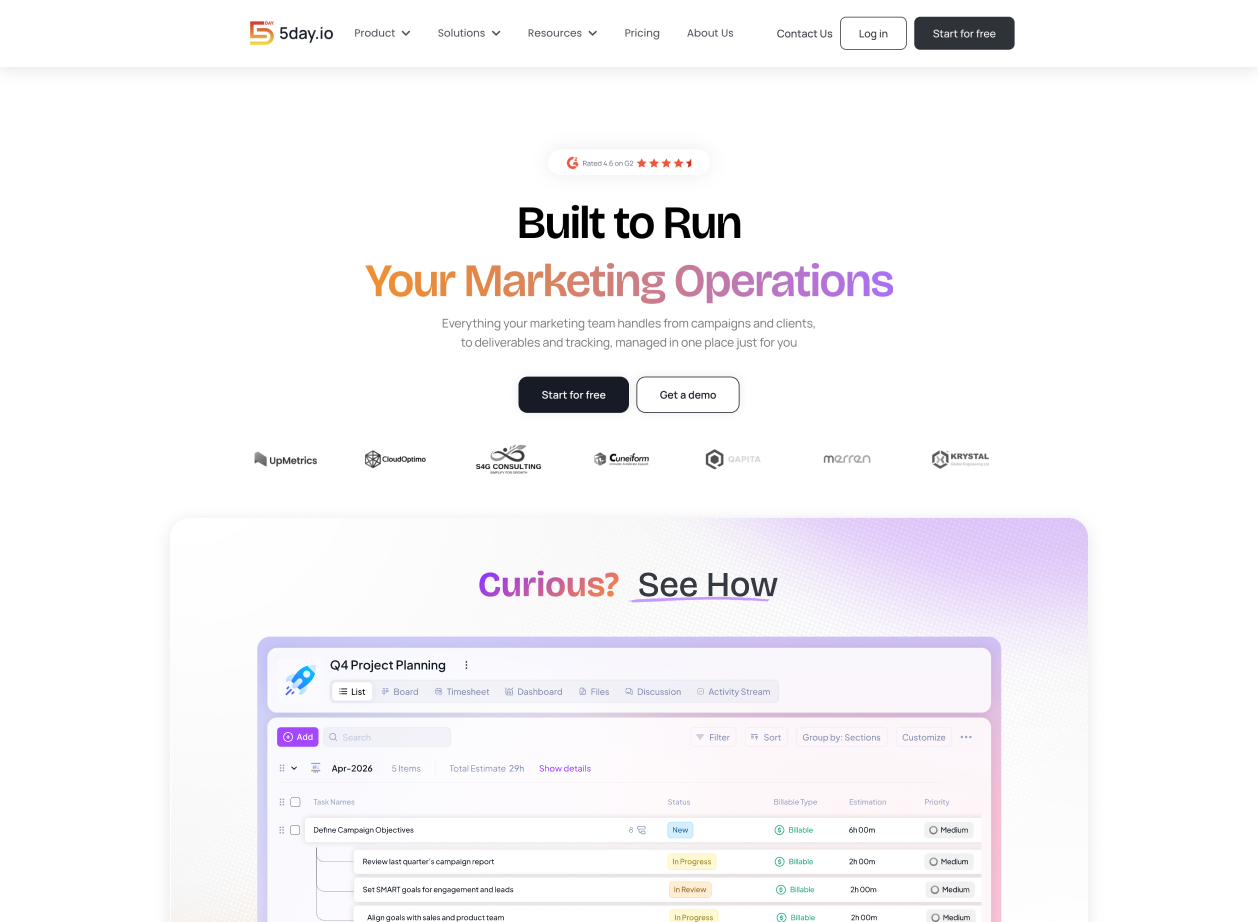
Agency Fit Score: 9.2/10
5day.io is a marketing operations platform built specifically for marketing functions, be it agencies or in-house teams. It is not a general project management tool adapted for marketing teams, but a platform designed from the ground up for them.
The distinction from Productive.io is fundamental rather than incremental. Productive.io is an agency management platform built around project profitability and resource utilization.
On the other hand, 5day.io focuses more on operational concerns of marketing agencies specifically. It includes content pipelines that need calendar views, retainer cycles that map to publishing sprints, campaign workflows that require channel and format context at the task level, all tuned to marketing workflow rather than how teams deliver engineering or design projects.
Most Productive.io Alternatives on this list ask marketing agencies to adapt to them. 5day.io offers to suit the direction agencies are already moving.
Key features for marketing agencies:
- Content calendar and campaign views (List, board, timeline and calendar) designed natively for publishing workflows.
- Tasks carry channel, format, and campaign tags that create immediate visibility into the dependencies without the configuration overhead required to replicate this in Monday.com or ClickUp
- Sprint management for retainer clients with Sprint boards, backlog, story points, and velocity tracking synced to the monthly delivery cycles that define most marketing retainers
- Agencies running content or SEO retainers can manage client work in recurring cycles with defined output
- Native timesheet with billable and non-billable time tracked against tasks and campaigns, synced with time approval workflows for managers (for agencies that bill clients against hours rather than milestones, removing the need for separate Harvest or Toggl subscription)
- AI-powered task management (ACE AI) helps with task writing, AI assignee suggestion, and AI navigation tuned for marketing workflow patterns.
What does 5day.io replace from Productive.io?
5day.io is a marketing agency management platform, with specific features like content calendar and campaign planning, sprint-based retainer management, and timesheet tracking. It offers everything the average marketing agency uses Productive.io for, without the overhead of the features it does not use.
Where does 5day.io fall short?
Resource planning and financial reporting are not 5day.io’s focus. Agencies that used Productive.io primarily as a capacity management and profitability tracking tool will not find a direct replacement for those functions here.
5day.io is the right answer for agencies where marketing execution is the heart of what the platform needs to support.
2026 pricing:
Plan | Billed monthly price |
Starter | $0 (Up to 5 users, 1 workspace, 5 projects) |
Growth | $9.99/user/month |
Scale | $15.99/user/month |
Enterprise | Custom / not listed |
G2 rating: 4.5/5
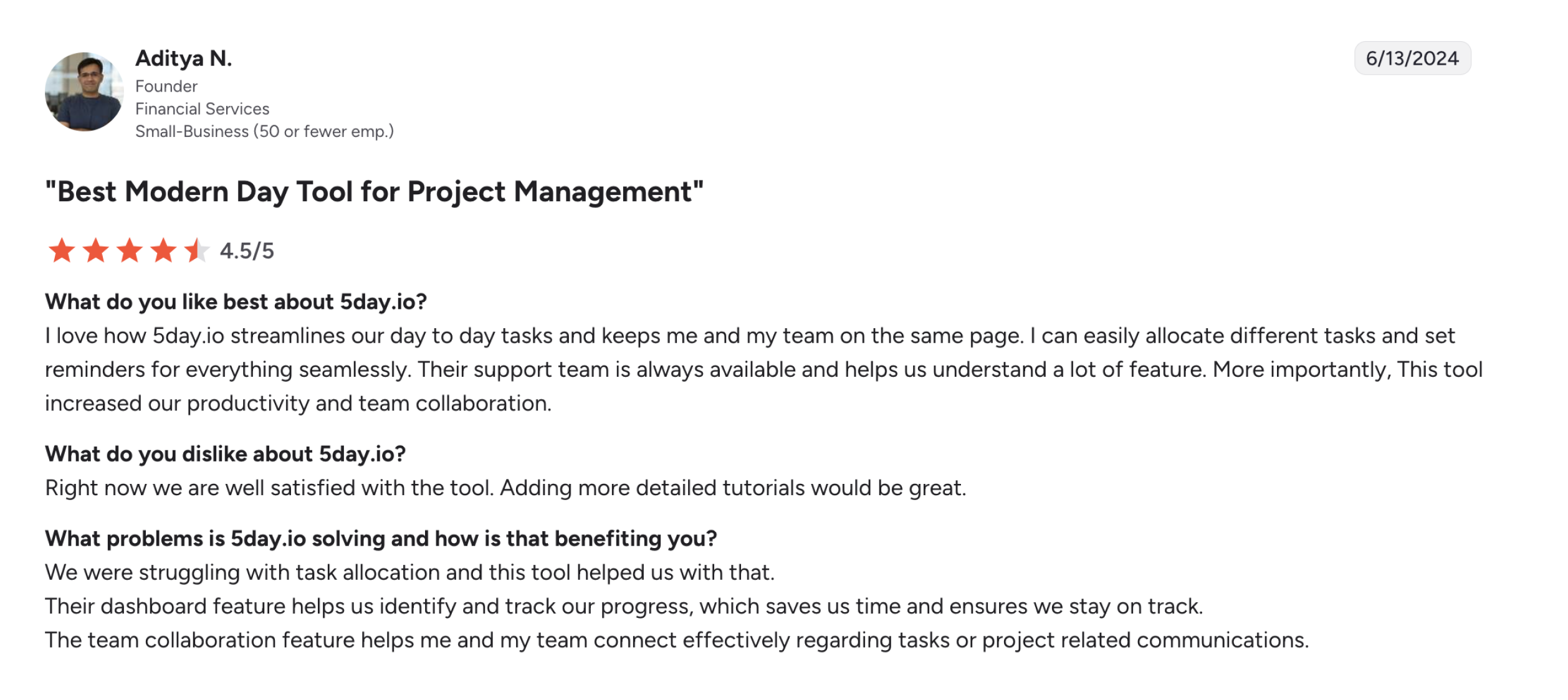
Reviewers consistently highlight ease of use, time tracking, and all-in-one project management as the platform’s standout strengths. The most common feedback requests point to add more integrations with niche marketing tools and deeper customization options for advanced workflows.
Teamwork – Best for client-billing and retainer management
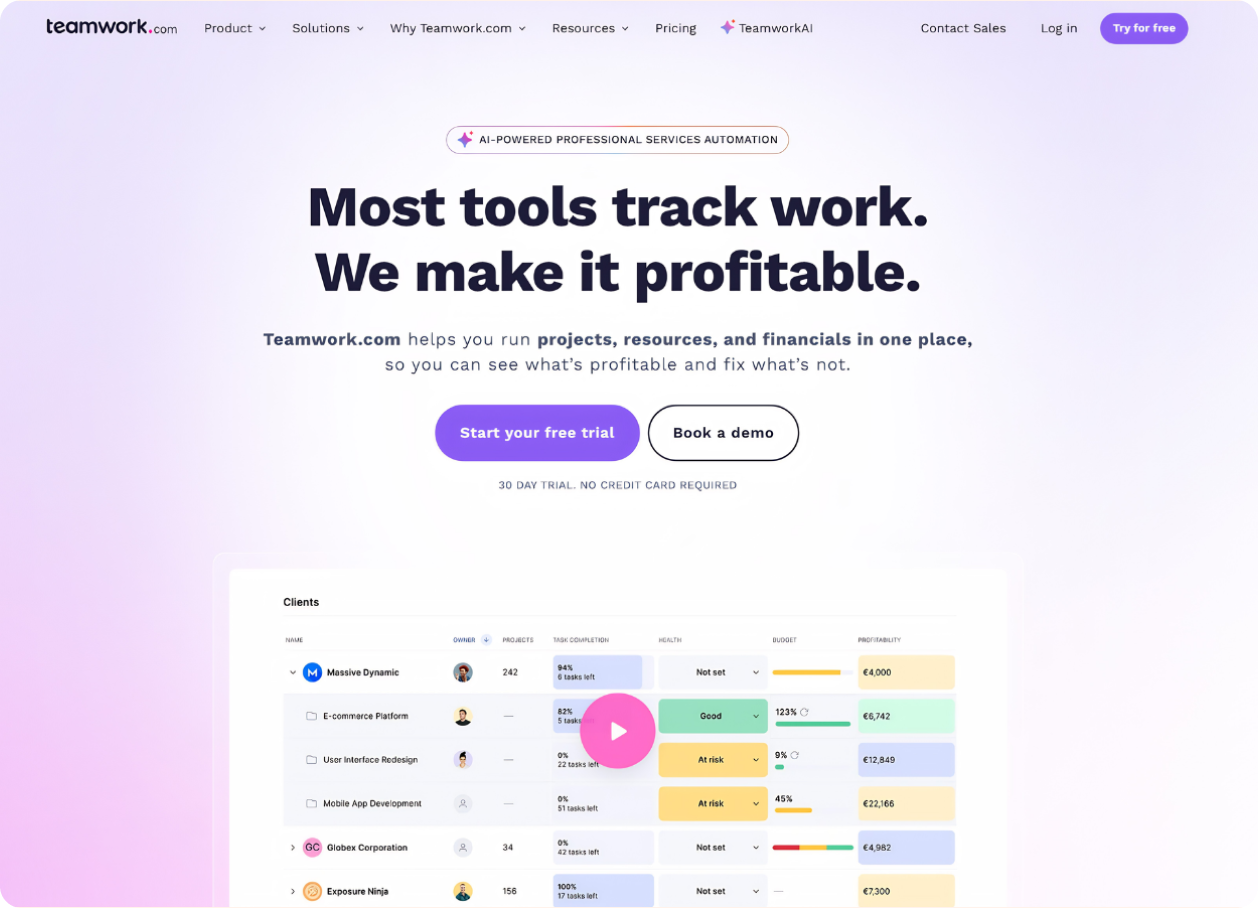
Agency Fit Score: 9/10
Teamwork is a project management platform built specifically for client-facing agency work, combining task management, time tracking, invoicing, and a dedicated client portal in one system.
Of all the tools in this list, Teamwork is the closest to a like-for-like replacement for the billing and client management side of Productive.
Productive.io excels at the internal financial picture, such as margins, resource utilization, and profitability per project. Teamwork matches it on the client-facing side and adds a dedicated portal that Productive’s entry plans do not offer.
For agencies where monthly invoicing and retainer budget tracking are the operational core, the transition from Productive.io to Teamwork involves the least compromise in this aspect.
Key features for marketing agencies:
- Native invoicing with billable hours tied directly to tasks and time logs
- Dedicated client portal to review deliverables and track project status without holding a paid seat
- Retainer budget tracking with overage alerts (best for agencies managing monthly content or campaign retainers, where scope creep is a constant risk)
- Native HubSpot and QuickBooks integrations on core plans
- The Workload view is available below the enterprise tier
What it replaces from Productive.io:
- Billing and invoicing (like-for-like at comparable pricing)
- Client portal (stronger on entry plans than Productive.io)
Where Teamwork falls short:
Resource planning is functional but less sophisticated than Productive. If capacity management and utilization reporting are central to your agency, Teamwork will require a separate tool or a workaround.
It is also not built specifically for marketing workflows, like content calendars and campaign views, are not native. As marketing operations become more complex, teams often find themselves maintaining the system itself. Instead of benefiting from a platform designed to connect the entire marketing function, it makes the process even more complex.
2026 pricing:
Plan | Pricing |
Free plan | $0 (Up to five users, limited features) |
Basic plan | $13.99/user/month |
Accelerate plan | $29.99/user/month |
Optimize plan | Custom |
Enterprise plan | Custom |
G2 rating: 4.4/5
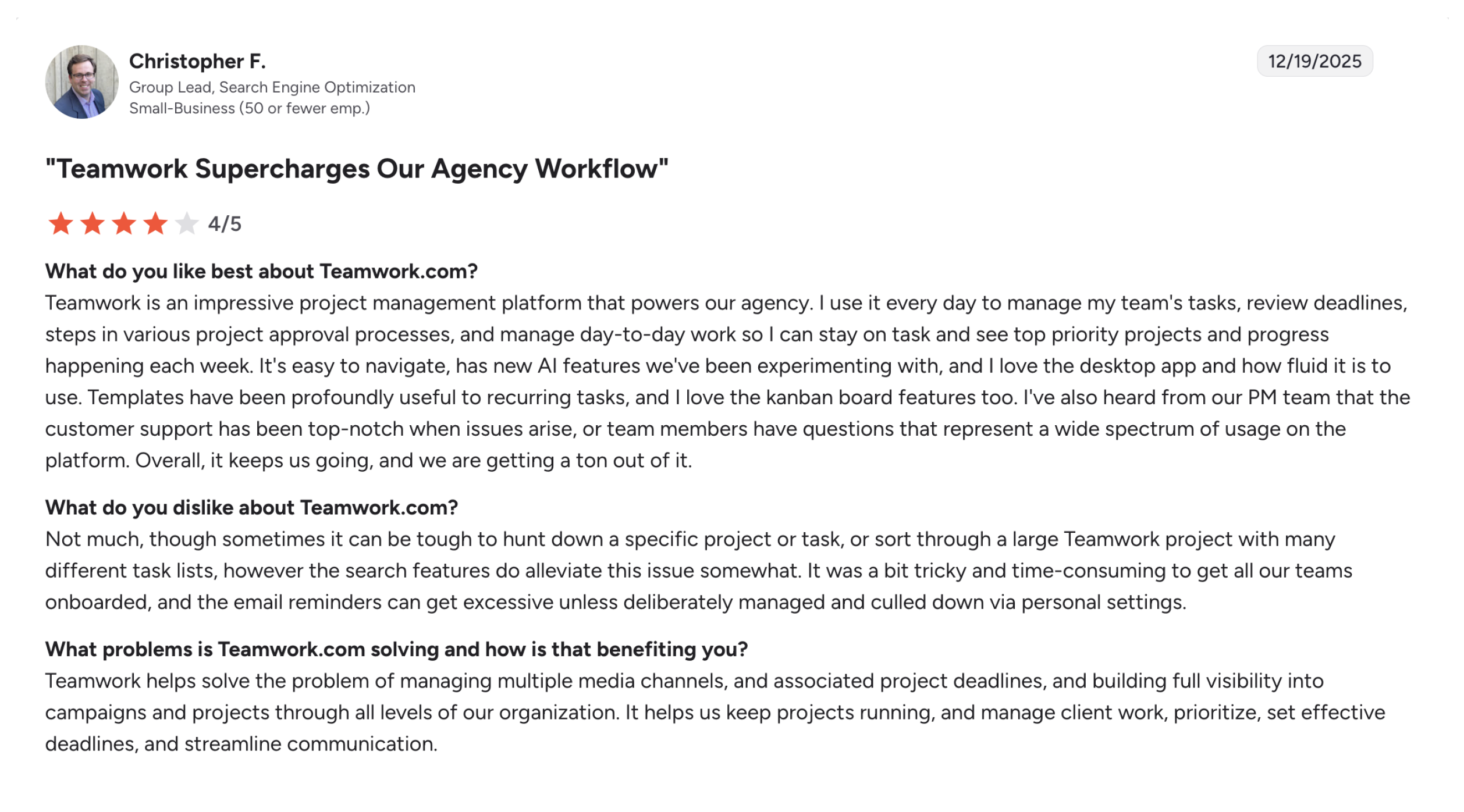
Reviewers consistently highlight billing and client collaboration as strengths; resource planning is the most common gap cited.
Monday.com – Best for multi-client campaign visibility

Agency Fit Score: 8.2/10
Monday.com is a visual work management platform used by marketing agencies to manage multi-client projects, campaign pipelines, and cross-team workflows from a single dashboard.
Where Productive.io organizes work around projects and profitability, Monday.com organizes it around visibility.
For agencies managing five or more simultaneous client campaigns, the ability to see status across all accounts from a single view is Monday’s clearest advantage.
The platform is also an integration-rich tool, which matters for marketing agencies whose workflows span HubSpot, Google Analytics, and social scheduling tools that Productive.io does not natively support.
Key features for marketing agencies:
- Cross-account campaign dashboards (status, deadlines, and blockers) across all active clients without switching between project views
- Over 250 native integrations, including HubSpot, Salesforce, Google Analytics, and most social scheduling platforms
- Monday.com AI formula builder automates repetitive status updates, formula creation in dashboards, and workflow suggestions based on board activity
- WorkDocs for client-facing content sharing and collaborative approval functions as a lightweight client portal
What does it replace from Productive.io?
Multi-client visibility, marketing stack integrations, approval workflows, and team collaboration
Where does Monday.com fall short?
No native invoicing. Billing requires a QuickBooks, FreshBooks, or Xero integration, which adds a tool and a sync point.
Resource planning is available only on higher tiers; agencies coming from Productive.io specifically for capacity management will find the standard plans thin here.
The platform’s flexibility is also a setup cost; building it to fit an agency’s specific workflows takes time and a willing admin.
2026 pricing:
Plan | Pricing |
Free plan | $0 (Up to 2 seats) |
Basic plan | From $12/seat/month |
Standard plan | $14/seat/month |
Pro plan | $24/seat/month |
Enterprise plan | Custom |
G2 rating: 4.7/5
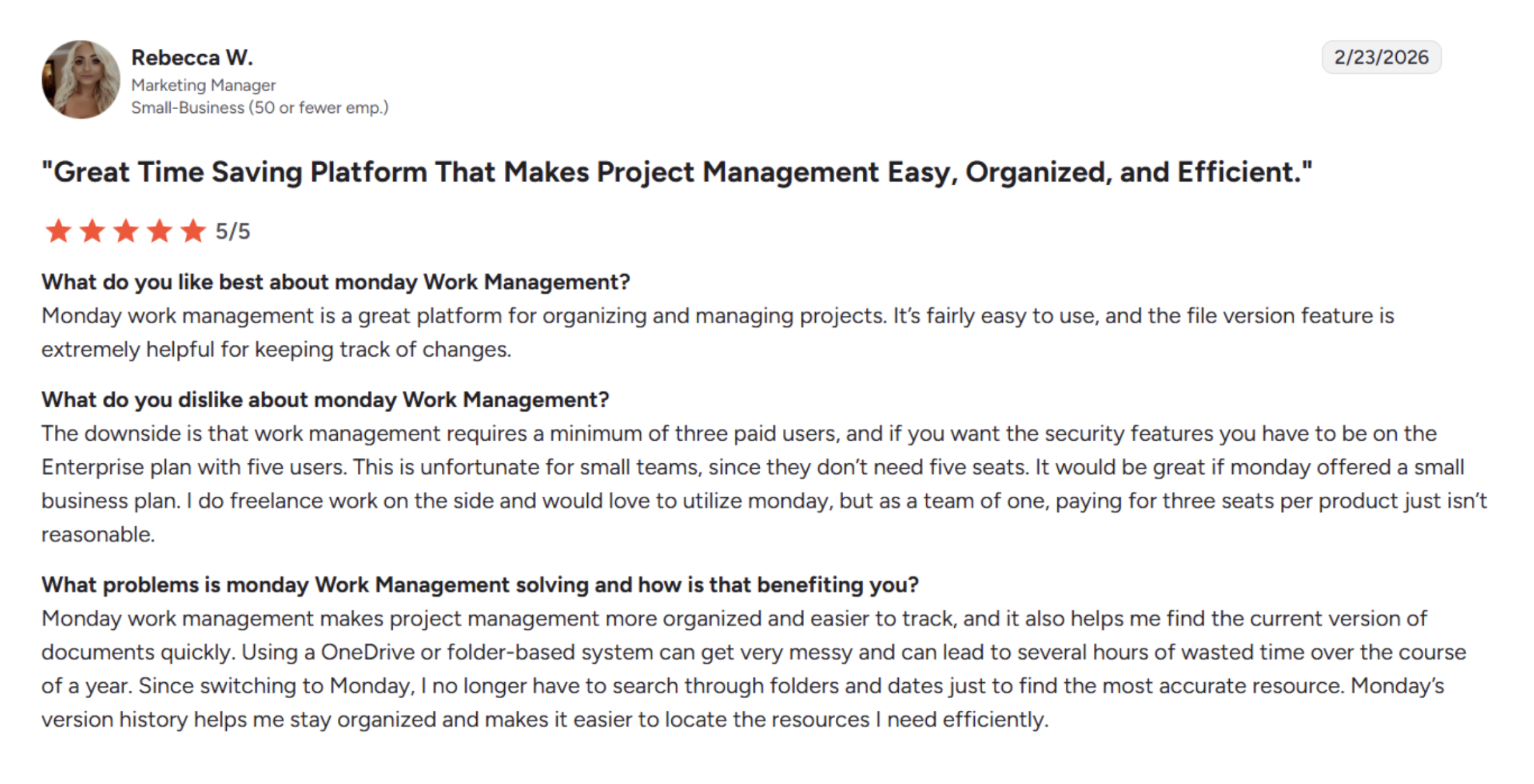
Reviewers cite ease of use and integration breadth as primary strengths. On the other hand, reviewers pointed out that billing and resource planning gaps appear consistently.
ClickUp – Best for agencies wanting an all-in-one platform
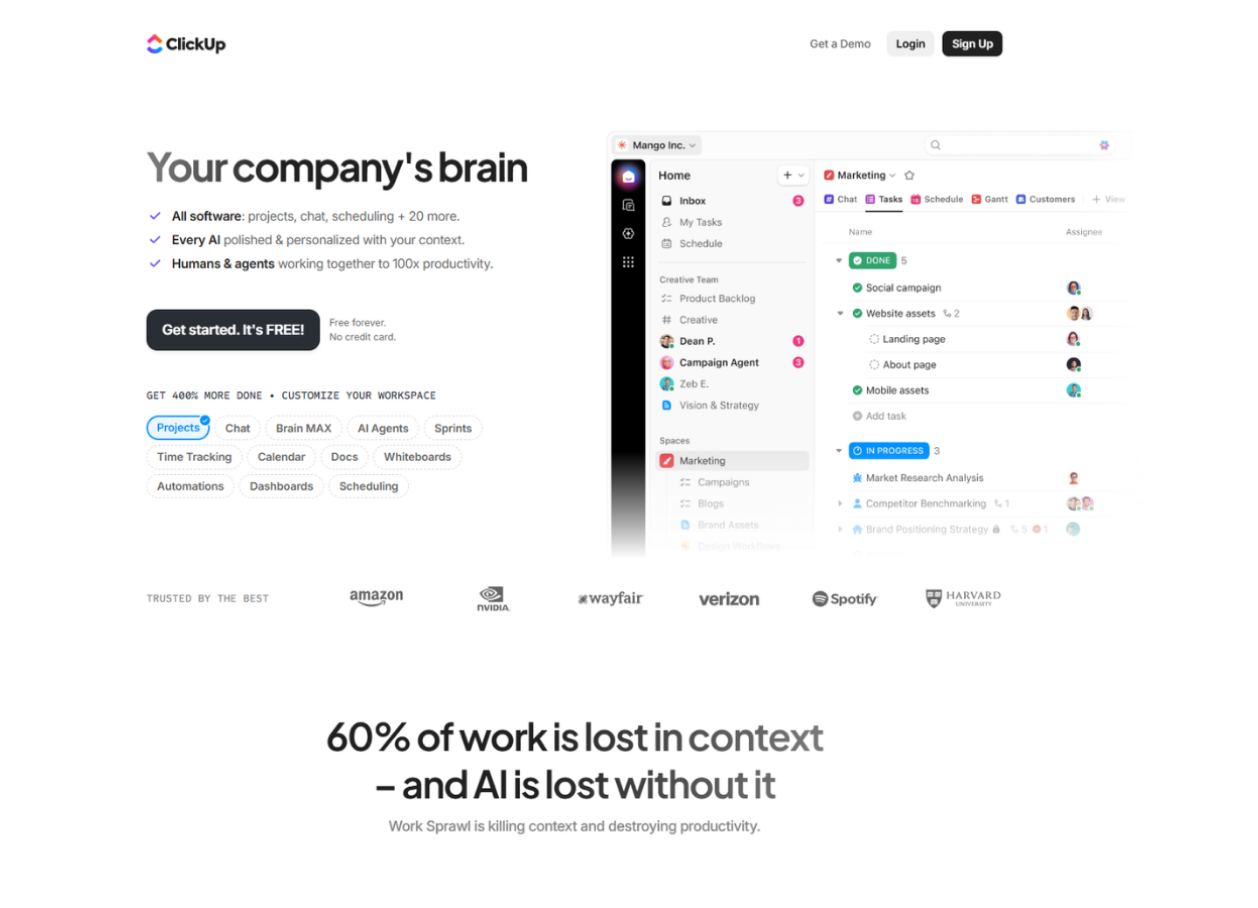
Agency Fit Score: 8.3/10
ClickUp is a customizable all-in-one work management platform that agencies use to combine project management, documents, goals, time tracking, and reporting into a single workspace.
ClickUp’s pitch to Productive.io switchers is straightforward: more flexibility, lower cost, one tool instead of several. The free tier is available with unlimited users and tasks, which makes it a practical entry point for smaller agencies that cannot justify Productive’s per-seat pricing.
Key features for marketing agencies:
- Flexible guest access for clients and stakeholders, helping agencies collaborate externally without purchasing a full paid seat for every participant
- ClickUp AI writing assistant generates task descriptions, summarizes project updates, drafts meeting notes, and surfaces action items from comments
- Native time tracking with billable rate fields
- Guest access for client collaboration without a full paid seat
- List, board, calendar, Gantt, and workload views all available without plan-tier gating
What does ClickUp replace Productive.io?
Task management, time tracking, dashboards, and team documentation in one platform
Where ClickUp falls short?
Resource planning is basic. ClickUp’s workload view shows task volume but lacks the utilization forecasting and capacity management depth that Productive.io offers. Billing requires a third-party integration. The platform’s depth is also its learning curve, as new hires take longer to reach productivity than on simpler tools like 5day.io, Asana, or Basecamp.
2026 pricing:
Plan | Pricing |
Free plan | $0 (Unlimited users and tasks) |
Unlimited plan | $10/user/month |
Unlimited plan | $19/user/month |
Enterprise plan | Custom |
G2 rating: 4.6/5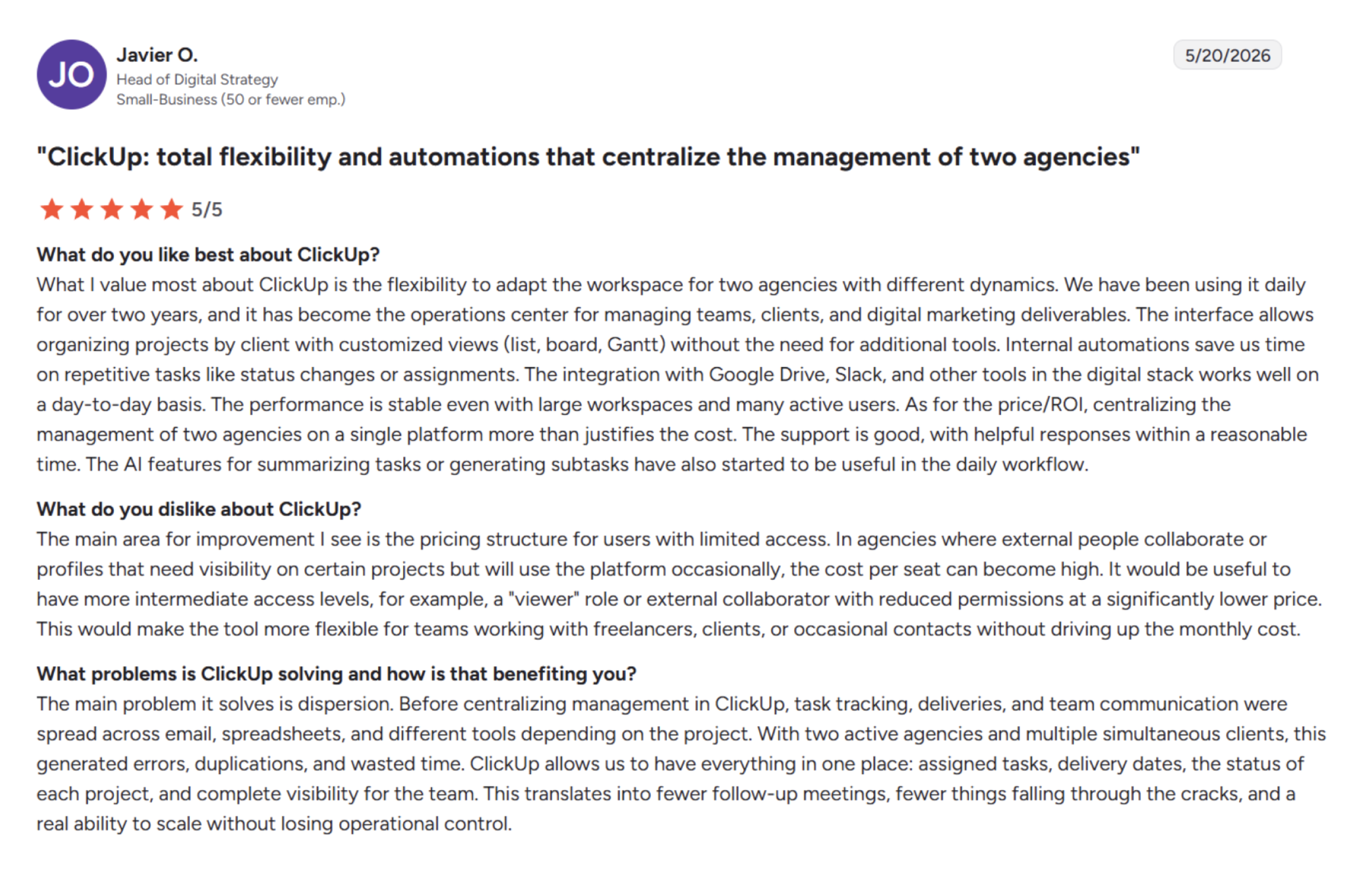
Reviewers highlight feature breadth and value at price. Setup complexity and occasional performance issues on large workspaces appear regularly in critical feedback.
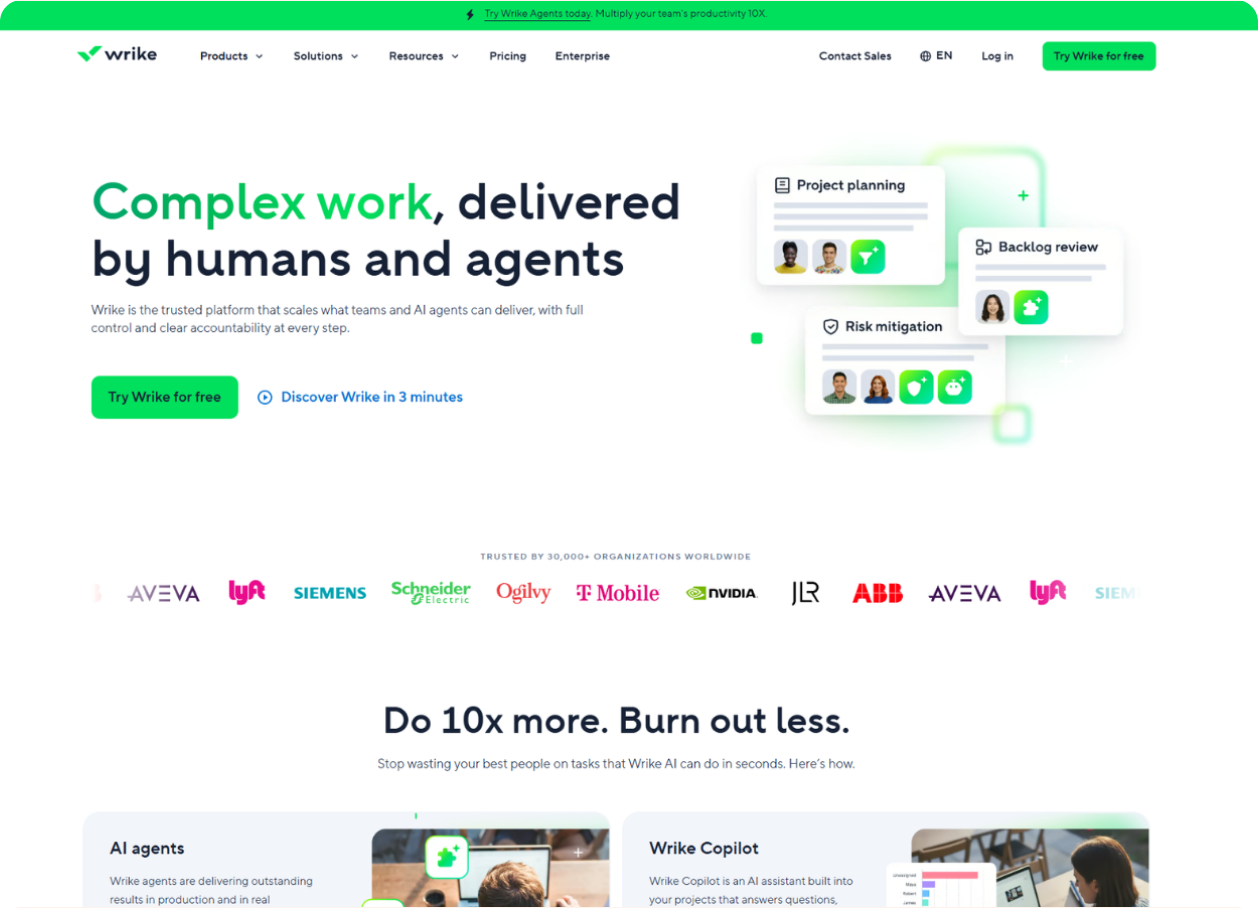
Wrike – Best for complex inter-team marketing workflows
Agency Fit Score: 8/10
Wrike is an enterprise work management platform used by larger marketing teams and agencies that need advanced resource management, creative proofing, and cross-departmental workflow automation at scale.
Wrike is the tool with matching Productive.io’s resource planning depth. Where Productive.io combines resource planning with financial management, Wrike combines resource planning with creative operations.
For agencies where proofing assets, routing approvals, and managing external collaborators on large campaigns are daily functions, Wrike is a decent option.
Key features for marketing agencies:
- Wrike Work Intelligence AI layer covers risk prediction, smart task suggestions, automated status updates, and workload anomaly detection
- Advanced resource management with workload balancing and availability forecasting
- Creative proofing and asset review workflows with markup tools, version control, and approval chains built specifically for creative deliverables
- External collaborator access without full paid seats
- Gantt charts and task dependencies for complex, multi-phase project delivery
What does Wrike replace from Productive.io?
Resource planning (comparable depth for large teams), approval workflows (stronger for creative assets), capacity management
Where Wrike falls short?
No native billing or invoicing. Agencies coming from Productive.io specifically for the financial layer will need a separate tool. Pricing scales steeply at higher tiers and is best justified for teams of twenty or more.
For smaller marketing agencies, the enterprise feature set adds overhead without proportional value.
2026 pricing
Plan | Monthly billing |
Free | $0 |
Team | $10/user/month |
Business | $25/user/month |
Pinnacle | Custom |
Apex | Custom |
G2 rating: 4.2/5
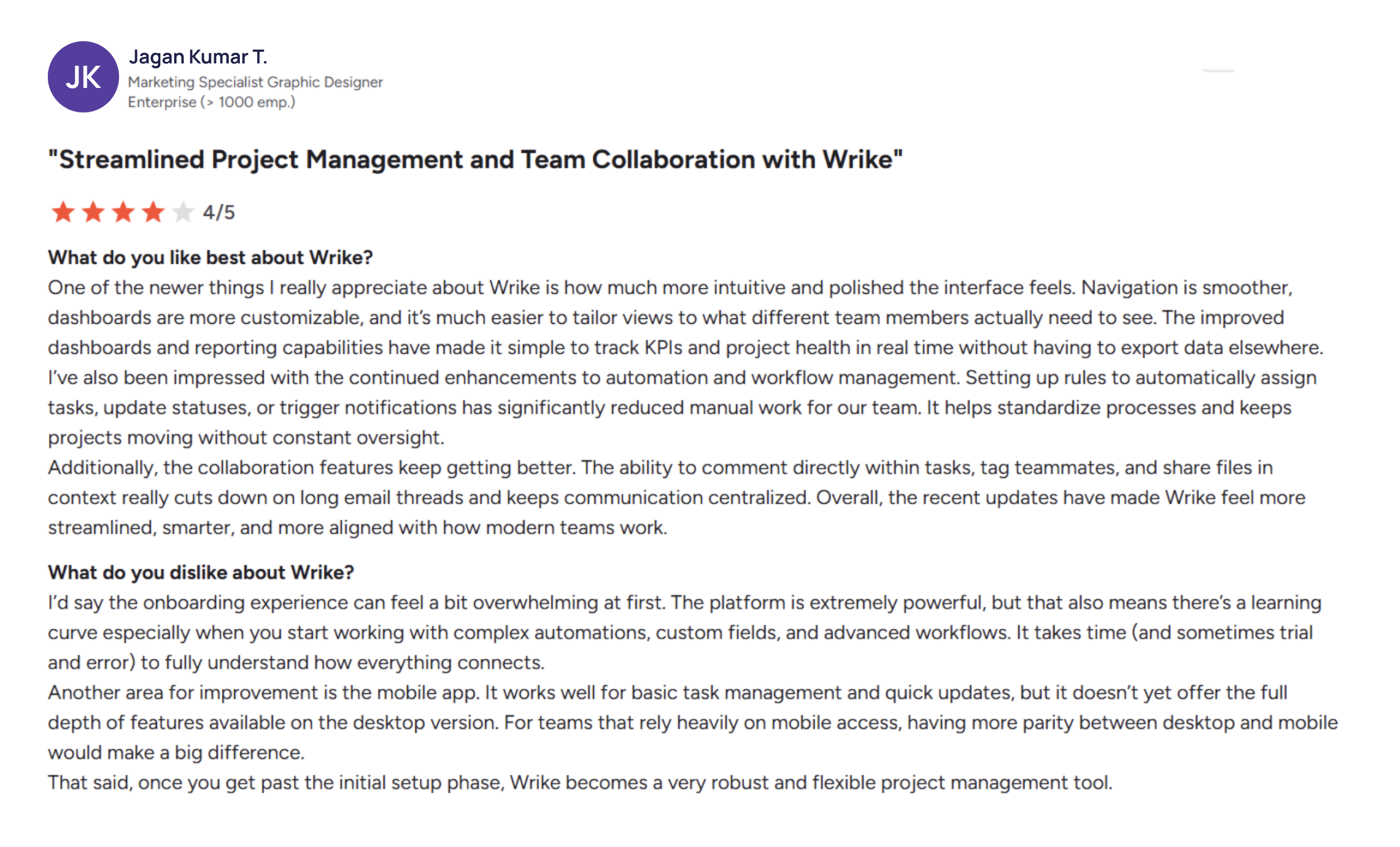
Resource management and creative review are consistently cited as strengths; pricing and complexity at scale are the most common criticisms.
Asana – Best for structured approval workflows
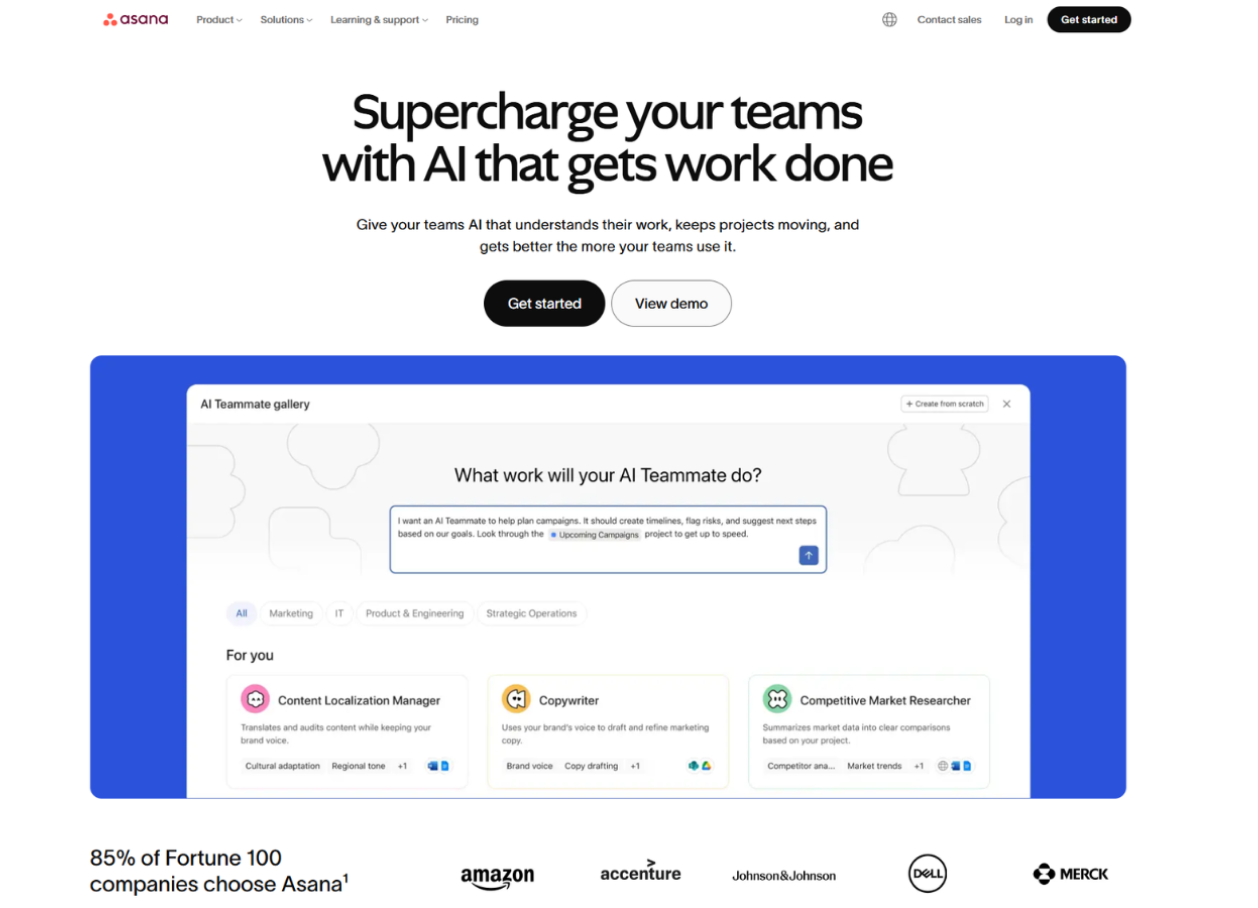
Agency Fit Score: 7.5/10
Asana is a task and project management platform known for its clean interface and structured workflow management. Marketing teams use it for campaign tracking, content pipelines, and cross-functional project coordination.
Asana does not try to replace Productive.io feature-for-feature. It is a simpler tool with a narrower scope. It helps teams get up and running quickly and maintain structured workflows without requiring significant configuration.
For agencies where Productive.io’s steep onboarding curve has been a recurring operational cost, Asana’s interface is simple and easy to use. New hires reach full productivity in days rather than weeks. That is a real operational advantage for agencies with any staff movement.
Key features for marketing agencies:
- Clean UX with low ramp-up time for new team members
- Free plan for up to fifteen users, a good option for small agencies moving off Productive’s paid plans
- Timeline and Gantt views for campaign planning and editorial calendars
- Strong template library for marketing workflows, including campaign briefs, content approvals, and launch checklists
- Asana Intelligence offers AI-powered status summaries, goal tracking, and workflow recommendations on paid plans
What does Asana replace from Productive.io?
Task management, approval workflows, campaign planning, and cross-functional coordination
Where does Asana fall short?
No native billing or invoicing, like Monday.com and ClickUp, agencies need a third-party tool for any financial layer. Resource planning is basic and not meaningful to the depth that Productive.io users like. The free plan’s feature restrictions mean agencies managing complex retainer workflows will need to be on a paid tier.
2026 pricing
Plan | Billed monthly price |
Personal | $0 (Up to 10 users) |
Starter | $13.49/user/month |
Advanced | $30.49/user/month |
Enterprise | Custom |
Enterprise+ | Custom |
G2 rating: 4.4/5
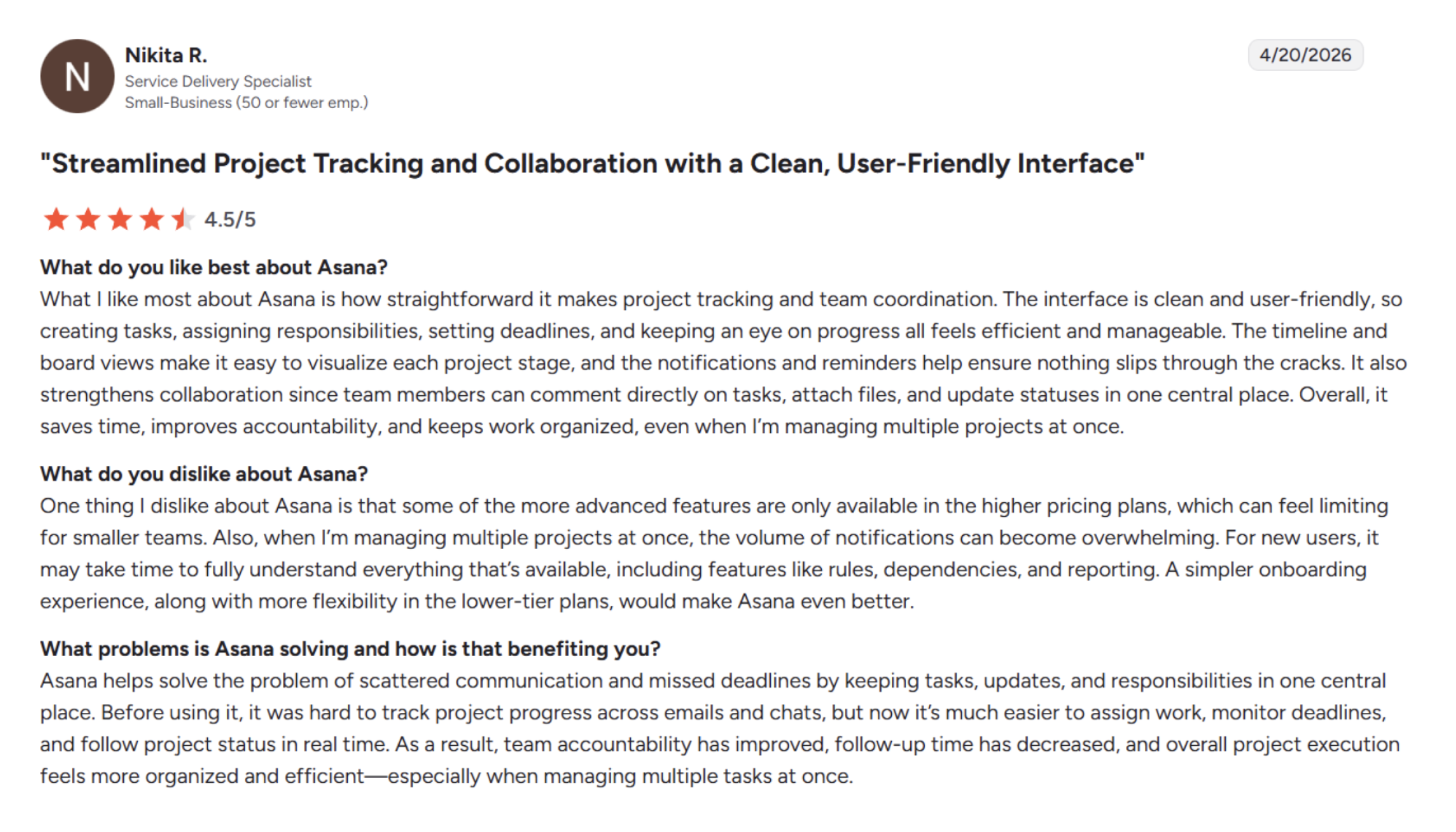
Ease of use and task management clarity are the most cited strengths. Billing, resource planning, and reporting depth are the consistent gaps.
Float – Best for resource planning and capacity management
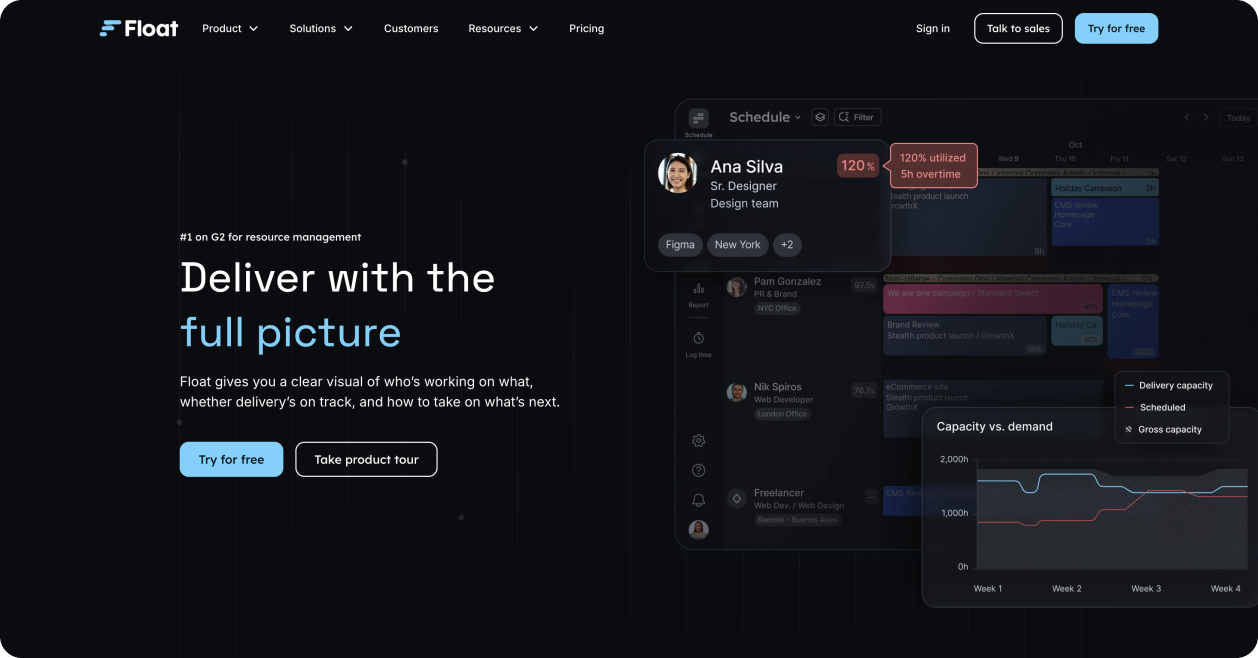
Agency Fit Score: 7/10
Float is a dedicated resource planning and capacity management tool for agencies and studios. It offers real-time visibility into team workload and project allocation.
Float earns its place on this list not as an all-in-one replacement for Productive.io but as a recommendation for a specific type of Productive.io user. It’s a good tool for an agency that chose Productive for its capacity management and cannot find an adequate replacement in any general PM tool.
In short, Float is purpose-built for resource planning first, with everything else secondary.
Key features for marketing agencies:
- Purpose-built capacity and scheduling with availability forecasting, utilization rate tracking, etc.
- Timeline-based workload view with drag-and-drop reallocation across projects and clients
- Integrates natively with Harvest for time tracking and invoicing
- Role-based scheduling for agencies managing a mix of permanent staff and freelancers
- API access for agencies that need to connect Float’s resource data to broader operational dashboards
What does Float replace from Productive.io?
Resource planning and capacity management (matched or exceeded).
Where Float falls short?
Float is not a full project management tool. It only handles resource planning and scheduling. Task management, project delivery, and billing all require additional tools.
For agencies switching from Productive.io specifically for its integrated experience, adding Float means adding complexity rather than removing it. The Float + Harvest + a PM tool combination works well operationally but costs more and requires more administration than Productive.io alone.
2026 pricing:
Plan | Billed monthly price |
Starter | $7/user/month |
Pro | $12/user/month |
Enterprise | Custom |
No free plan is available for small agencies looking to test the tool.
G2 rating: 4.3/5
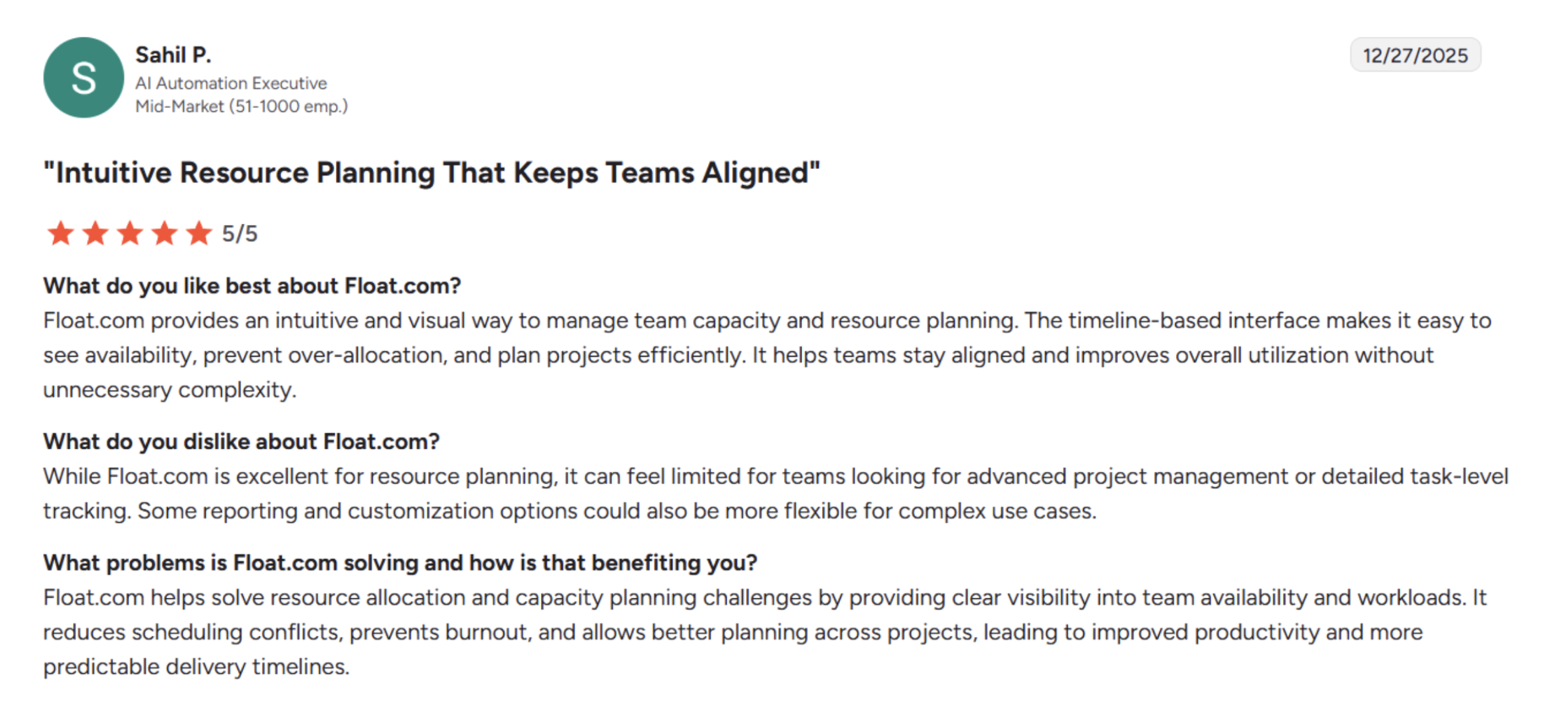
Reviewers praise its resource planning depth and visual scheduling. Absence of project management features and the need for companion tools are the most cited limitations.
Scoro – Best for full agency business management (PM + finance)
Agency Fit Score: 9/10
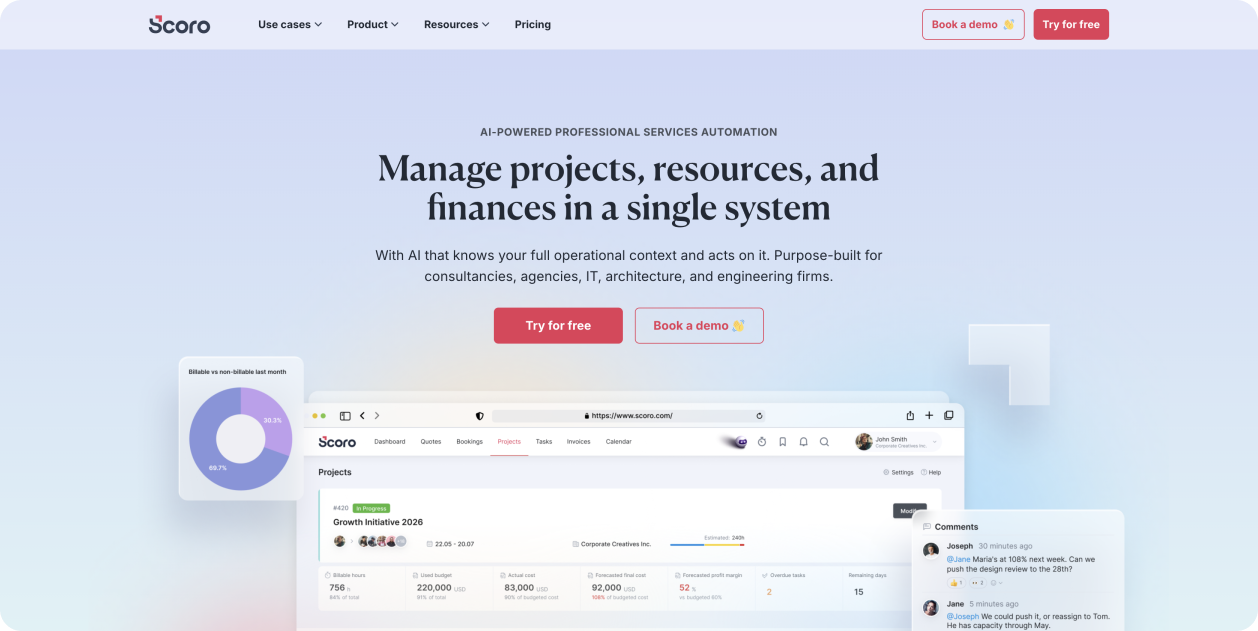
Scoro is an all-in-one business management platform for agencies that combines project management, CRM, quoting, invoicing, financial reporting, and resource planning.
If Productive.io’s financial layer is the primary reason an agency chose it, and the reason they are hesitant to leave, Scoro is matching that depth. Where Productive.io offers project profitability and billing, Scoro extends that into a full CRM and sales pipeline, quoting and proposal workflows, and financial reporting that rivals dedicated accounting platforms.
But the tradeoff is its pricing, making it the most expensive tool on the list.
Key features for marketing agencies:
- CRM, quoting, invoicing, and financial reporting in one platform
- Project budgeting with real-time margin tracking
- Resource planning with workload and utilization views that are comparable in depth to Productive.io
- Retainer management with recurring invoice automation
- Detailed time tracking with billable and non-billable split across projects, clients, and team members
What does Scoro replace from Productive.io?
Everything — Scoro is the most direct like-for-like replacement for finance-first agencies and goes further on the CRM and quoting side.
Where Scoro falls short?
Cost. At $19.90/user/month on the Core plan, Scoro is the most expensive tool on this list and considerably more than Productive.io at comparable seat counts. It is also the heaviest to implement. The platform’s depth requires meaningful setup investment.
For marketing agencies where the financial layer is secondary to campaign execution, most of Scoro’s capabilities will go unused. This is the right tool for the right agency, and a significant overkill for many.
2026 pricing:
Plan | Billed monthly price |
Core | $19.90/user/month |
Growth | $32.90/user/month |
Performance | $49.90/user/month |
Enterprise | Custom |
G2 rating: 4.5/5

Financial depth and all-in-one coverage are consistently cited as primary strengths. Pricing and implementation complexity are the most common criticisms.
Notion – Best for knowledge management + light project tracking
Agency Fit Score: 6.5/10
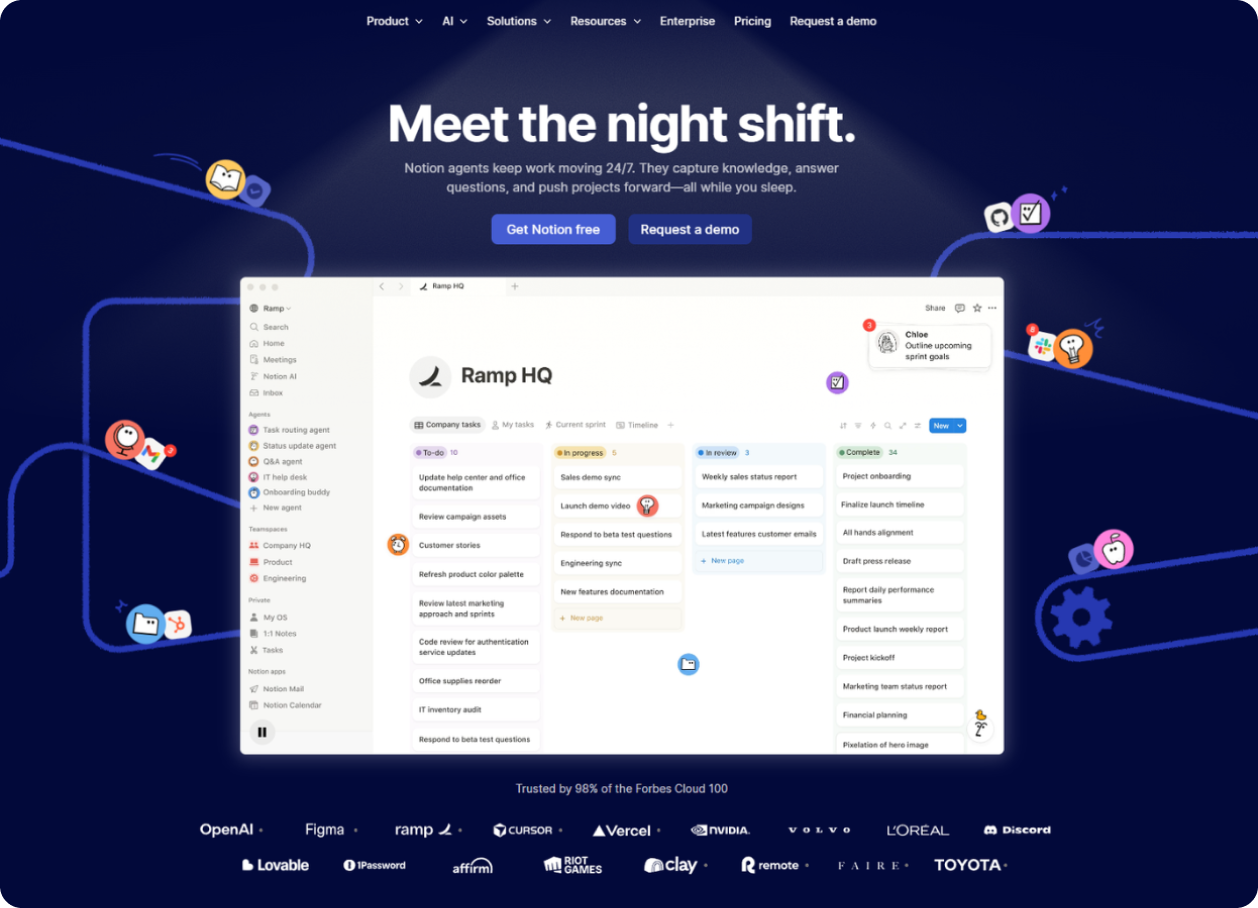
Notion is a flexible workspace platform that combines notes, databases, wikis, and lightweight project tracking. Often, small and lean agencies use this as an all-in-one knowledge base and task management system.
Notion is the most honest inclusion on this list because it is not a Productive.io replacement in any meaningful sense for most agencies, and including it without saying so would be doing readers a disservice.
What it is, for a specific and narrow agency profile, is a genuinely useful alternative: the solo consultant or very small agency (one to four people) where knowledge management, client briefs, and SOPs are as important as task tracking, and where billing and resource planning are not daily concerns.
Key features for marketing agencies:
- Notion AI document drafting generates briefs, summarizes meeting notes, drafts proposals, and creates structured documents from raw inputs
- Flexible database views, such as table, board, calendar, and gallery, adaptable to content tracking, campaign planning, and client management
- Wiki-style knowledge base for agency SOPs, client brand guidelines, creative briefs, and onboarding documentation
- Generous free plan with practical individual limits
- Less expensive than Productive.io at any team size
What does Notion replace from Productive.io?
Task management and knowledge management for very small, lean agencies where simplicity is the priority
Where does Notion fall short?
There is no billing. There is no invoicing or resource planning. It doesn’t offer a meaningful client portal. Notion is not an agency management platform; instead, it is a knowledge and productivity tool that some agencies use for light project tracking alongside other dedicated tools.
For any agency with three or more active clients and a billing cycle to manage, Notion as a Productive.io replacement is not a practical proposition.
2026 pricing
Plan | Billed monthly price |
Free | $0 |
Plus | $12/user/month |
Business | $24/user/month |
Enterprise | Custom |
G2 rating: 4.6/5
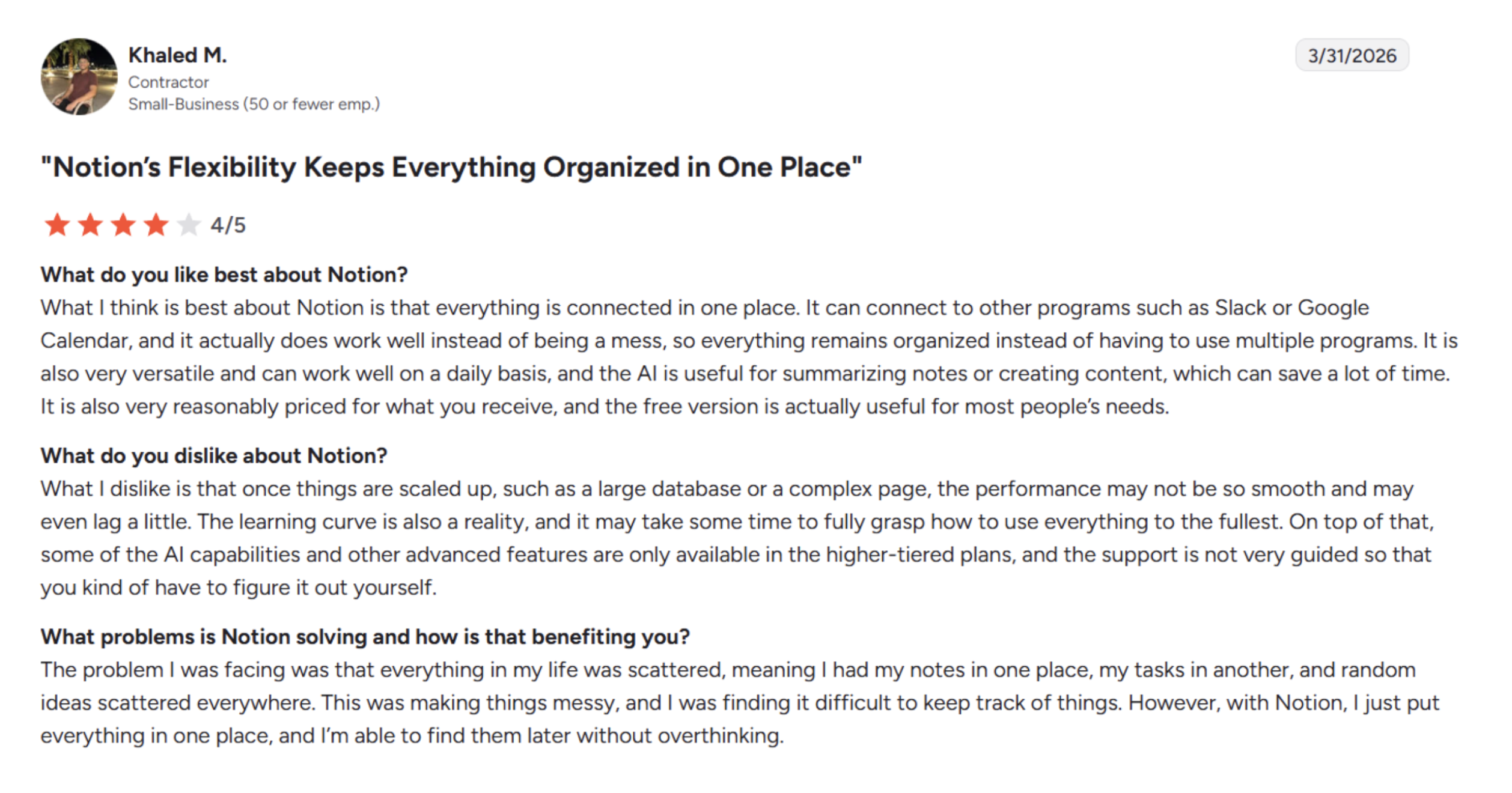
Users often praise Notion for its flexibility and document management. Most people found the absence of project management depth and reporting as recurring limitations.
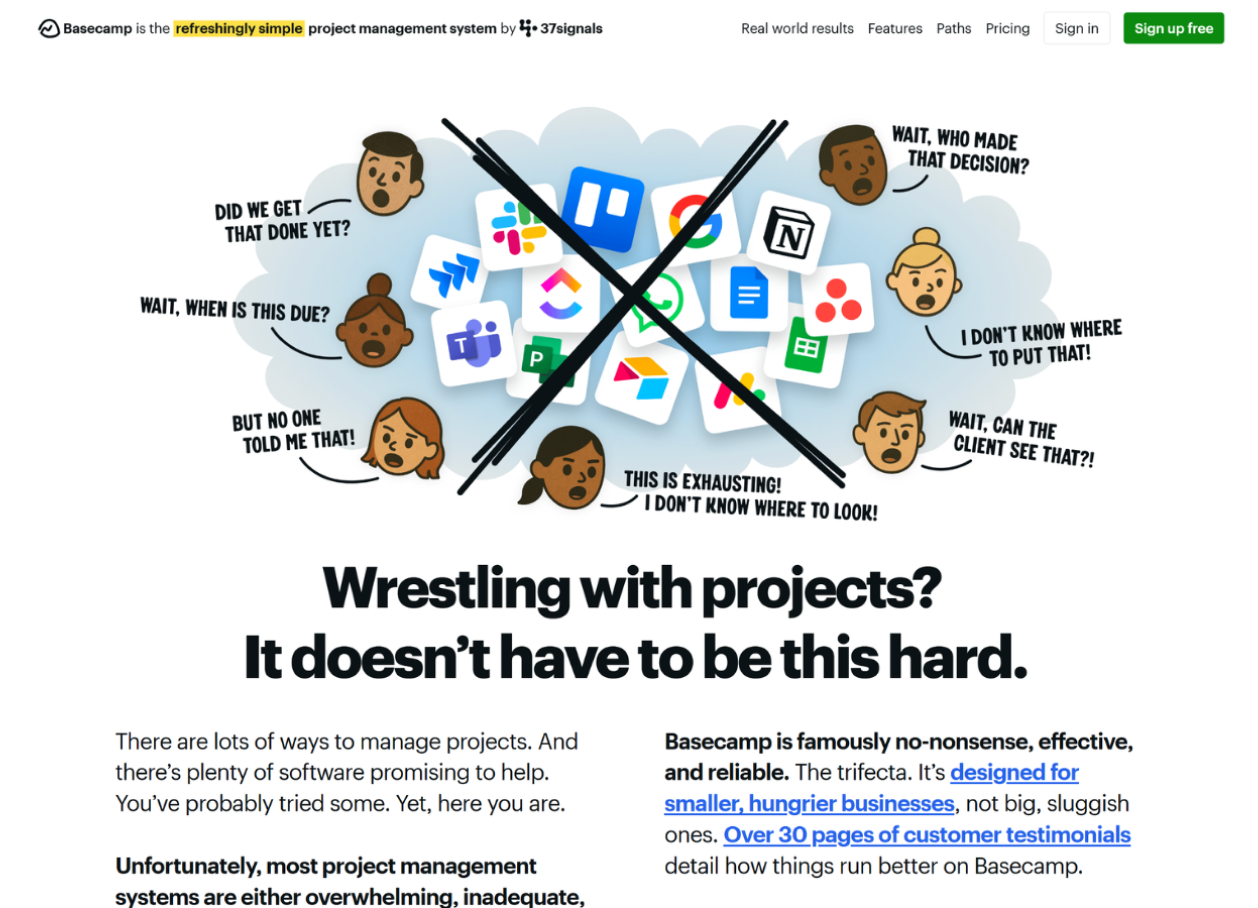
Harvest + Basecamp – Best budget combo for time tracking + PM
Agency Fit Score: 7/10
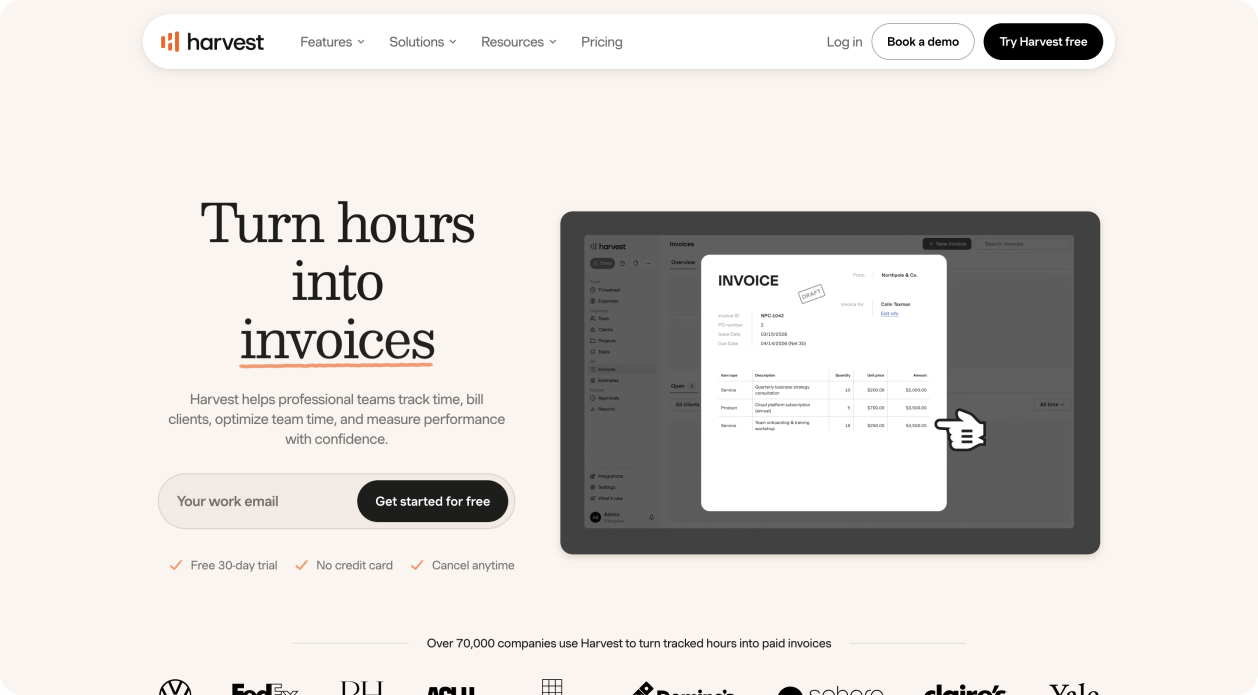
Basecamp is a simple project management and team communication platform. Most agencies combine it with Harvest (time tracking and invoicing) for predictable pricing and functional billing without committing to an enterprise platform.
The Basecamp + Harvest combination solves the two things agencies typically need from Productive.io: project coordination and billing. Basecamp is intentionally simple. Harvest is genuinely good for standalone time tracking and invoicing.
Key features for marketing agencies:
- Basecamp’s $299/month flat rate covers unlimited users
- Harvest is more mature than most native PM tool billing layers
- Client sections in Basecamp allow sharing of updates, files, and discussions with clients without a formal portal infrastructure
- Simple, opinionated interface that requires minimal configuration and low onboarding overhead for new hires
- Predictable total cost regardless of team growth, which is useful for agencies modelling operational costs twelve months out
What does Basecamp + Harvest replace from Productive.io?
Project coordination and billing as a two-tool combination that covers both functional areas without deep integration between them.
Where does Basecamp + Harvest combination falls short?
Two tools means two systems and manual context-switching — time logged in Harvest does not automatically connect to project status in Basecamp. There is no resource planning in either tool. Basecamp’s simplicity is also its ceiling — complex campaign workflows, dependencies, and multi-client reporting are not well-served by the platform’s deliberately limited feature set. For agencies that have outgrown simple project lists, this combination will feel like a step backward in operational sophistication even as it solves the pricing problem.
2026 pricing
Basecamp
Plan | Billed monthly price |
Free | $0 |
Plus | $15/user/month |
Pro Unlimited | $349/month |
Harvest
Plan | Billed monthly price |
Free | $0 |
Pro | $13.75/seat/month |
Premium | $17.50/seat/month |
Enterprise | Custom |
G2 ratings: Basecamp 4.1/5, Harvest 4.3/5
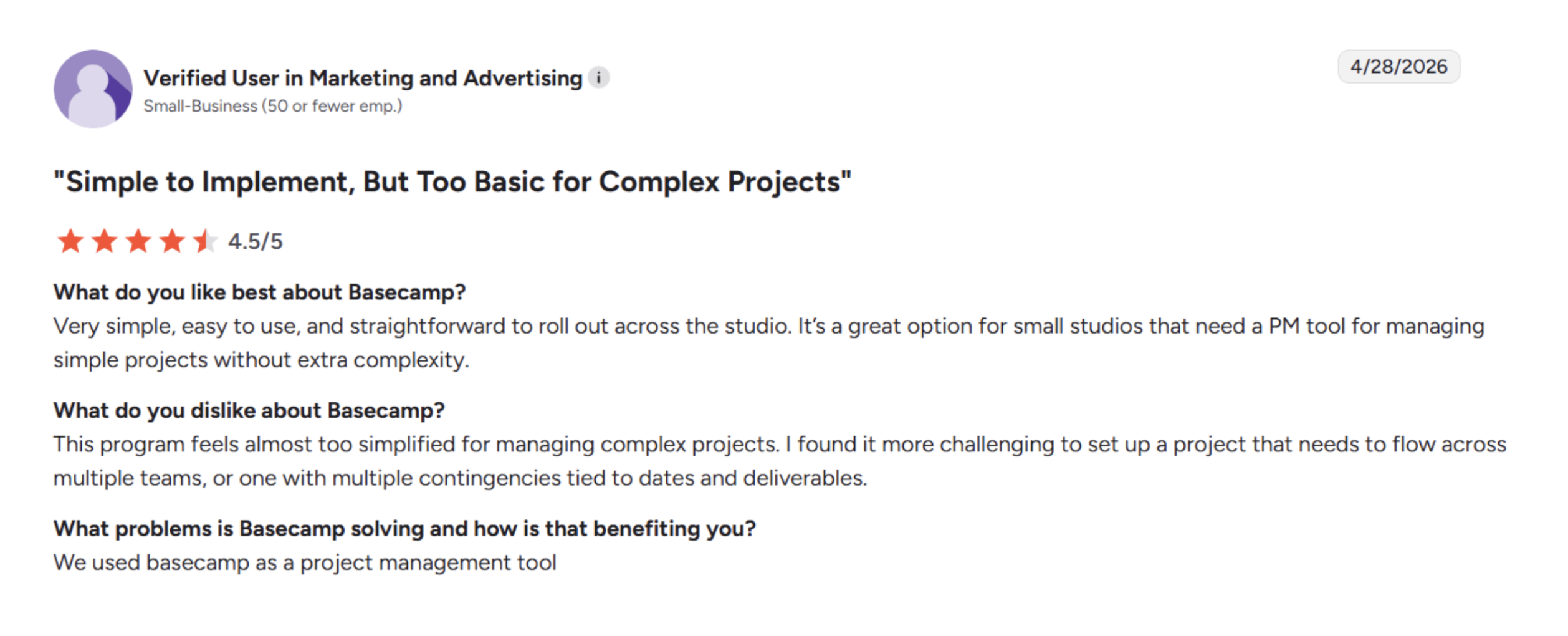
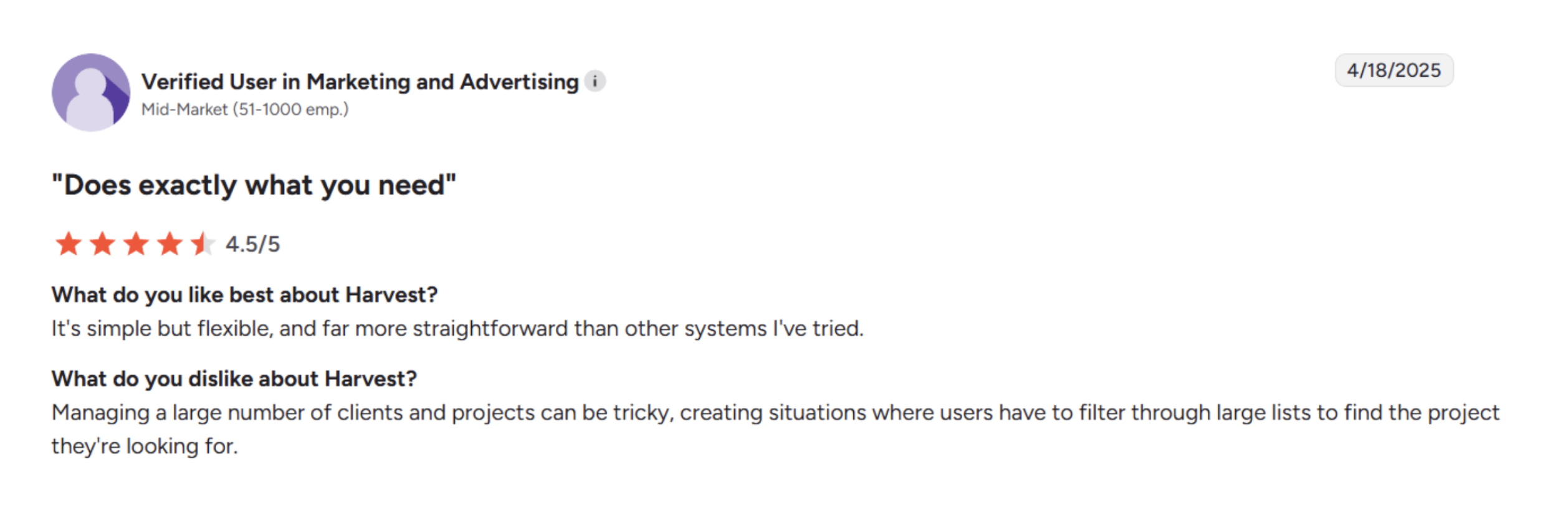
Both tools are rated highly for simplicity and reliability; both are consistently criticized for limited depth in areas their design intentionally does not address.
Feature-by-Feature comparison: Productive.io vs. top alternatives
Productive.io is strong across several features that matter to agencies. Now, let’s find out whether the best alternatives to Productive.io beat it on the features your agency uses most, and also cover the rest of the operational surface adequately.
Resource planning and capacity management
Productive’s resource planning is one of the most complete in its price category. Most general project management tools treat resource management as a workload view. Productive.io goes further, tracking utilization rates, availability forecasting, and scheduled capacity against booked project work in real time.
For marketing agencies, the more relevant question is whether resource planning is the operational function they need to replace, or whether it was simply part of a platform they were using for other reasons.
For agencies where the core work is campaign execution, content delivery, and retainer management, 5day.io champions those workflows directly. Agencies that moved to Productive.io for its project management and found the resource planning layer underused are core users of 5day.io.
Time tracking and billable hours management
Productive handles time tracking as an integrated part of its billing layer.
As a marketing teams project management tool, 5day.io approaches time tracking as a native marketing workflow function rather than a financial management layer. Teams can track billable and non-billable hours against campaigns and tasks, time approval workflows are available for managers, and client-side billing verification. For marketing agencies billing against hours and feeding clean time records into Xero, QuickBooks, or FreshBooks at month end, 5day.io covers the full workflow without requiring a separate Harvest subscription. Teamwork offers the closest native equivalent. For agencies switching from Productive.io specifically because of billing needs, Teamwork’s time tracking layer may make more sense.
ClickUp and Asana both include time tracking features, but neither connects time logs to invoicing natively. Billing still requires a third-party tool.
Client portal and approval workflows
Productive.io’s client portal is one of its more notable limitations on entry plans, which forces agencies to upgrade or find workarounds for sharing work status and getting approvals. This is one of the more cited reasons agencies evaluate alternatives.
5day.io includes client access within the platform, allowing them to review deliverables, track campaign progress, and stay informed on project status without holding a full paid seat. For content agencies, social media agencies, and SEO teams where client visibility centers on campaign delivery and content approval rather than complex project financials, this covers the practical scope of what most marketing agency client relationships need from a portal without the overhead of a dedicated client portal infrastructure.
Teamwork offers a dedicated client portal. Clients get their own view (project status, deliverables, files, and conversations) without requiring a paid seat or access to internal team workflows.
Financial reporting
Scoro exceeds Productive.io on financial depth. Its reporting covers project profitability, team utilization, pipeline value, invoice status, and expense tracking in a single financial dashboard. For finance-first agencies, Scoro is the relevant comparison.
Teamwork offers budget tracking, invoice management, and profitability reporting on its core plans. It is not as complete as Productive.io or Scoro, but it covers the reporting surface that most billing-dependent marketing agencies use.
Monday.com, ClickUp, Asana, and Wrike all treat financial reporting as either an integration concern (connecting to QuickBooks or Xero) or an advanced dashboard feature at higher tiers.
5day.io does not replicate Productive.io’s financial reporting layer. Time tracking feeds into billing; the platform does not generate profitability reports or resource utilization dashboards. For marketing agencies where financial visibility at the project level is a primary operational need, this is the honest trade-off of choosing 5day.io over Productive.io.
AI features across Productive.io alternatives in 2026
AI features in project management software for marketing agencies in 2026 vary more in usefulness than in marketing. Most platforms have announced AI capabilities; the relevant question for marketing agencies is what those capabilities do in a workflow context.
Tool | AI Feature | What it does in practice |
Productive.io | Basic AI (limited) | Workflow suggestions and basic automation — less developed than most competitors at this point |
5day.io | ACE- Contextual AI agent ecosystem built for marketing workflows | A growing suite of specialized AI agents to understand project context, brand guidelines, conversations, and assets; recommends strategies, plans campaigns, generates content, and support execution |
ClickUp | ClickUp’s supporting assistant | Drafts task descriptions, summarizes project updates, generates meeting notes and action items from comments |
Monday.com | Monday.com AI formula builder | Automates formula creation in dashboards, generates workflow suggestions, provides status summaries across boards |
Notion | Notion AI document drafting | Generates briefs, summarizes meetings, drafts proposals and structured documents from raw inputs |
Wrike | Wrike Work Intelligence | Risk prediction, smart task suggestions, automated status updates, workload anomaly detection |
Asana | Asana Intelligence | AI-powered status summaries, goal tracking recommendations, workflow automation suggestions |
Teamwork | Teamwork AI (early stage) | Task creation assistance and project summarization — less developed at time of publication |
Scoro | Scoro AI (limited) | Reporting insights and anomaly detection on financial dashboards |
Float | None (at time of publication) | — |
The practical take for marketing agencies
5day.io takes a different approach from most project management software by building a contextual AI agent ecosystem designed for marketing operations. ClickUp’s AI assistant is useful for task creation and summarization but remains focused on productivity assistance rather than marketing execution.
Wrike’s Work Intelligence is a sophisticated operational tool but is designed for complex delivery management rather than marketing execution. Notion AI is strong for document-heavy workflows. The rest are functional but not differentiating in a marketing agency context.
Pricing comparison of Productive.io vs. alternatives
Pricing is where many Productive.io evaluations stall. The per-seat model looks manageable early. It stops looking manageable at a specific team size. Here’s a tool-by-tool pricing comparison of Productive alternatives.
Per-seat cost at 5, 10, and 20 users
Ten users is the team size at which per-seat pricing starts to materially affect margins and the size at which Productive.io’s pricing pressure becomes most acute. The table below shows estimated monthly costs at three team sizes across all tools in this comparison.