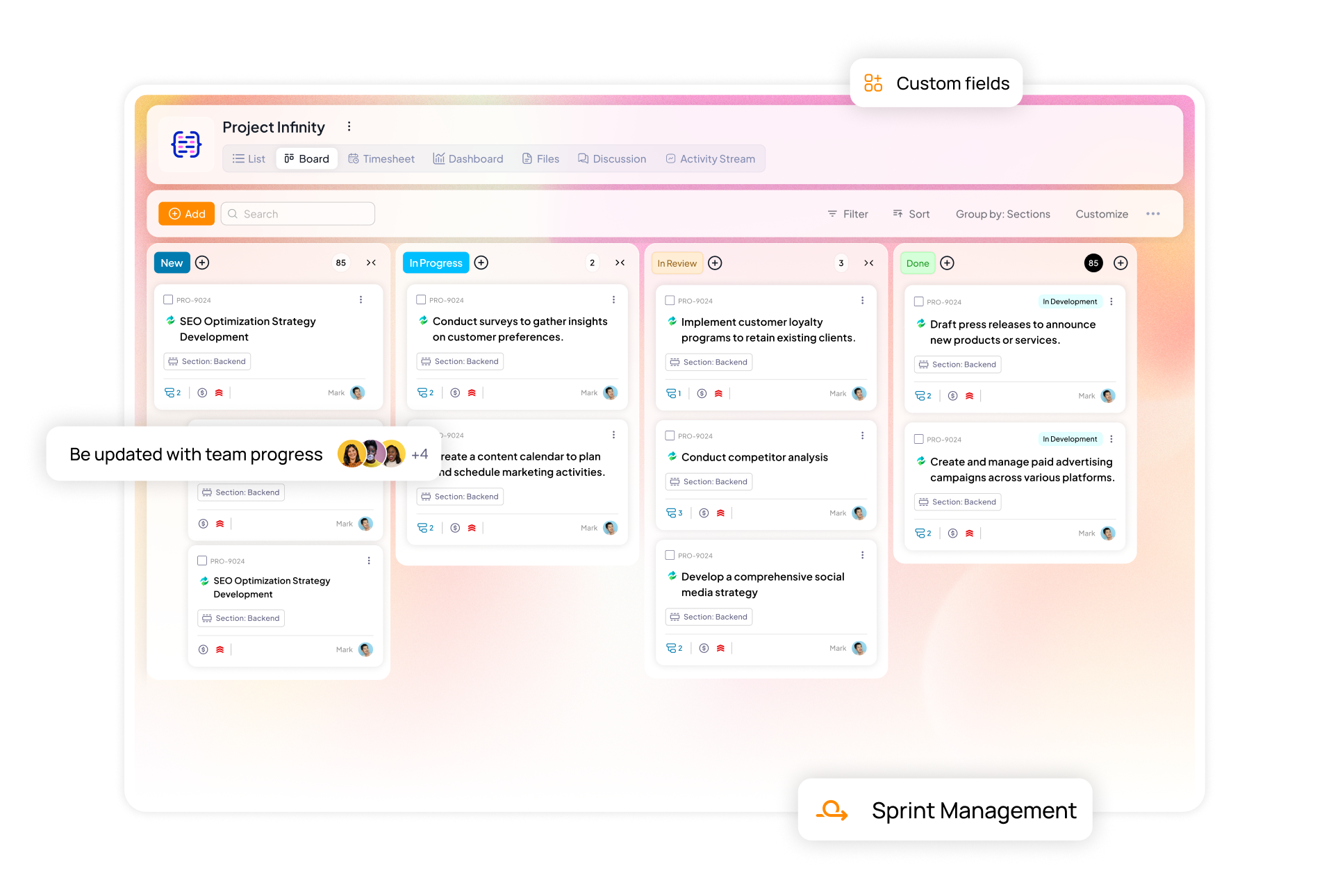


Project management is complex, especially for small and mid-sized marketing teams balancing creative project management with tight budgets and deadlines. To deliver real value, teams must focus on critical success factors (CSFs). These are non-negotiable conditions that highlight whether a project achieves its goals.
In this guide, you’ll find answers to what are critical success factors in project management and why they matter more than ever in 2026. Further, you’ll learn how marketing teams can identify and implement them using best practices and tools for project success.
What are the critical success factors in project management?
Critical success factors in project management are the essential conditions or areas of focus that a project or organization must get right to achieve its goals.
CSFs define the essential conditions for achieving long-term objectives, guiding teams to align daily work with the mission. If these conditions are met, the project has a chance to succeed.
It’s important to distinguish CSFs from related concepts. Such as:
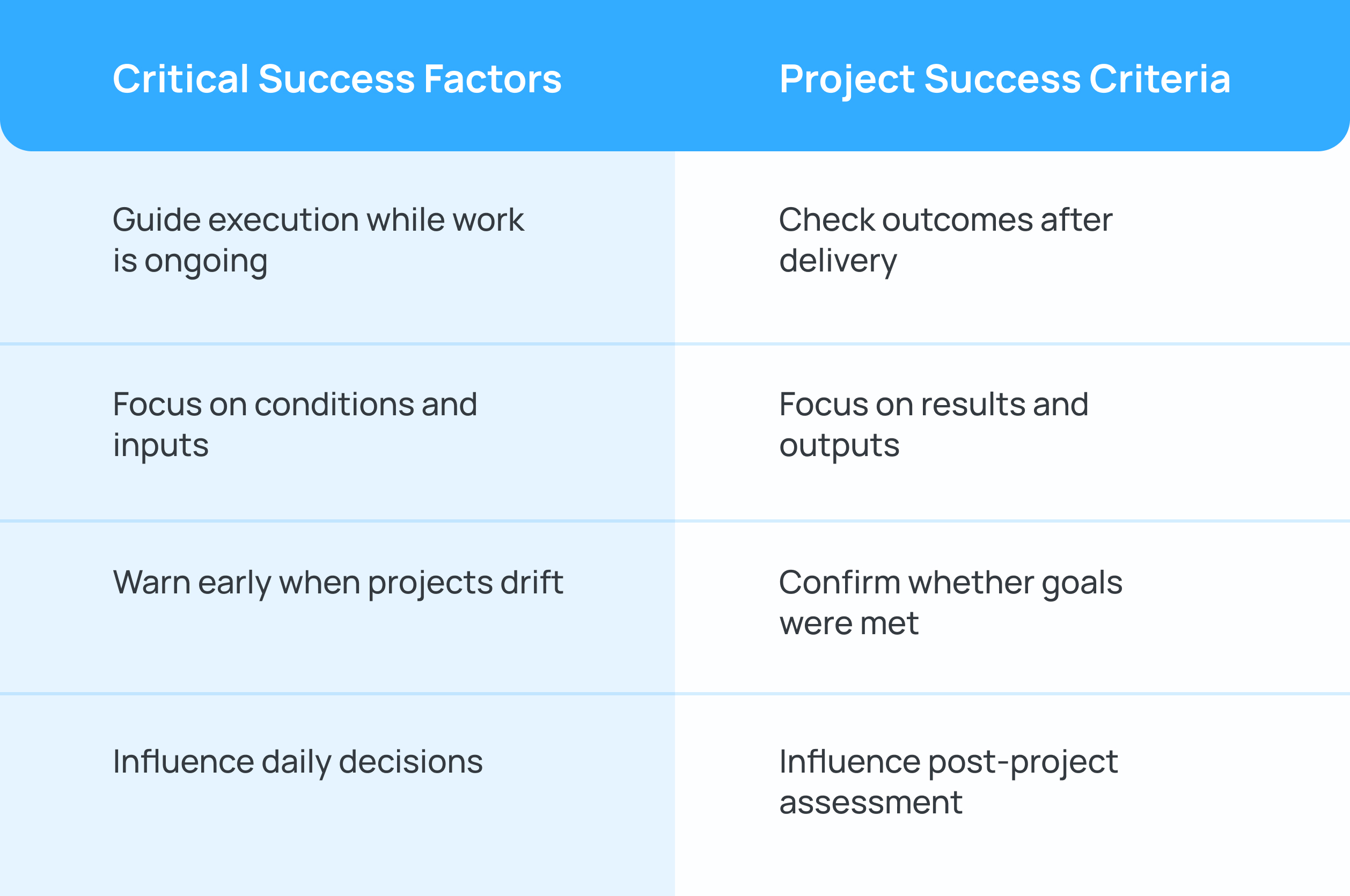
Project success criteria: These are the measurable outcomes, like launching the product by Q3, under budget, with 98% uptime, that define whether a project is successful
CSFs: These factors are the critical inputs or conditions that make achieving the success criteria in project management possible.
In essence, criteria measure success, while factors facilitate it. Critical success factors for projects identify the vital few elements, like people, processes, areas, or conditions, that the team must focus on. By defining these factors, every team member understands the priorities that will move the project forward.
Why critical success factors matter more in 2026?
Rapid change and complexity mark the business landscape of 2026. Digital transformation, remote/hybrid teams, social media, and new technologies like AI are reshaping how projects are run. This evolution makes it even more important to pin down CSFs so teams stay aligned amid disruption.
In 2026, project managers must lead more collaboratively and smarter to keep pace with tighter deadlines and higher stakeholder expectations.
Critical success factors in project management provide that steady foundation. They help teams concentrate on what matters, for example, ensuring quality while scaling under rapid growth. And as a result, it helps avoid being derailed by the noise of constant change.
Several specific trends highlight why CSFs are vital now:
AI and automation
Project tools are increasingly embedding AI for scheduling, risk analysis, and even predictive dashboards. Recent PMI data shows that over half of projects are using GenAI in some capacity, improving speed and quality.
To capture these benefits, teams need CSFs around technology adoption and data literacy. Without prioritizing tech-readiness as a CSF, teams risk lagging competitors who use data-driven planning and predictive insights.
Remote/Hybrid work
Nearly every organization now has team members working offsite, which brings challenges of coordination and communication. The World Economic Forum predicts remote work will only grow, reaching many more roles by 2030.
In this environment, factors of project success, like clear communication channels, become more important than ever. Teams must intentionally put CSFs in place to establish trust and alignment.
For instance, emphasizing emotional intelligence and collaboration tools is cited as a critical skill-building. Without such CSFs, projects can fragment: teams chase updates or wait on approvals, causing delays and confusion.
Quality and stakeholder demands
Customers and stakeholders in 2026 expect faster delivery and high quality. Therefore, factors related to project quality management rise in prominence.
In practice, this means CSFs, like built-in testing, are non-negotiable. Each component deliverable must meet predefined quality metrics for the overall project to succeed.
Similarly, with customer satisfaction often topping success criteria lists (beyond the project management triangle – time/scope/budget), projects must identify CSFs that ensure client needs are met at every step.
Uncertainty and risk
Economic and regulatory landscapes are less predictable, so adaptability is key. An Environmental CSF approach is to treat external risks (like supply chain shocks or compliance changes) as factors to manage.
Teams should define CSFs that build resilience. Without such CSFs, projects can stall when conditions change.
Core critical success factors for project management success
Every project has its own context, but certain common themes emerge when looking at what makes projects succeed. Research and industry experience highlight a core set of critical success factors that recur in successful projects:
Top management support and clear goals
Engaged leadership and a well-defined mission are the top CSF. Factors like project mission and top management support are the strategic success drivers.
If executives back a project and clarify its objectives, teams know the project is a priority. Projects should therefore make securing leadership buy-in and aligning goals a CSF early on.
Stakeholder engagement
Involving end-users and clients from the start is crucial. User involvement and clear business objectives are among the top 10 IT project management success factors.
For marketing teams, this means understanding customer needs and getting stakeholder sign-off on requirements. Regular stakeholder consultation helps catch misunderstandings early.
As a practical example, a marketing campaign project may set a critical success factor that requires teams to incorporate audience feedback at each milestone, ensuring the final campaign truly resonates.
Clear scope and requirements
Scope definition is a crucial CSF. If the project’s scope is vague, the team cannot plan effectively. Project scope is a method used to set boundaries for successful project execution, capturing deadlines and deliverables.
Ensuring everyone agrees on what is (and isn’t) in scope is an early CSF. Unchecked scope creep will derail timelines and budgets.
Similarly, detailed requirements prevent rework later. Project teams must manage well-defined scope and requirements clarity as CSFs from the start.
Effective planning and scheduling
A realistic plan and schedule are another strategic CSF. Creating a project plan that reflects actual resource capacity and task dependencies. In modern practice, it also means adapting plans quickly when changes occur.
For instance, setting key dates or project milestones is a way to monitor progress (and indeed milestones themselves can be seen as tactical CSFs). If the plan is too aggressive or not revisited, teams can burn out or drift off course.
Tools like project management software help maintain these plans (like Kanban boards) so that meeting deadlines remains a focused CSF.
Skilled team and clear roles
A talented, well-organized team is fundamental. Critical success factors in project management examples here include having an experienced project manager and team members with the right skills. CSFs also cover a clear team structure and decision-making.
Teams that establish clear decision rights up front and are empowered to use them perform much better. When every member knows their responsibilities and who approves what, work flows faster.
Open and timely communication
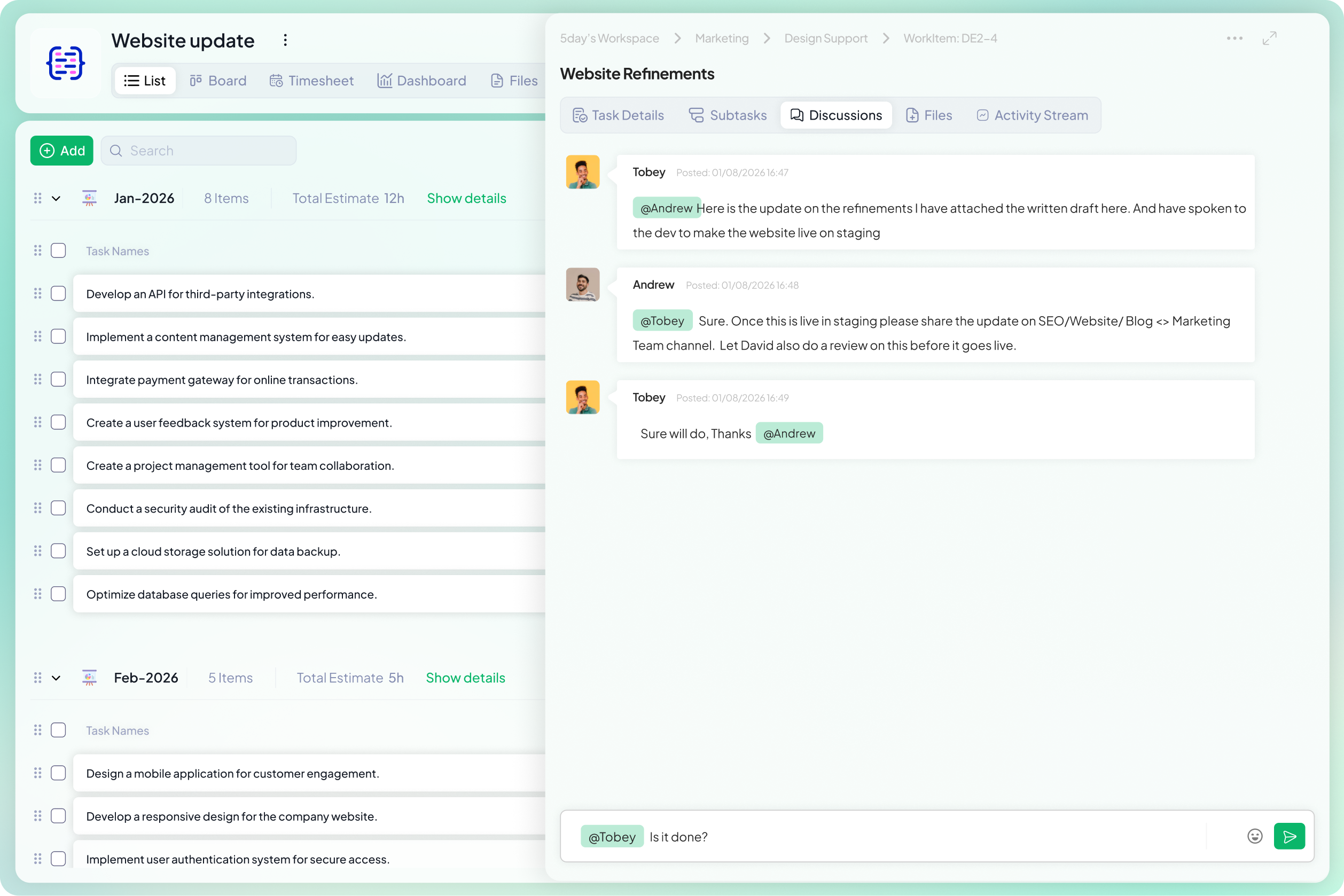
Poor communication consistently undermines projects. Open, timely communication is often a CSF. This includes both formal updates (status reports, stand-ups) and informal collaboration.
Tools or processes that keep the whole team informed can be considered CSFs. For instance, a team might make it a factor to have a shared dashboard showing real-time status. Most project problems are human factors that make-or-break projects.
Establishing CSFs such as weekly cross-team syncs or centralized information sharing can mitigate this risk. Using a single project tool to centralize information (so no one chases updates in scattered chats) is key to reducing delays.
Quality management
Ensuring deliverables meet the required standards is itself a set of CSFs. Project quality management (which includes planning, assurance, testing, and control) is critical to success.
If each task deliverable hits its quality metrics, the final product is much more likely to succeed.
Agile processes and adaptability
In fast-moving markets, being able to adapt is a CSF. Although not a traditional focus in older CSF lists, modern projects often list Agile planning or iterative reviews as factors.
Many successful projects break work into shorter sprints with quick feedback. Including adaptability as a CSF might mean building in regular retrospectives or adjustment points. If changing course is a factor, teams keep learning and improving rather than rigidly sticking to outdated plans.
Tools and infrastructure
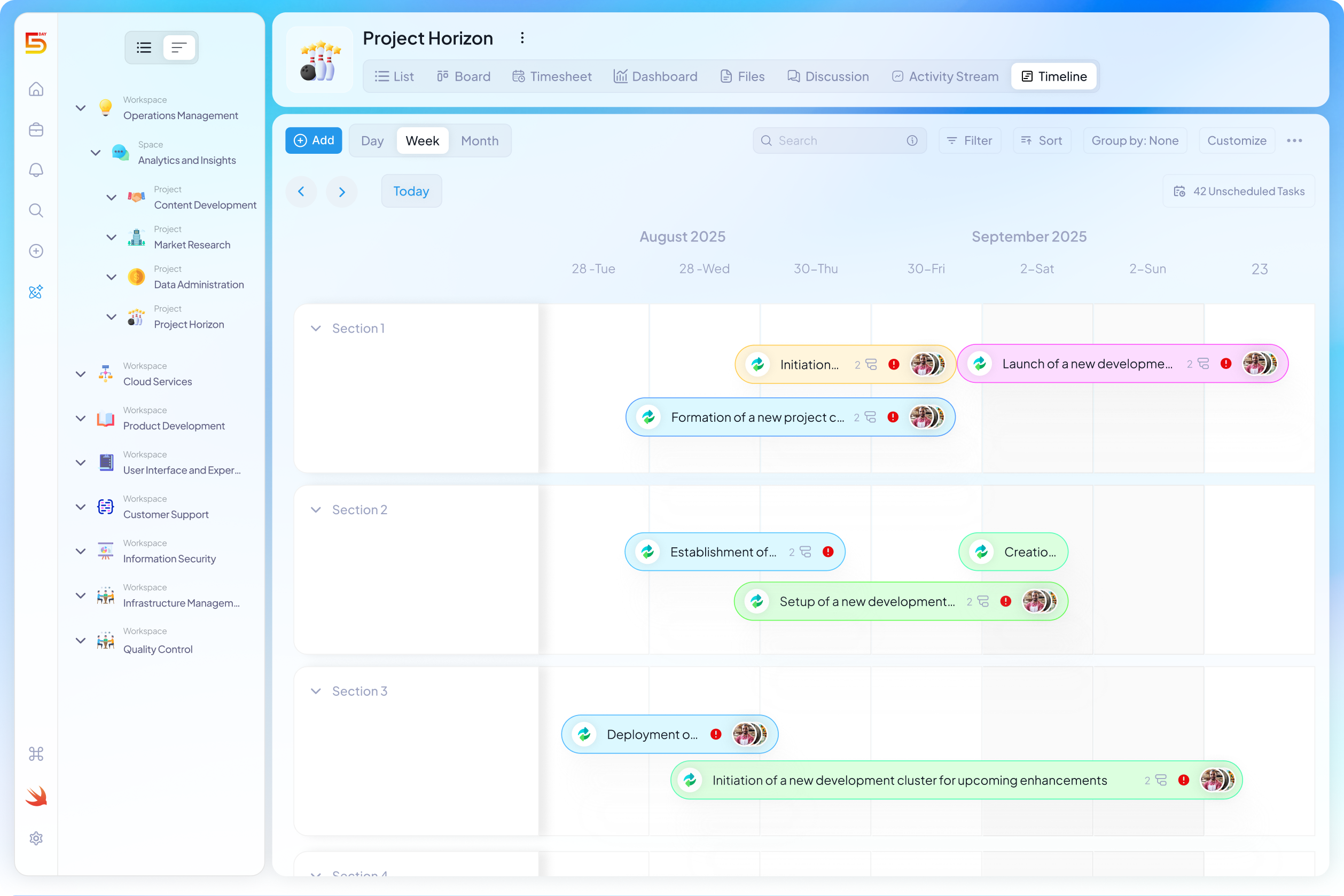
Having the right tools and environment is a practical CSF. This can mean adequate technology or standardized processes. A capable project management software can itself be a factor. For instance, a CSF might be all teamwork managed in a collaborative platform.
Teams that invest in such systems can manage many campaigns in real time and visualize dependencies. In contrast, relying on fragmented spreadsheets can be disastrous. After all, even JPMorgan famously lost $6 billion due to one spreadsheet error.
So, adopting a unified tool (like 5day.io) is often part of a CSF strategy. It includes transparency, reminders, dependencies, and approvals in the process, so no one leaves critical details out.
Types of critical success factors in project management
The key success factors for successful project delivery emerge from the environment in which a project operates. This is why experienced leads categorize CSFs based on where the pressure comes from.
Broadly, critical success factors fall into the following categories.
Industry-based CSFs
Industry CSFs stem from norms and expectations that apply across a specific sector.
In marketing or professional services, these often include speed to market, regulatory compliance, data accuracy, or client transparency. A project may fail even with strong execution if it ignores the basic expectations of the industry it operates in.
For example, in digital marketing projects, rapid iteration and measurable performance often function as industry CSFs. Teams that treat reporting or optimization as optional quickly fall behind competitors who treat them as non-negotiable.
Industry CSFs change slowly, but they set the baseline for success.
Competitive CSFs
Competitive CSFs arise from how an organization positions itself against alternatives in the market.
These factors reflect what differentiates your delivery from others. This could include faster turnaround times, higher quality output, better collaboration, or stronger client communication.
Competitive CSFs often influence how much flexibility a project has. If speed is a key differentiator, then short approval cycles and fast feedback become CSFs. If quality or creativity drives competitive advantage, deeper review cycles and stronger quality controls become non-negotiable.
Environmental CSFs
Environmental CSFs come from external forces outside direct project control.
These include economic conditions, regulatory changes, client maturity, technology shifts, or workforce availability. In 2026, factors like remote work, AI adoption, and economic uncertainty influence project success.
For example, a project running during market volatility may require stronger risk buffers and decision agility as CSFs. A compliance-heavy environment may require approval discipline and documentation as success factors.
Ignoring environmental CSFs leaves projects exposed when conditions change.
Organizational CSFs
Organizational CSFs reflect internal strengths and limitations of the company.
These include leadership support, resource availability, decision-making structures, communication norms, and tool maturity. Two companies can run identical projects with different outcomes purely because their organizational CSFs differ.
For SMBs, organizational CSFs often include workload visibility and cross-team coordination. When these factors are weak, projects slow down even when teams work hard.
Organizational CSFs determine the feasibility of the project.
Project-specific CSFs
Project-specific CSFs are unique to the initiative itself. They depend on project scope, complexity, risk profile, timeline, and stakeholder mix. A product launch may prioritize quality and readiness, while a time-sensitive campaign may prioritize speed and approval flow.
These CSFs require conscious selection at kickoff. Reusing CSFs from past projects without adjustment often leads to blind spots.Identifying the key success factors in project management
Once you understand what CSFs are, the next challenge is figuring out which ones matter most for your specific project. Identifying the right CSFs is a process that ties closely to your organization’s strategy and project context.
Here are proven steps to identify critical success factors in project management:
Match with strategy and goals
Start by looking at the broader business or campaign strategy. CSFs should directly support top goals. A strategic plan (using SWOT analysis, competitive benchmarking, etc.) helps find critical project management success factors in 2026.
For example, if a company’s strategy is to increase market share, a project CSF might be to launch an MVP by Q2 (planning) or establish a user feedback loop (execution). Carry out a SWOT or PESTLE analysis to identify internal strengths/weaknesses and external threats/opportunities.
These frameworks can reveal vulnerabilities or differentiators. Perhaps you find that resource constraints are a major weakness. Or if a new regulation looms, a CSF might be compliance audit-ready.
Engage stakeholders for insights
Next, review preliminary CSF candidates with key stakeholders, such as clients, sponsors, legal, and team leads. Create a strategic team to study your plan and pinpoint key result areas (KRAs) and goals.
Ask questions, like what are the must-have outcomes for this project? What would cause this project to be considered a failure? Their answers often reveal CSFs.
Differentiate critical vs. supporting success factors
Once you have a list of potential factors, distinguish those that are truly critical from those that are merely supportive. Sort goals into crucial versus supporting, then pruning to avoid overload, as too many CSFs dilute focus.
For example, one might list 3–5 top CSFs for a given project, such as executive sponsorship, clear requirements, quality testing, and cross-team collaboration. Less critical items, like regular status emails, are normal processes rather than CSFs.
Focus on factors by asking if this CSF failed to materialize, could the project still succeed? If the answer is no, it stays on the list.
Define measurable indicators
To make CSFs actionable, connect each to project management indicators or KPIs. For every CSF you identify, decide how you’ll know if it is being met. Tying CSFs to actual metrics that show progress. Each CSF should have clear KPIs to track impact.
If customer satisfaction is a CSF, you might track Net Promoter Score or customer approval rates as KPIs. Setting these metrics up front turns abstract factors into tangible targets.
Document and communicate
A CSF is only helpful if everyone knows about it. Once identified, share the CSFs and how they link to project goals with the whole team. Written project charters or kickoff decks should list them explicitly. Create a shared language for priorities to turn fragmented efforts into coordinated progress.
Use visuals (charts, diagrams) if helpful. For example, many teams map project deliverables to CSFs and related KPIs in a simple table. Regularly remind the team of these factors in meetings and updates so they stay top of mind.
Involve the team
Get the project team’s input and buy-in. Invite members to give feedback on proposed CSFs. They often have practical insights about what really drives progress. By involving the team, you both refine the list and secure commitment.
Throughout, use a formal CSF framework if helpful.
For instance,
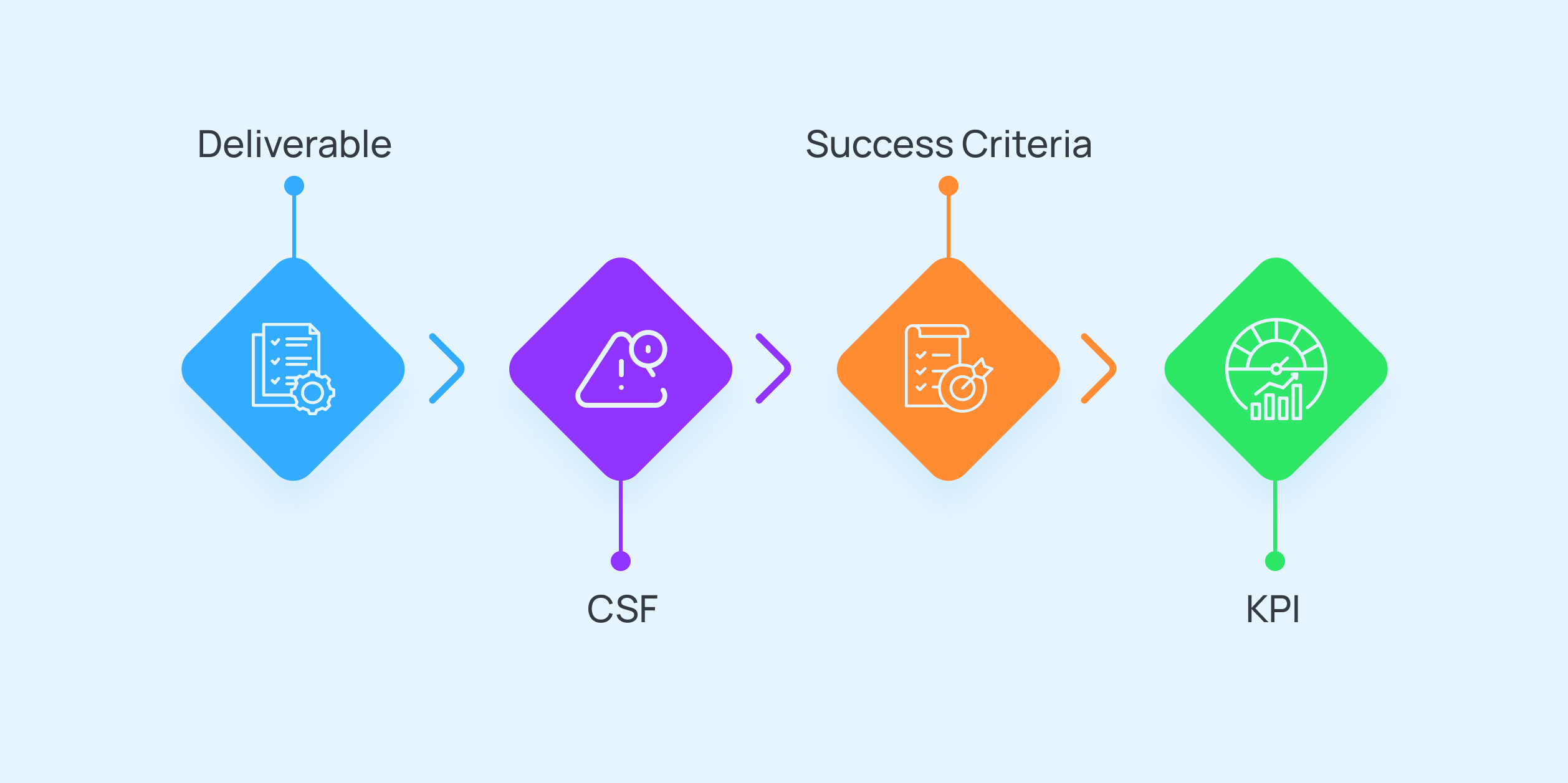
Start by clarifying the key deliverable of the project, then ask what this deliverable requires to be successful, to uncover CSFs, and finally attach criteria. Following such a process ensures the CSFs remain rooted in what the project needs to create.
How to build and implement critical success factors?
Identifying CSFs is only half the battle. To make them effective, you must merge them into how you execute the project.
Here are strategies for building CSFs into your project practice:
Include CSFs in strategy and plans
CSFs must not sit in isolation. So, treat CSFs as part of your business strategy and project planning. For each CSF, define who is responsible for it and how it aligns with higher-level goals.
If top management support is a CSF, identify the sponsor accountable and outline how they will engage. Make CSFs explicit deliverables in project charters and work breakdown structures.
In marketing projects, you might tie a CSF to a marketing OKR or sprint goal. This helps the team move from vague intentions to concrete actions.
Assign clear accountability
Assign a champion or owner for each CSF. This could be a role, say QA lead, or a team UX team owns usability. Ownership means they track progress on that factor, raising flags if things slip.
No accountability can impact a well-intended plan. A useful tactic is to list CSFs on your project dashboard or in weekly reports, showing who is monitoring each one.
Makes CSFs visible
Communicate CSFs across the team continuously. Use project management software dashboards or goal-tracking tools so that the status of each CSF is transparent. A CSF dashboard might display key KPIs, like test pass rate and stakeholder sign-off status, at a glance.
When teams can see CSFs alongside regular tasks, they remain front-and-center. At kickoff and key meetings, review each CSF and its status.
A clear communication plan removes misalignment, as everyone knows what matters.
Include CSFs in processes
Weave CSFs into your standard processes and ceremonies. If control quality in project management is a CSF, then every sprint review or project phase should include a quality check. Use checklists or workflows that enforce the CSFs.
For example, in 5day.io, you can set up a workflow where teams need certain approvals for a task to move forward (making the approval CSF a built-in step).
Automation and templates can help too. For instance, automated reminders ensure no one overlooks the deadlines, which supports a CSF of timely delivery.
Use the right tools
Implementing CSFs is far easier with the right project management software. Tools like 5day.io help align work with success factors. Content calendars and campaign views make sure teams respect scheduling CSFs, while integrated feedback loops support the CSF of clear stakeholder engagement.
Platforms like 5day.io allow marketers to manage many projects in real time, visualize dependencies, track deadlines, and avoid silos.
Don’t hesitate to adopt tools so that your CSFs become part of the workflow (such as custom fields for priority CSF status or automated alerts when a CSF metric goes off track).
Track and measure progress
Track progress against your CSFs just like you do budgets or timelines. Each CSF should have a corresponding KPI or check-in. CSFs define success, but KPIs measure progress.
For example, if one CSF is stakeholder engagement, your KPIs might be the percentage of stakeholders who approve deliverables. Review these in your regular team updates.
If a CSF is slipping, find the cause immediately. CSFs should evolve as the project changes, so revisit and adjust them if business needs shift.
Create a CSF-focused culture
CSFs work best when the team culture values them. Encourage everyone to act like an owner of the success factors. That means celebrating wins against CSFs when the team hit 100% of the tasks done on time and treating misses as learning opportunities.
Motivate team members to remind each other of the CSFs when they see something off track.
How 5day.io supports critical success factors in project management

Most teams can easily choose the critical success factors in project management. But once work starts moving, it becomes surprisingly hard to tell when those factors start slipping.
Deadlines still look reasonable on paper, and status updates sound doable. Yet underneath, work starts taking longer than expected, and approvals pile up. By the time these patterns are obvious, project success is already at risk.
This is where 5day.io steps in.
5day.io ensures that teams don’t need separate reviews or reports to understand whether a project is healthy. It shows it through the work itself. In day-to-day execution, teams use 5day.io project management software to:
- See how effort spreads across projects and spot when focus starts to fragment
- Spot tasks where time spent doesn’t match progress, revealing rework or scope drift
- Notice delivery pressure building before it turns into quality compromises or burnout
- Keep decisions and context attached to the work, so teams avoid revisiting old ground
For teams managing many projects at once, this kind of visibility changes how success factors function. They start acting early as they see warning signals during execution.
If you want critical success factors in project management to stay relevant after planning ends, try running your next projects in 5day.io. There’s no credit card required.