

Project quality can feel like a nice-to-have until rework and unhappy clients hit your margin.
ASQ notes that quality-related costs can reach 15% to 20% of sales revenue. This is the reason why even simple quality checks can protect margins fast..
The good news is that simple project quality management tools and strategies go a long way, helping small and mid-sized teams manage projects fluently.
Project quality management is about clear standards that keep work “fit for purpose” without slowing delivery. This guide breaks down what project quality means, where it fails, and which tools to use to help you build quality into daily work.
What Is Project Quality Management?
Project quality management makes sure deliverables and processes meet agreed standards, so customers get what they need.
It covers three core processes: quality planning, quality assurance, and quality control.
- Quality planning sets quality goals, acceptance criteria, and how you will measure success
- Quality assurance shapes the way you work so teams follow good processes
- Quality control checks outputs against those standards and catches defects before release
You can document this with a simple project quality management plan. This plan will define what “good enough” is for scope and explain who is assigned to which activity.
For small and mid-sized businesses, this does not need to be a heavy manual. A short, precise plan stored inside your project management software is often enough.
Why Project Quality Fails in Modern Teams
Quality usually fails because nobody wrote down the standard.
Most teams care about quality, but the breaks happen in execution. Research on the cost of poor quality suggests that defects and rework can eat 10-30 percent of project or operating costs in many organizations.
Small and mid-sized businesses feel this more because:
- They have thin margins and cannot absorb rework easily
- Senior people juggle sales, delivery, and quality at the same time
- Tools are scattered, so defects and feedback live in different systems
Common reasons project quality fails:
- No shared definition of “done” for key deliverables
- Quality checks live in separate tools or personal notes
- Teams rush to hit dates and skip tests or reviews
- Data about defects never reaches planning or estimation
Strong quality management tools that are easy to operate for project work tremendously reduce the chance of errors. For example, 5day.io keeps all tasks streamlined in one simple dashboard. It helps teams maintain good systems by keeping tasks visible so people can manage risks promptly.
The Three Pillars of Project Quality Management
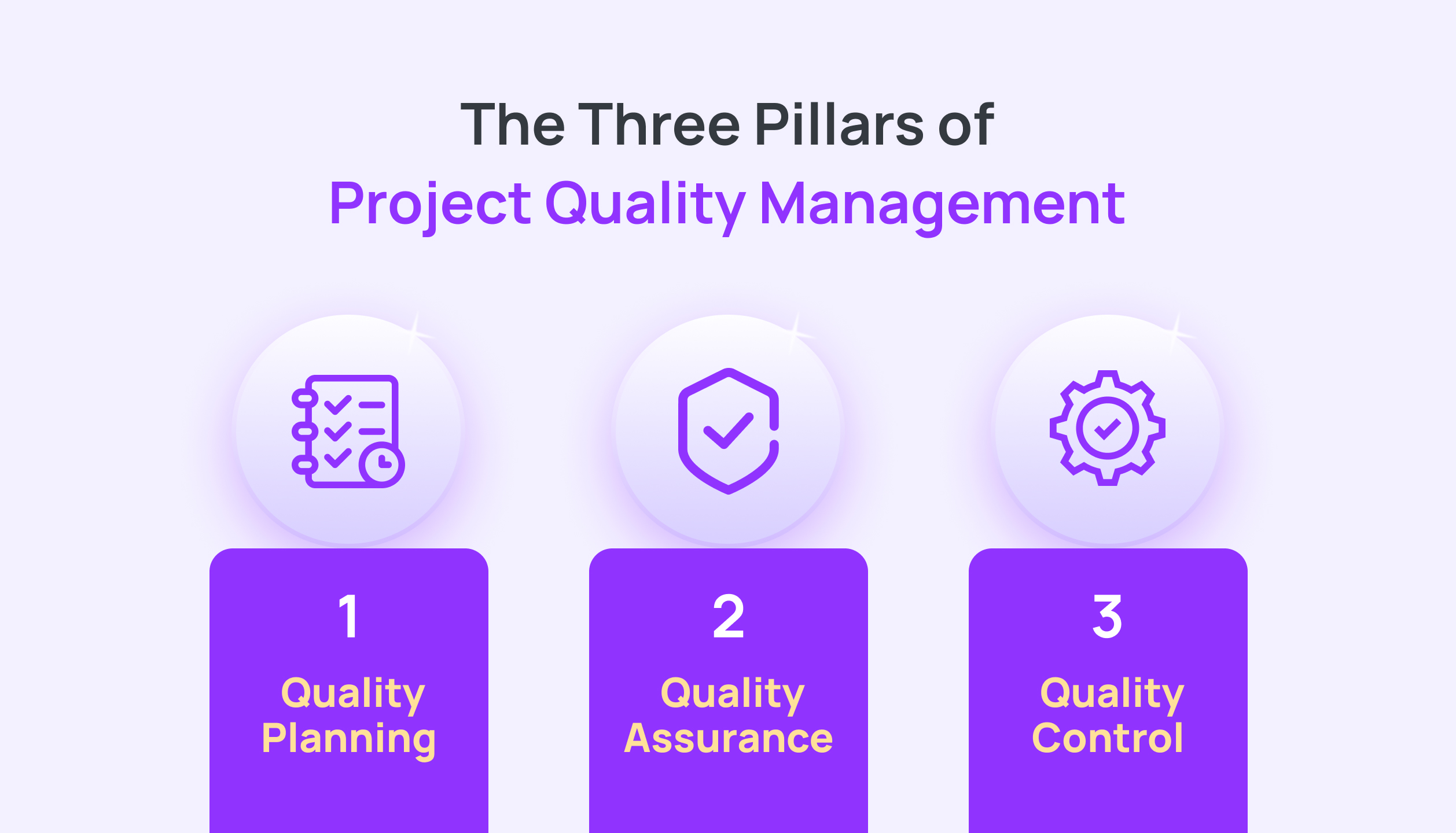
The best way to break down quality management tools and strategies is to understand the three pillars: quality planning, quality assurance, and quality control. These pillars keep your work consistent, even when projects change or team members rotate.
Pillar 1 – Quality planning
Quality planning answers three simple questions:
- What does “good” look like for this deliverable
- How will we measure that
- When and where will we check it
A basic plan can include:
- Acceptance criteria for each feature or asset
- Design or brand guidelines that must be followed
- Checkpoints where teams review work with stakeholders
You can build quality control tools inside your project management systems with features such as custom fields, templates, checklists, etc. attached to tasks.
Pillar 2 – Quality assurance
Quality assurance (QA) focuses on the process. It stops defects at the source instead of trying to catch everything at the end.
Examples of project quality assurance tools and practices:
- Standard operating procedures for common project types
- Peer reviews for designs, code, or documents
- Training checklists for new team members
QA lines up well with total quality management in project management, where everyone cares about quality, not just one role. TQM ideas such as continuous improvement and data-driven decisions can stay inside this pillar.
Pillar 3 – Quality control
Quality control (QC) checks deliverables against the plan and standards. Common quality control methods in project management include:
- Test cases for software or flows
- Checklists for content, legal, or compliance reviews
- Spot checks on samples in larger batches
For small teams, QC should feel like part of normal work, not a separate “policing” step. You can embed checks into task workflows in your project management software, so they do not depend on memory.
Benefits of Quality Management Tools
Project quality management tools make quality visible, repeatable, and cheaper than fixing problems late.
Studies in sectors such as construction and manufacturing show that rework often runs at 4-10 percent of total project cost, even in mature organizations. When you add delays and lost customer trust, that cost climbs further.
Strong quality management tools for a project help you:
- Catch defects earlier, when fixes are cheaper
- Reduce rework and support loads after delivery
- Give leaders a clear view of quality trends across projects
- Improve estimates since you see how often quality issues appear
For small and mid-sized teams, this can mean the difference between a busy month that stays profitable and a busy month that quietly burns cash through rework and discounts.
Essential Project Quality Management Tools and Techniques
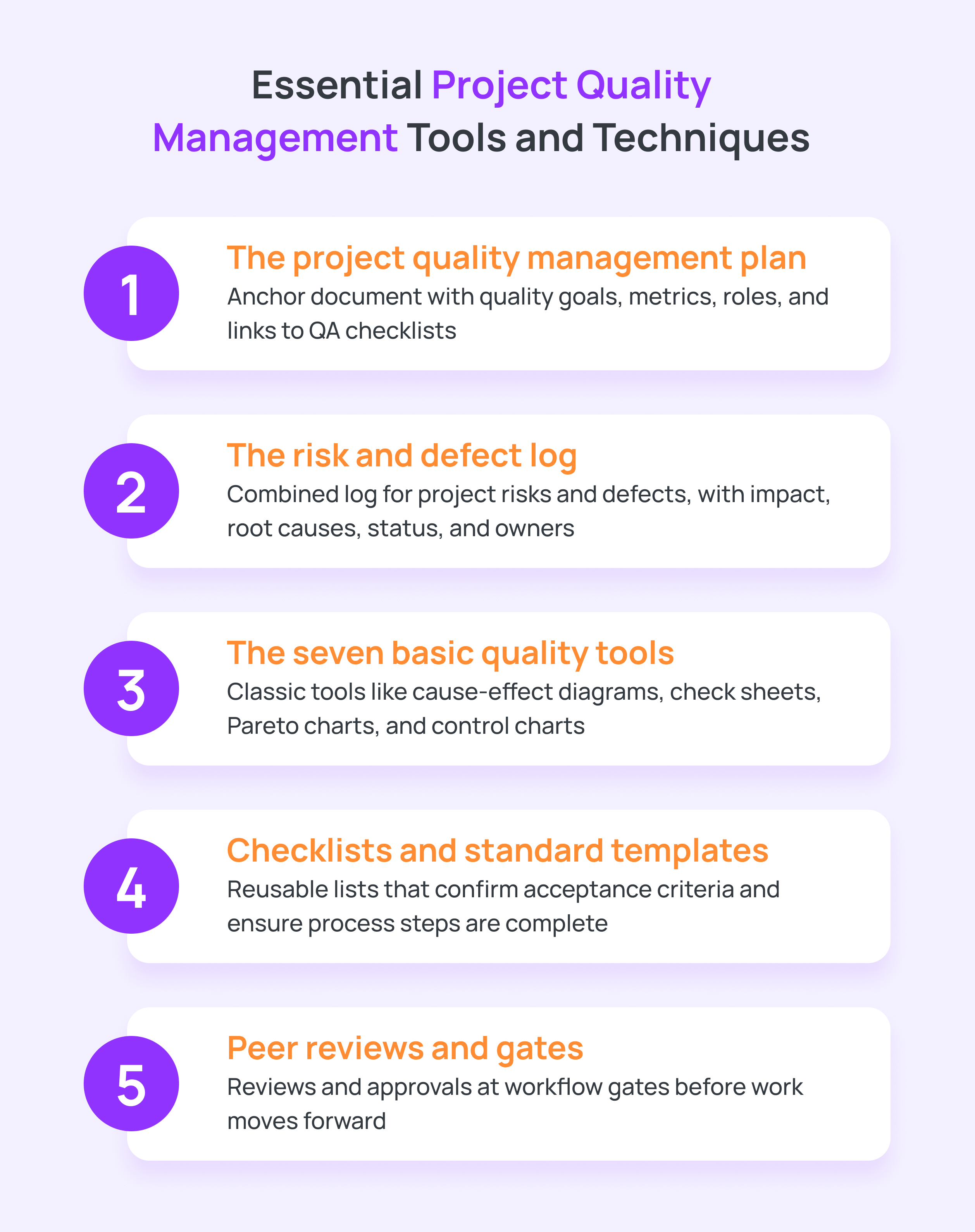
You do not need every quality tool on day one; a small set of simple tools used well beats a long list nobody touches.
Below are practical project quality management tools and techniques that fit SMB teams.
The project quality management plan
This is the anchor document for your work on quality.
A simple version includes:
- Quality goals tied to project goals
- Key quality metrics and how you will track them
- Roles and responsibilities for QA and QC
- Links to templates, checklists, or standards
You can store this as a template inside your project management software and duplicate it for new projects.
The risk and defect log
Quality does not live alone. Poor quality often shows up as project risk first, then defects later.
A combined log for risks and defects can include:
- Description and category
- Impact on users or customers
- Root cause once you know it
- Status and owner
This helps you connect project quality management with your wider project risk management process instead of treating them as two separate worlds.
The seven basic quality tools
Classic quality management tools in project management include the “seven basic tools of quality.” They are simple diagrams and charts that help teams see patterns and root causes..” They are simple diagrams and charts that help teams see patterns and root causes.
Common examples:
- Check sheets for tallying defects
- Cause-and-effect (fishbone) diagrams to map root causes
- Pareto charts to see which issues drive most problems
- Control charts to watch variation over time
These are visual and easy to teach. That makes them ideal project management quality control tools for small teams without heavy statistical training.
Checklists and standard templates
Checklists sound basic, yet they remain one of the most effective project quality management tools.
You can use them to:
- Confirm all acceptance criteria for a feature or deliverable
- Ensure each stage in a workflow is complete
- Guide reviewers who check content, designs, or code
Standard templates for briefs, specs, and test cases support this. They reduce variation in input, which reduces variation in output.
Peer reviews and gates
Regular peer reviews act as a living project quality assurance tool. You can set the following workflow as gates in your project board. Work cannot move to the next stage until a review box is ticked or a task changes status.
Examples:
- Design reviews at key milestones
- Code reviews before merge
- Content reviews before publishing
Proven Project Quality Management Strategies
Tools help when we talk about quality management in project management. However, quality improves only when strategies turn into habits inside the team. Here are practical strategies that fit small and mid-sized businesses.
Define “done” with quality baked in
Do not treat quality as a later check. Add quality to the definition of done for major deliverables.
For example, a feature is “done” only when:
- All acceptance tests pass
- Key user flows have been checked on target devices
This keeps project quality management close to day-to-day work, not far away in a separate process.
Treat defects as signals, not blame
When a defect appears, ask “what system allowed this” instead of “who did this.”
Link each defect to:
- A process gap
- A missing check
- An unclear requirement
This creates a loop between QC and quality planning. Over time, it looks a lot like total quality management in project management, where teams improve processes step by step instead of chasing single fixes.
Start small and improve one metric at a time
Pick one metric that matters, for example:
- Defects found after release
- Rework hours on a project
- Support tickets tied to quality
Track it per project in your project quality management tools, then run small experiments to lower that number. Once you see improvement, add the next metric.
Bring quality into planning and estimation
Quality often fails because plans assume a comfort zone path is the right choice for the work.
To avoid that:
- Include test and review effort in estimates
- Add buffer for known quality risks
- Use past defect data to tune future plans
This ties your project quality management plan directly to time and cost, instead of bolting quality on at the end.
Use simple audits instead of heavy inspections
Large enterprises sometimes run heavy audits that slow work. Smaller teams can keep it light.
For example:
- Monthly sample checks on recent deliverables
- Short retrospectives around quality issues
- Quick audits of adherence to key checklists
The aim is learning and adjustment, not long reports.
How 5day.io Supports Project Quality Management
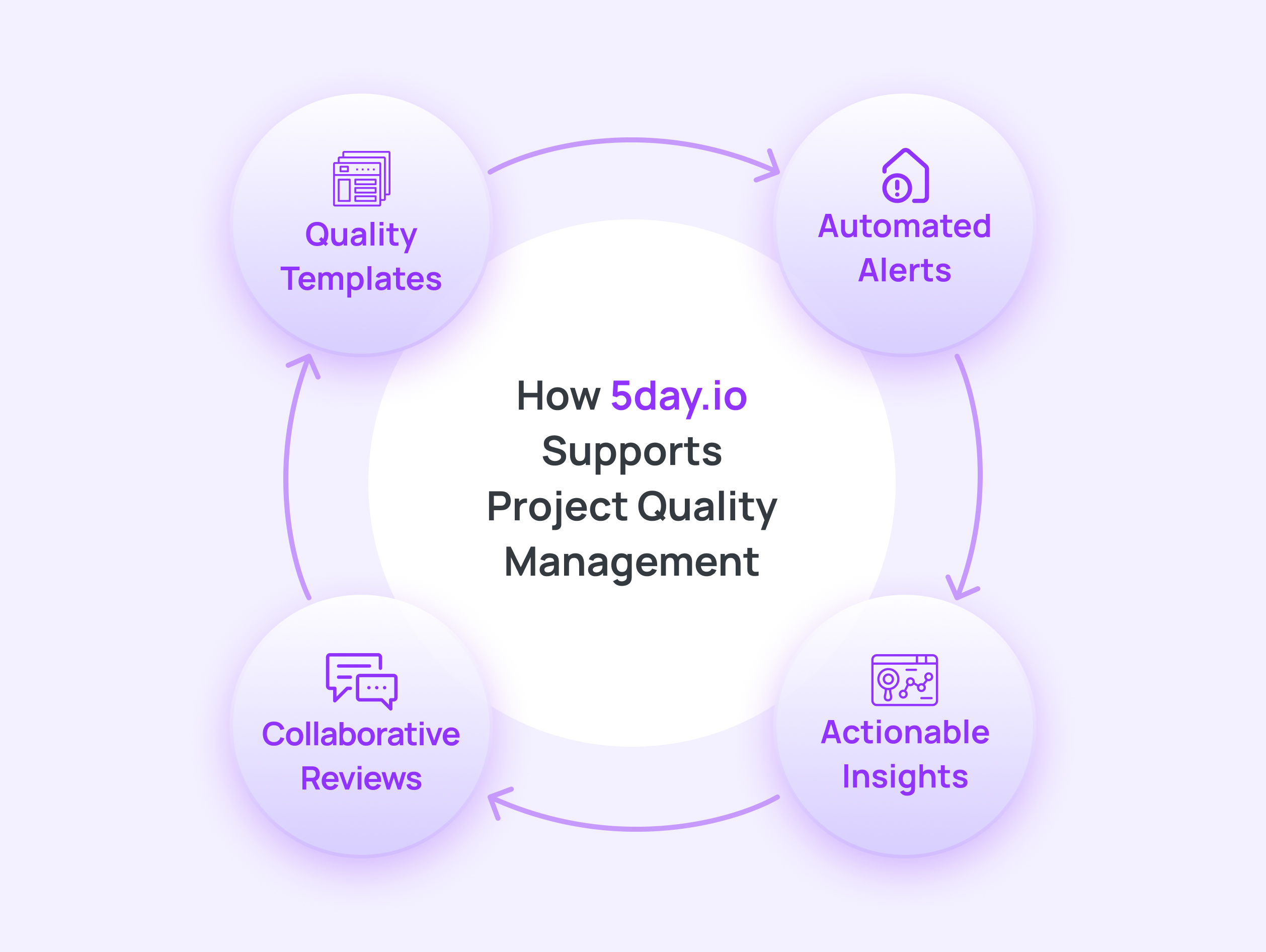
5day.io gives small and mid-sized teams a calm space where tasks, quality checks, and timelines stay together in one simple project management tool. It can fully support the quality flow without adding more systems.
Various small and mid-sized businesses prefer 5day.io for simplicity. With this software, you can:
- Turn your project quality management plan into a project template with standard fields and checklists
- Add custom fields for quality status, defect count, or review type
- Tag tasks that relate to QA or QC, so teams see them alongside normal work
- Use boards and timelines to spot clusters of quality tasks near launches
You can also log defects as tasks and link them to the original work. This keeps your project quality management tools and techniques tied to real tasks, not separate spreadsheets.
Additionally, you can track risks and capacity in 5day.io, and quality fits right into that picture. You can see the impact on delivery, not just a defect count. Over time, this kind of integrated view looks like a lightweight quality management system tailored to the scale of your team, instead of a heavy enterprise suite.
Conclusion
Project quality improves when simple tools and clear standards become part of normal work, not a side project. You do not have to roll out every framework at once. Pick one active project, set a small project quality management goal, and choose three tools:
- A basic quality plan
- A shared risk and defect log
- One core check, such as peer review or test cases
Run that for a few weeks. Watch how it affects rework, customer feedback, and team stress. Then refine your project quality management tools inside 5day.io so they match the way your team actually works.
When you are ready to make quality a steady habit to ensure risk-free workflow, set up your next project in 5day.io. Build your plan, attach your quality checks, and keep everything visible on one calm board so every project can ship with confidence.