

How to apply this data in B2B holiday campaigns
The world is full of contradiction and so is business. What works for one will almost never work for all. Except for the fact that you need a good product to do good business; that remains evergreen.
Anyway, from all these contradictory statements, how do you choose what to do as a B2B business? Here’s a formula for that.
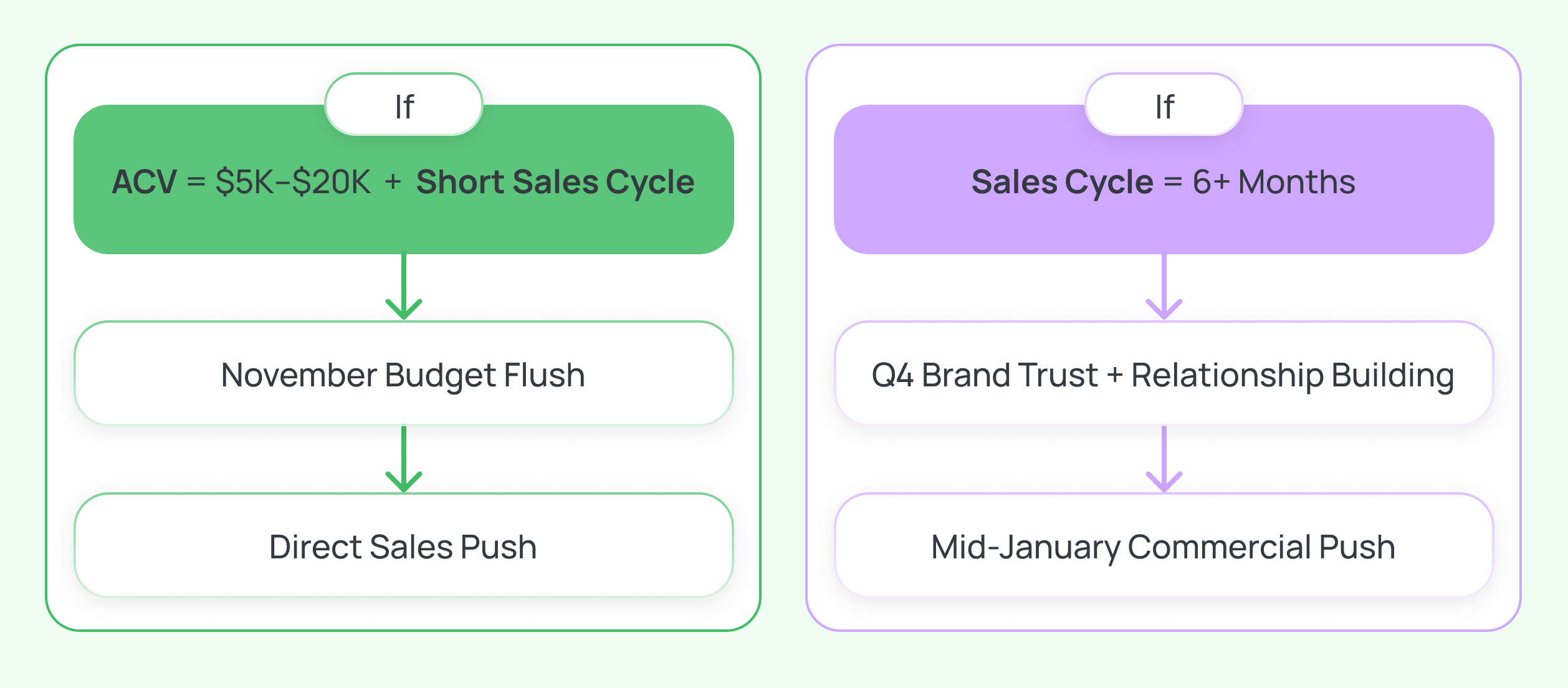
Look at your average sales cycle and ACV (Annual Contract Value).
If you have short-cycle SaaS products ($5k–$20k ACV), lean into the November “budget flush.”
If you run complex enterprise sales cycles (6+ months), use Q4 strictly for long-form brand trust and relationship-building space. Time your direct commercial push for mid-January’s planning cycles.
Holiday marketing calendar 2026: key dates for B2B brands
Timing is everything when it comes to seasonal execution.
To help you map out your Q4 roadmap without second-guessing, here is the complete 2026 B2B holiday marketing calendar.
It tracks every major moment, paired with its strategic angle and the best-fit campaign play. We’ll discuss what best fit campaign play is in more detail with examples below, but for now, here’s a quick scan.
Moment | Date | B2B Angle | Best-Fit Play |
Halloween | October 31, 2026 | Playful execution on “marketing horrors,” technical debt, or legacy software nightmares. | Useful Greeting |
Veterans Day | November 11, 2026 | Commemoration, community spotlight, or highlighting veteran-owned business initiatives. | Thank-You |
Thanksgiving | November 26, 2026 | Genuine gratitude to clients, partners, and community without a forced commercial pivot. | Thank-You |
Black Friday to Cyber Monday | November 27–30, 2026 | Transparent B2B discounting, annual subscription specials, or pricing audits. | Lucrative Discount |
Giving Tuesday | December 1, 2026 | Corporate social responsibility, matching grants, or pro-bono agency support. | Thank-You |
Hanukkah | December 4–12, 2026 | Inclusive multi-faith year-end messaging and seasonal appreciation. | Useful Greeting |
Christmas & Year-End Wrap | December 25, 2026 onwards | Reflective “Year in Review” summaries, trend outlooks, and prep for the new fiscal year. | Year in Your Inbox |
Holiday campaign ideas for B2B with real examples
Going into seasonal marketing without a proper plan is a surefire way to get lost in the noise.
To help you execute your holiday marketing campaigns successfully, we’ve broken down five distinct ways you can market your product without sounding sales-y or pushy.
We’ll also discuss how to decide which play you should select and how top brands pull it off with some holiday marketing examples. Alongside, you’ll get a tactical breakdown for each play as well.
Useful Greetings
Did you know corporate holiday emails get deleted in under 2 seconds? This is backed by no data, just my pure hatred for boring, sterile emails B2B companies send combined with my expertise to sniff ‘em out and delete them.
But there are a few companies that have solid holiday campaigns, and I’ve categorized them in a section called useful greetings.
A useful greeting is a holiday message that includes a free, practical tool instead of just a greeting card. Instead of wishing someone happy holidays, you give them something they can use in their work like a handy template. This is a great way for a brand to establish their expertise, while also keeping up with the theme of the holidays, so your presence does not look ill-timed.
Three brands have done this very well, and in completely different ways.
Canva
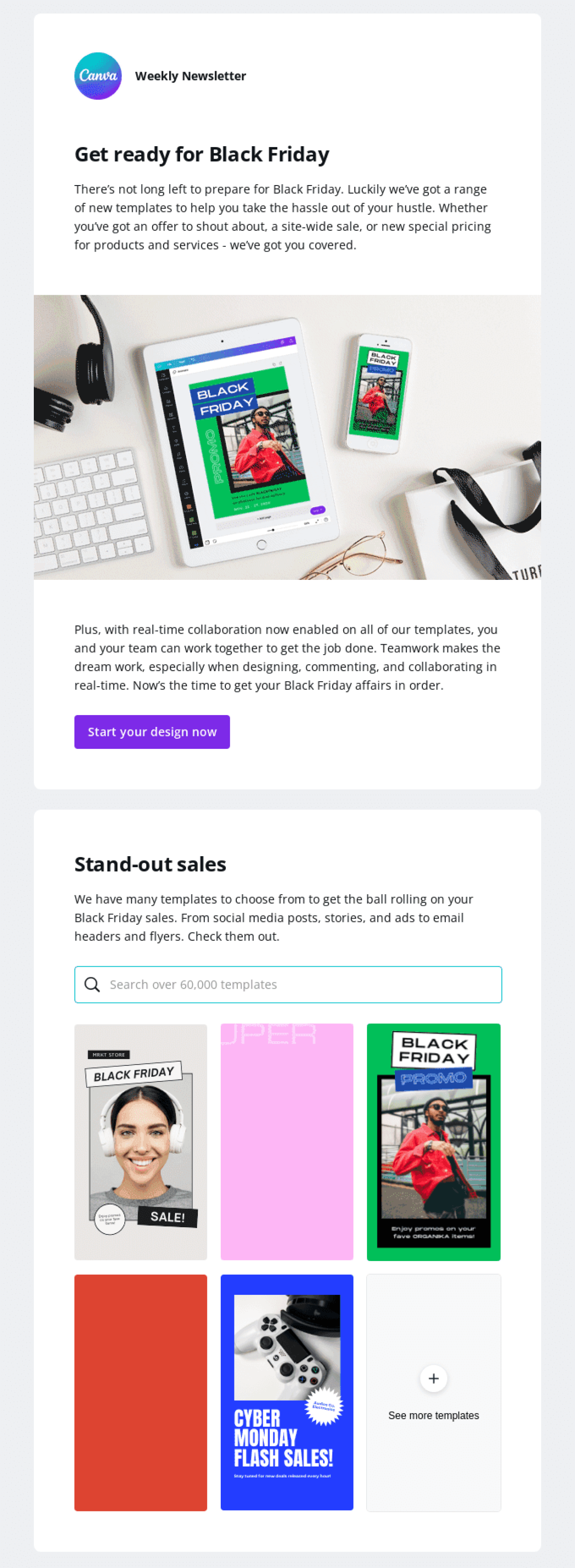
Canva put out extensive emails walking users step-by-step through how to use their templates to whip up killer Black Friday and holiday emails for their own customers.
Why this works:
It helps readers solve an annoying bottleneck instead of just adding to the inbox clutter. By handing them ready-to-go design assets right when everyone is scrambling, they make themselves useful when it counts.
Salesforce
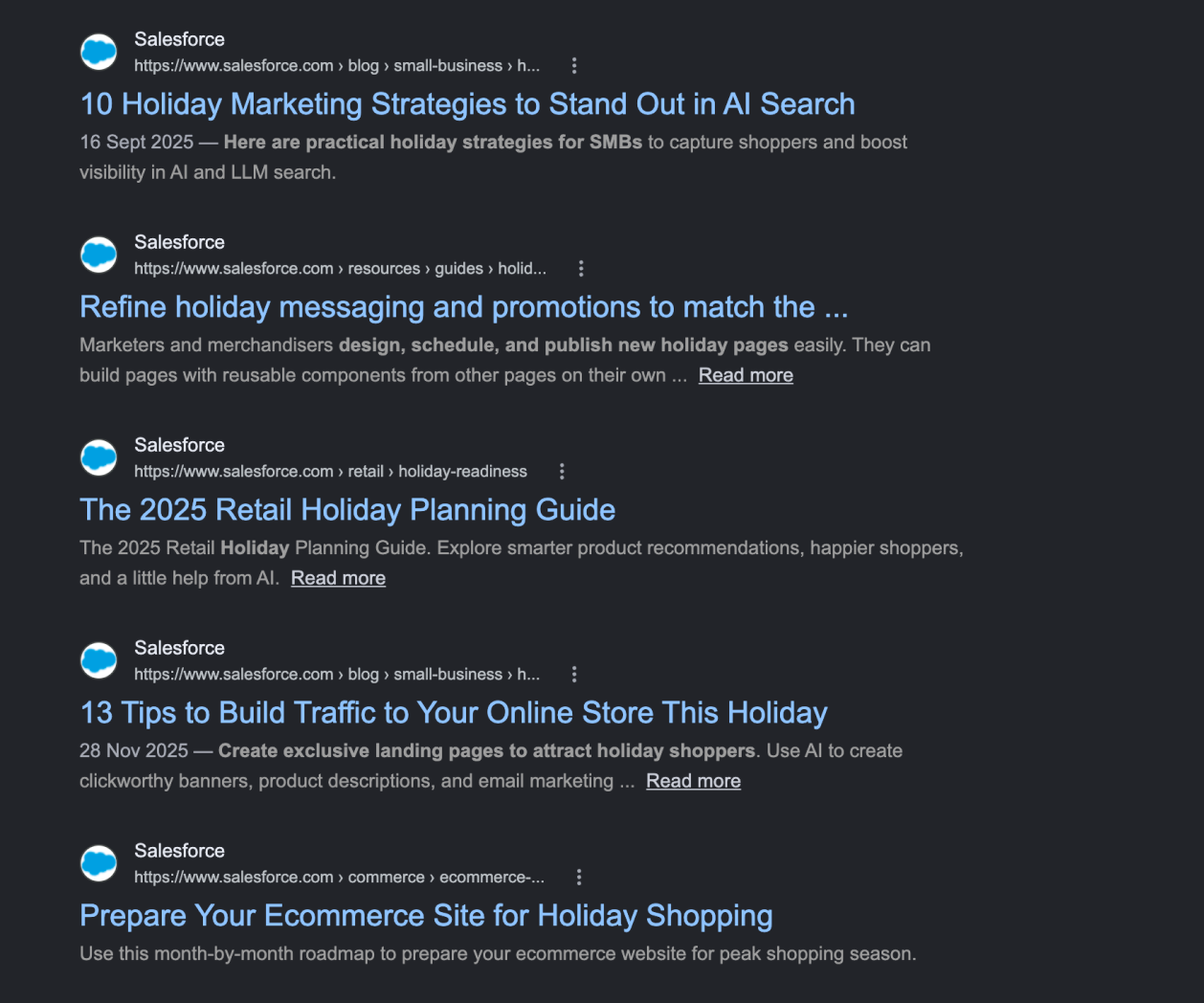
Salesforce drops comprehensive toolkits, templates, ebooks, and guides to help retail and B2B teams survive the holiday rush.
Why this works:
It hits their target market right where they live. Instead of generic cheer, they provide heavy-duty strategy guides that align with what enterprise teams are stressing over at the end of the year.
Semrush
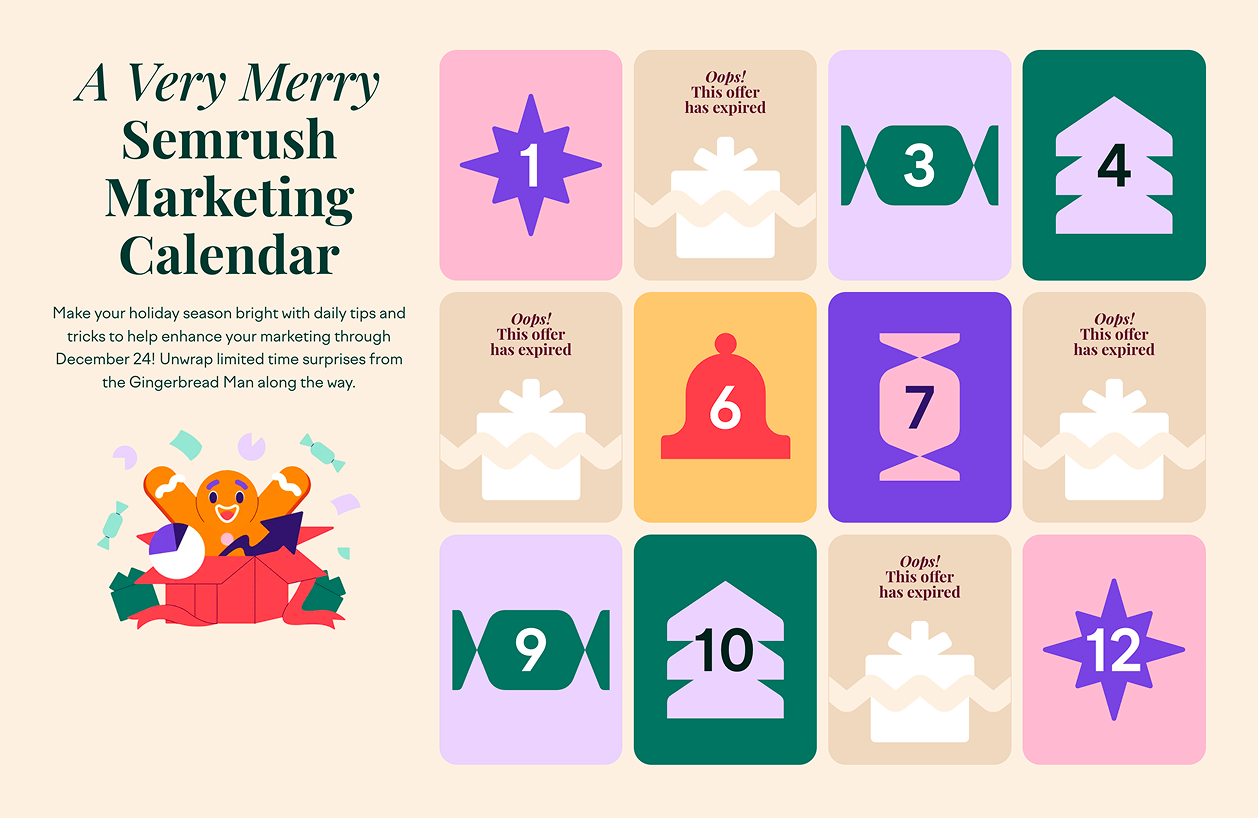
Semrush rolled out their famous interactive gingerbread-themed content calendar to help marketers map out their seasonal campaigns without losing their minds.
Why this works:
It takes a super dry task, planning a content calendar, and makes it fun and interactive, keeping users hooked and organized all the way through December. This basically has the same appeal that advent calendars have for physical products.
Tactical breakdown
- Best moment: Late October through mid-November
- Best audience: Existing customers, active users, free-plan users and warm pipelines. Partners and prospects who already know your brand also fit.
- Core asset: A holiday campaign calendar, an email or landing page template, a year-end planning checklist, or a short toolkit. It should solve one task your audience has in Q4.
- CTA: “Download the template,” “Grab the planning calendar,” “Copy the checklist,” or “Open the Q1 planning kit.”
- Avoid: Gating it behind a long form, or making the asset generic.
The Year in Your Inbox
A “Year in Your Inbox” campaign is exactly what it sounds like. Instead of pretending December is a normal month, you lean into the natural year-end instinct to reflect and reset.
This play works because nostalgia is built into the season. People are already reviewing their year and planning what they want to fix in January. Your job here is to become part of it rather than interrupt it with an offer.
This works as it turns your brand into a useful year-end companion. You remind customers of the value they got from you and give prospects a reason to reconsider you. It also creates a natural bridge into January planning conversations.
Let’s look at brands that do this well.
Shopify
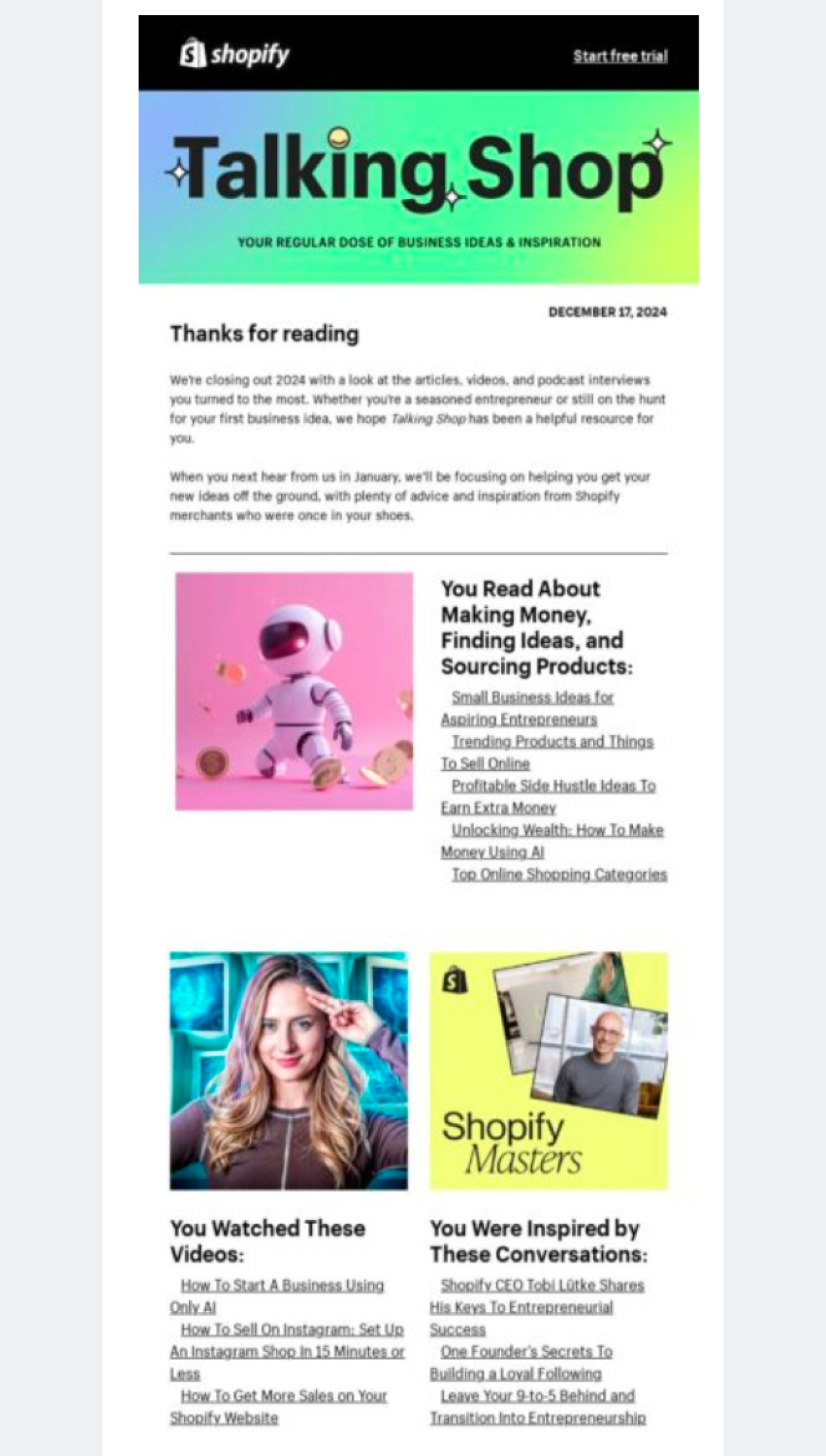
Shopify’s year-end content often centers on ecommerce trends, merchant stories, and the topics its audience cared about most during the year. One example highlighted “the ecommerce trends you cared about most in 2024,” which turns a recap into a data-backed content asset.
Why this works:
It gives merchants something strategic to carry into next year. Instead of a generic “thanks for a great year,” Shopify gives readers a reason to open, save, and share the email.
Loom
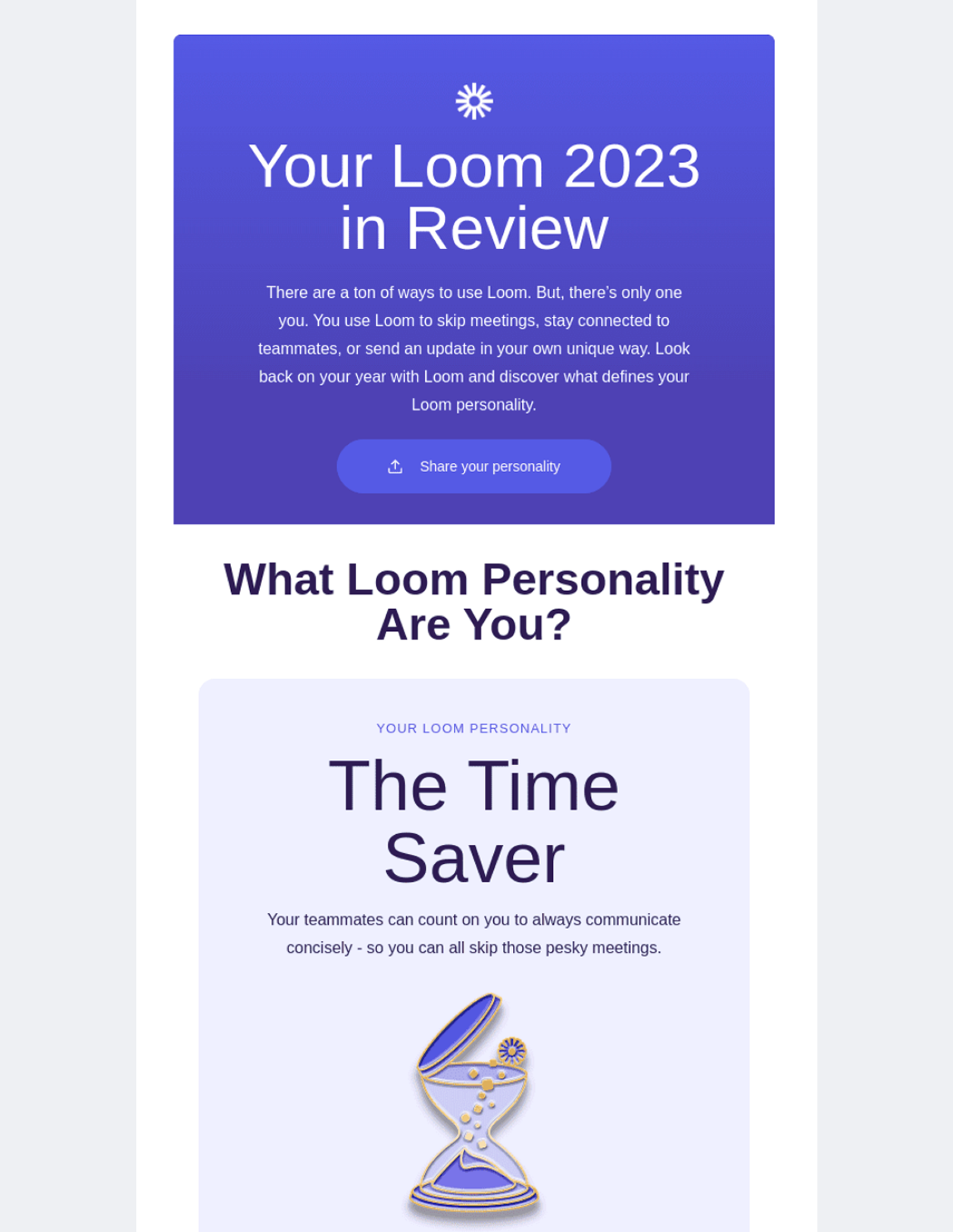
Loom’s email takes the usual year-end usage report and gives it a personality. Literally. Users get a type like “The Time Saver,” followed by personalized stats showing meetings skipped and minutes saved.
Instead of dumping a dashboard into your inbox, Loom turns those numbers into a story about how you worked. This gives all the metrics space to make people care about what they mean.
Tactical breakdown
- Best moment: Mid-December through the last week of the year.
- Best audience: Existing customers, active users, partners, and warm pipeline.
- Core asset: A “Year in Review” email, annual impact report, customer-story roundup, or trend forecast.
- CTA: “See your year,” “Explore what’s next,” “Save the 2027 planning guide,” or “Book a January strategy call.”
- Avoid: Turning it into a feature dump. Lead with the customer’s progress, not your changelog.
Lucrative Discount
Let’s be honest: B2B buyers are not allergic to discounts. They are allergic to fake urgency, vague “holiday savings,” and discounts that require a spreadsheet to understand.
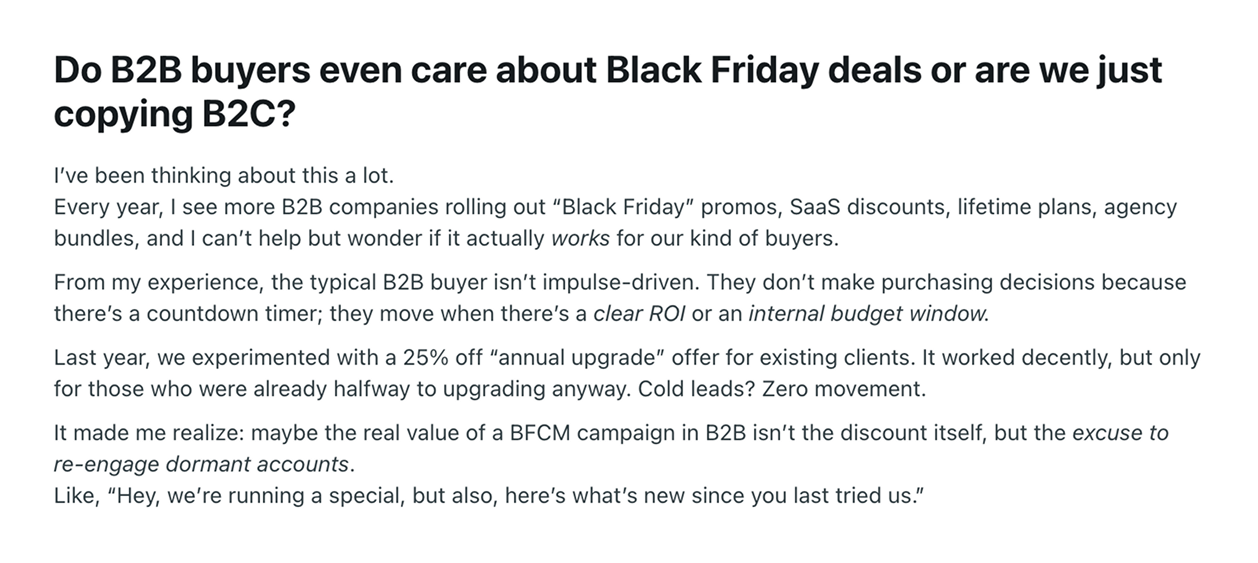
The Lucrative Discount play works when the offer is clear, and the timing is credible. The discount must connect to real buying triggers such as annual budget flush, year-end renewal, or January planning.
Here are some brands doing it well.
Quillbot
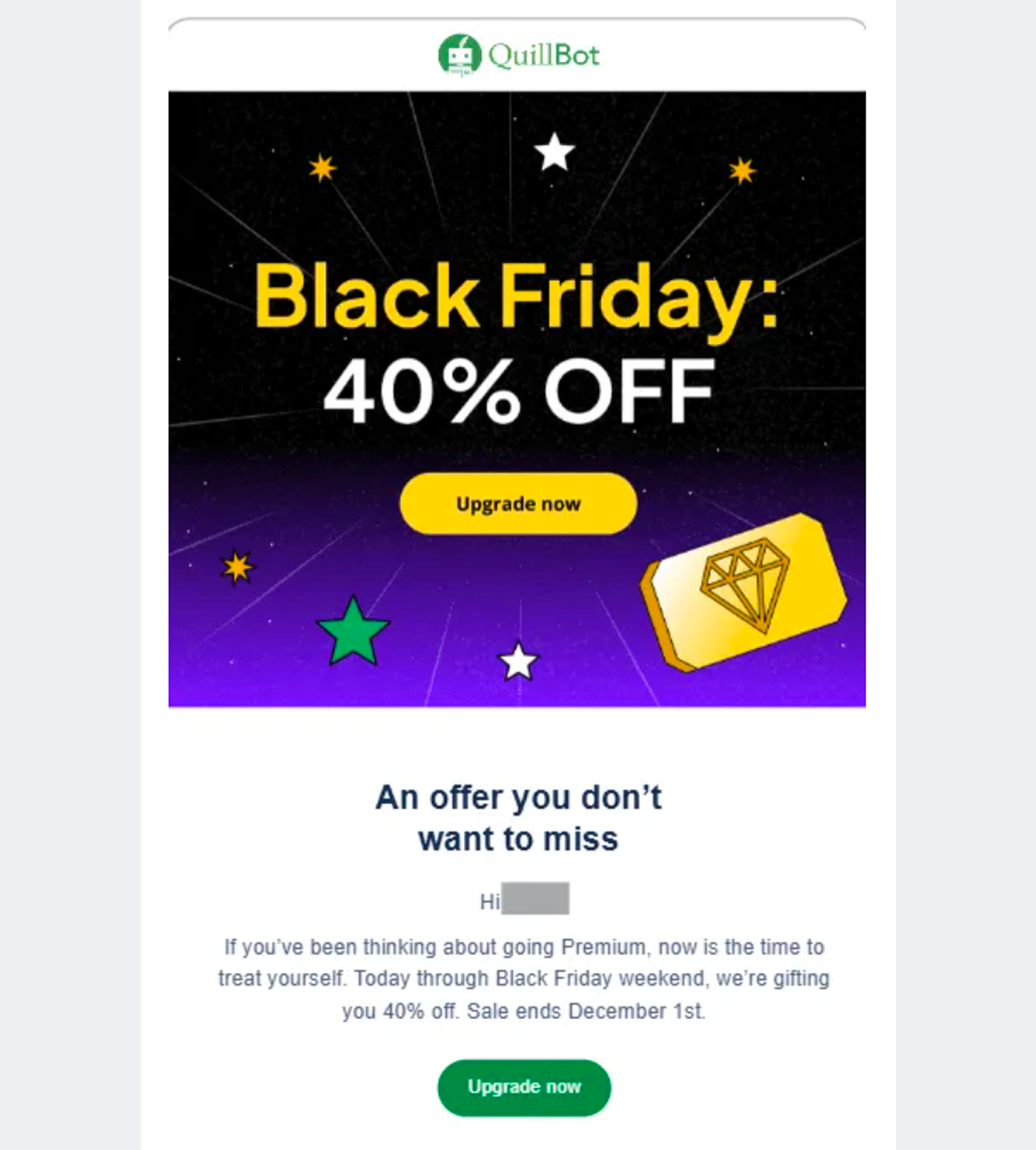
QuillBot’s Black Friday email keeps the offer front and center: 40% off. No essay about the future of writing. No five competing reasons to click. Just a clear discount and a limited-time reason to upgrade.
The bright design, emojis, and icons make it easy to scan, while a centered CTA gives readers one obvious next step.
Why this works:
It doesn’t make people work to understand the offer. If someone already knows the product and has been considering an upgrade, the email gives them the missing nudge: a lower price.
Skillshare
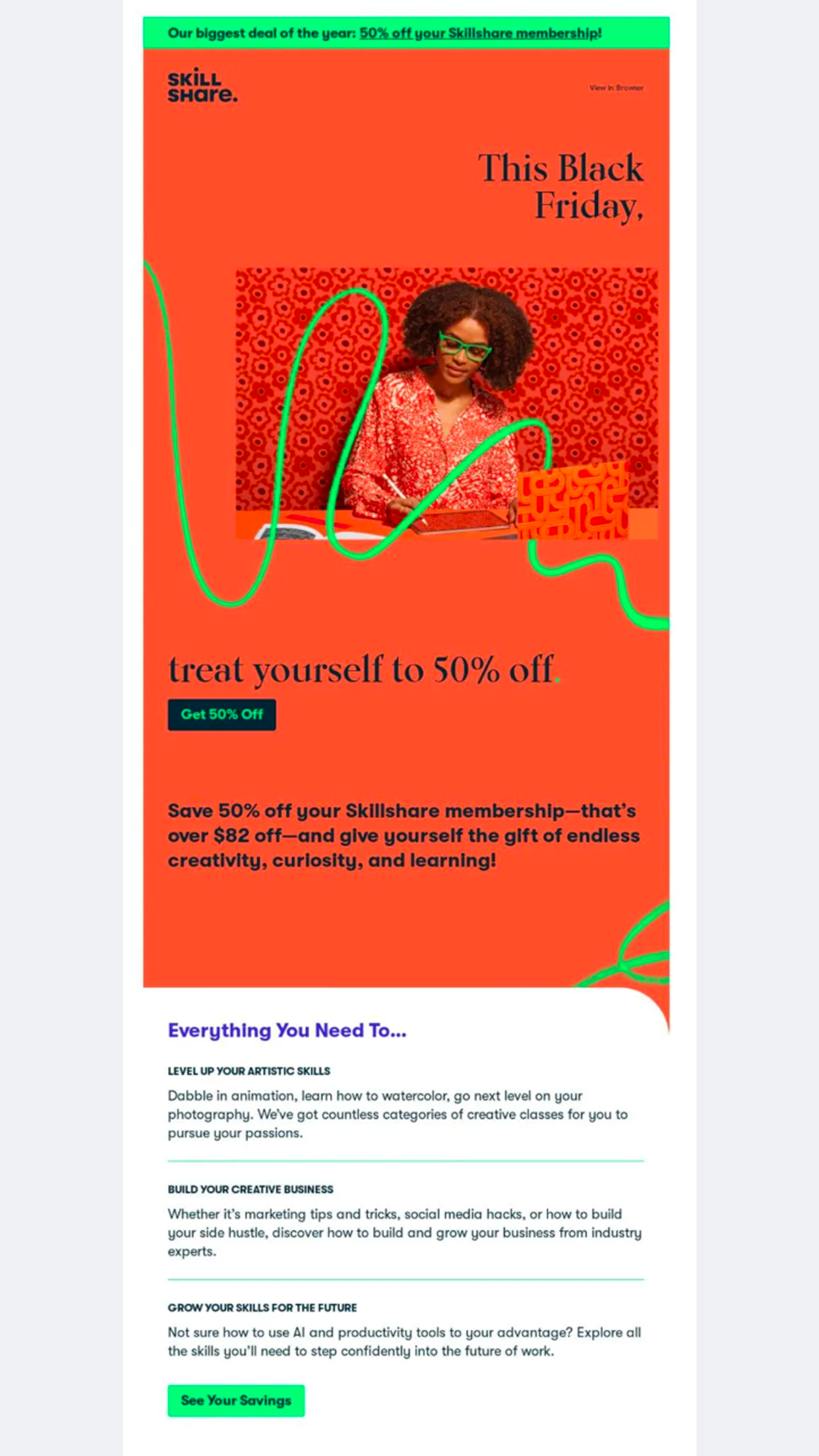
Skillshare frames its 50% discount as an investment in yourself rather than another thing to buy on Black Friday. Strong color contrast catches the eye, while a warm lifestyle image and conversational copy make the message feel more inviting than urgent.
Why this works:
It gives the discount an emotional reason to matter. You’re not just saving money; you’re making room to learn something you’ve been putting off. That’s a different pitch from the usual countdown-timer panic.
Tactical breakdown
- Best moment: Black Friday through Cyber Monday, with a possible extension into early December.
- Best audience: Free users, expired trials, downgrade-risk customers, and self-serve buyers.
- Core offer: Annual-plan discount, extended trial, free onboarding, migration support, or a bundled service.
- CTA: “Claim your discount,” “Upgrade before December 31,” or “Lock in 2027 pricing.”
- Avoid: Fake countdown timers, mystery discounts, and “up to X% off” when the actual relevant plan gets far less.
The Thank-You
This is the hardest play to pull off because it requires you to avoid pitching your product at all.
A “Thank-You” campaign thanks customers, employees, partners, or community members in a way that reflects your values. There is no discount code hidden at the bottom or any sneaky “book a demo before the year ends” links. Just a genuine moment of appreciation.
Slack does this well.
Slack
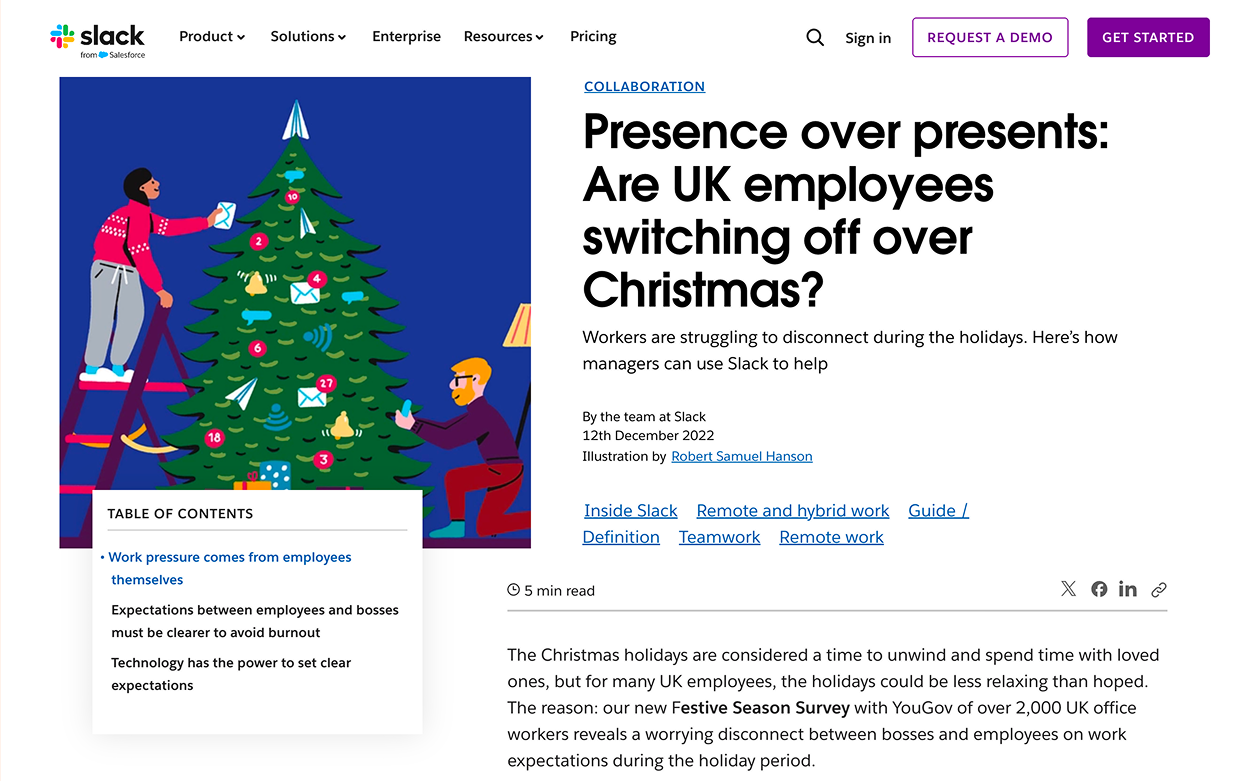
Slack’s “Presence over Presents” report is a strong example here. It starts with a real workplace tension of people struggling to disconnect during the holidays. Slack’s Holiday Season Survey found that workers were choosing work presence over presents, and the brand used that insight to offer practical guidance for managers.
Why this works:
It is not a holiday greeting pretending to be thought leadership. It is thought leadership that happens to be seasonal. The campaign reinforces Slack’s role in workplace communication while addressing a real human problem.
Tactical breakdown
- Best moment: Thanksgiving, Giving Tuesday, Hanukkah, Christmas, or New Year’s Eve.
- Best audience: Customers, partners, employees, community members, and nonprofit collaborators.
- Core asset: A gratitude email, customer spotlight, donation match, volunteer initiative, or small physical gift.
- CTA: “Meet the customers who made our year,” “Nominate a nonprofit,” or “See how we gave back.”
- Avoid: Gratitude with a sales appendix. If the last line is “P.S. Our Q1 calendar is filling fast,” you have ruined it.
The Physical or Interactive Stunt
This is the high-risk, high-reward category. A physical or interactive stunt can make your brand unforgettable, but only if the idea is genuinely tied to your positioning.
The goal is to create a small, shareable moment that makes someone say, “Woah, that was clever.”
There’s a very awesome example of this.
Murder Hornet Creative Agency
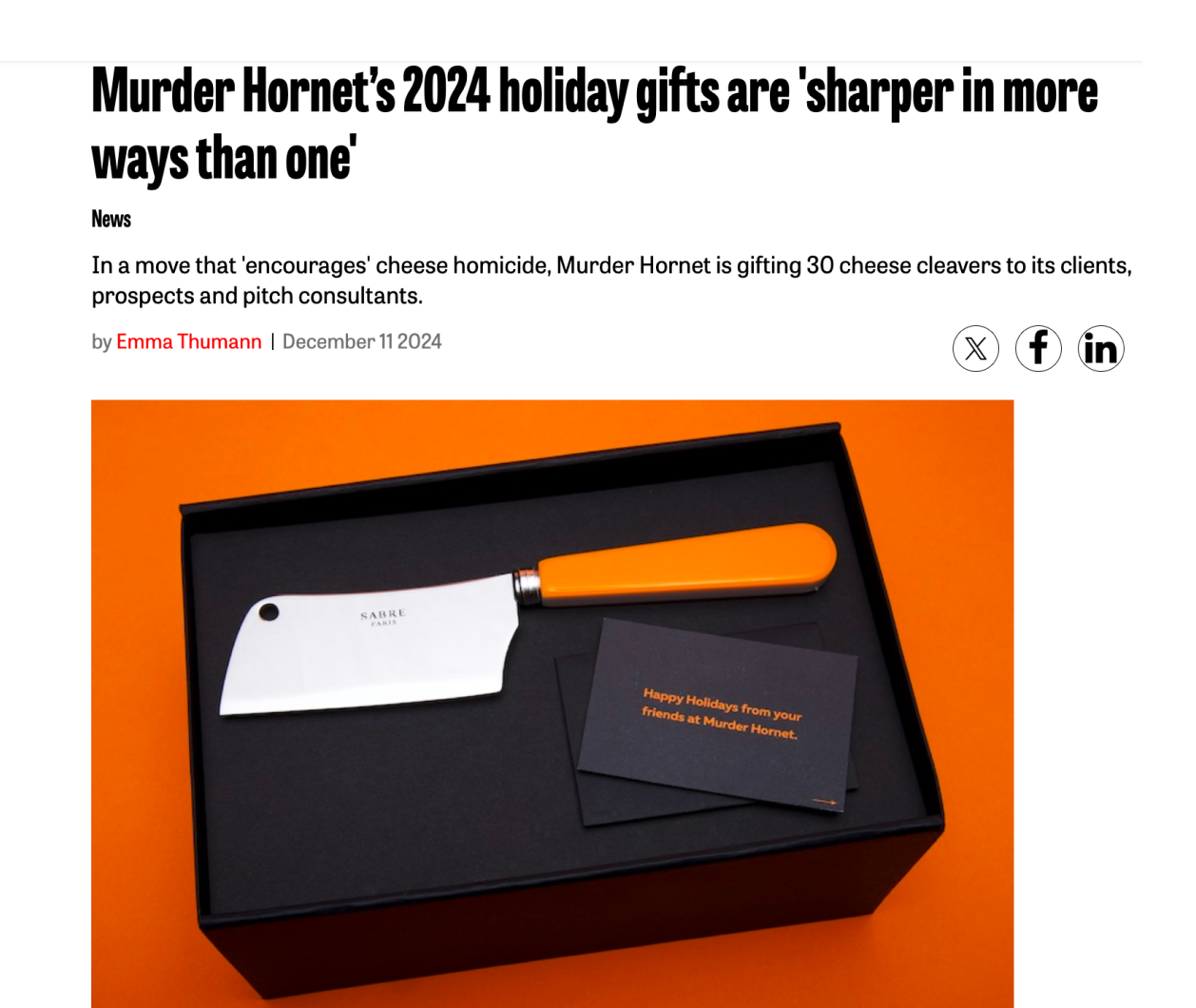
For its 2024 holiday campaign, the agency created 30 gifts for clients, prospects, and pitch consultants. Each featured a French-made Sabre cleaver with a bright orange handle, packaged in a black box reading “’Tis the Season for Murder.” A voucher for the Marin French Cheese Company completed the invitation to “murder” a holiday cheese board. Festive? Technically. Forgettable? Not a chance.
The idea wasn’t random weirdness, either. It tied directly to the agency’s “creative violence solves everything” positioning. Instead of putting its logo on a safe corporate gift, Murder Hornet turned the entire package into a demonstration of its creative personality.
Why this works:
It makes the gift do the positioning. The cheese voucher keeps the joke grounded in something recipients can use during the holidays, while the packaging shows the agency’s appetite for unexpected ideas.
Tactical breakdown
- Best moment: Early December, before teams go fully offline.
- Best audience: High-value clients, partners, prospects, and press.
- Core asset: A physical gift, interactive microsite, game, card deck, or limited-edition object.
- CTA: “Play the game,” “Claim your card,” “See the story behind it,” or “Request your kit.”
- Avoid: Spending your entire Q4 budget on a stunt with no follow-up system. A clever package without a nurture path is expensive brand theater.
Which holiday marketing plays fit SaaS, agencies and services
The right holiday campaign starts with how your customers buy, not what everyone else is doing for Black Friday.
Before you pick a play, ask: are you giving someone a reason to buy now, reminding an existing customer why they chose you, or building a relationship for next year?
Your product, sales cycle, and audience’s priorities should shape the answer.
Here’s a breakdown of all B2B holiday marketing plays and which company they fit.
SaaS
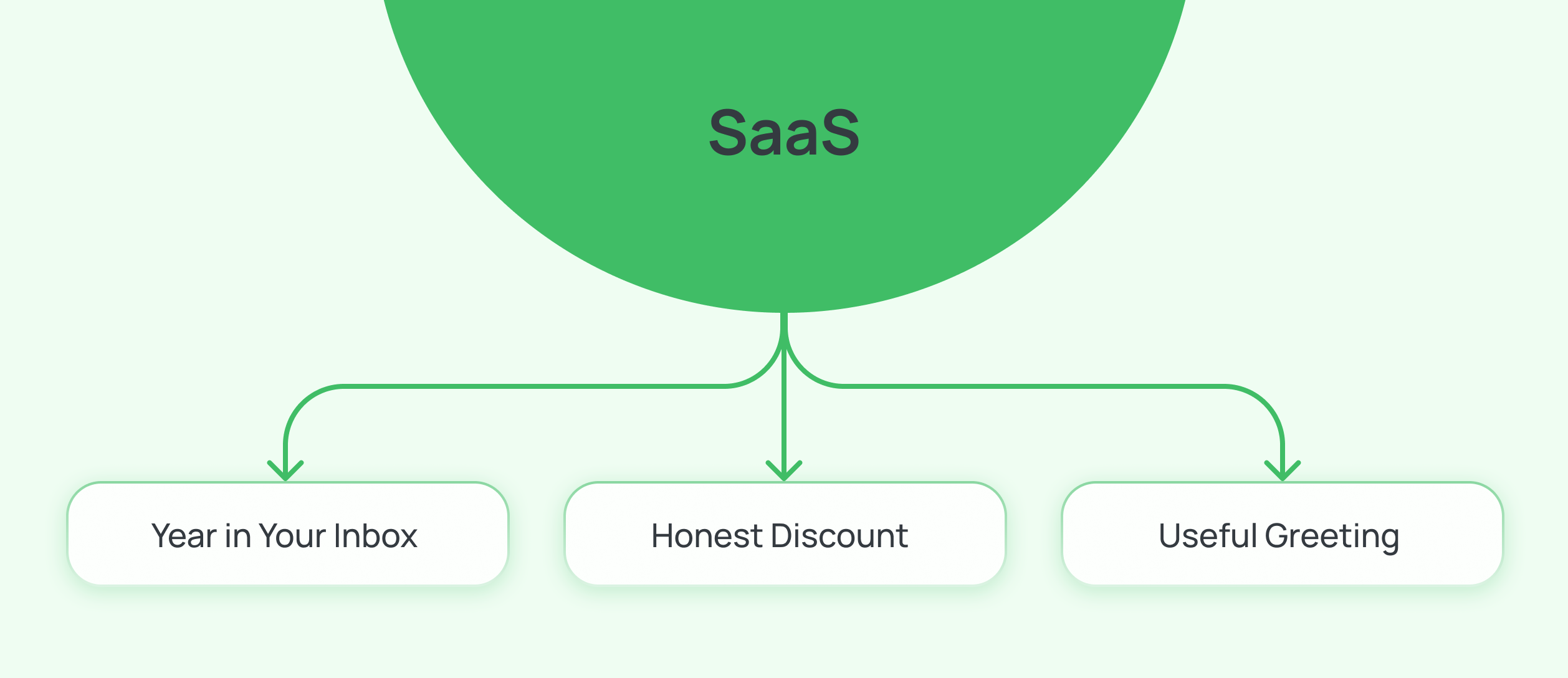
Focus on showing users what they got out of your product or giving them a clear reason to upgrade.
Best-fit play | What to do |
Year in Your Inbox | Turn usage data into a personalized recap. Show time saved, projects completed, or another outcome that makes the product’s value tangible. |
Honest Discount | Give free users or active evaluators one straightforward upgrade offer. Make the price, eligibility, and renewal terms easy to find. |
Useful Greeting | Share a template or planning tool that helps users tackle a year-end task—and connects naturally to your product. |
Agencies
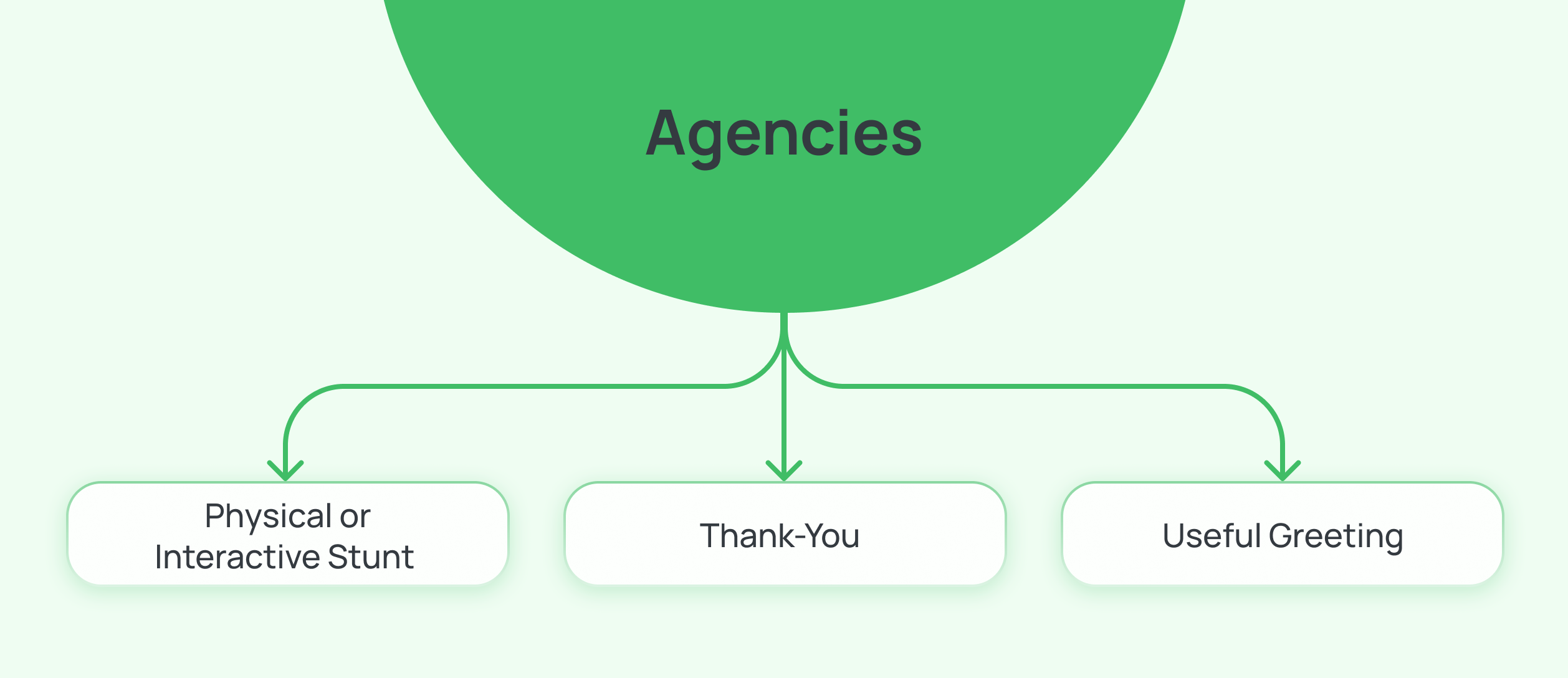
Your holiday campaign can double as a sample of your work. Make it feel like something only you would send.
Best-fit play | What to do |
Physical or Interactive Stunt | Create a gift, game, or mailer built around your agency’s personality. Give recipients something worth keeping or sharing—not another logo-covered notebook. |
Thank-You | Thank clients for something specific: a bold brief, a collaborative partnership, or a milestone you reached together. Leave the new-business pitch out. |
Useful Greeting | Give clients a campaign-planning kit or briefing template that helps them get January moving without starting from scratch. |
Services and consultancies
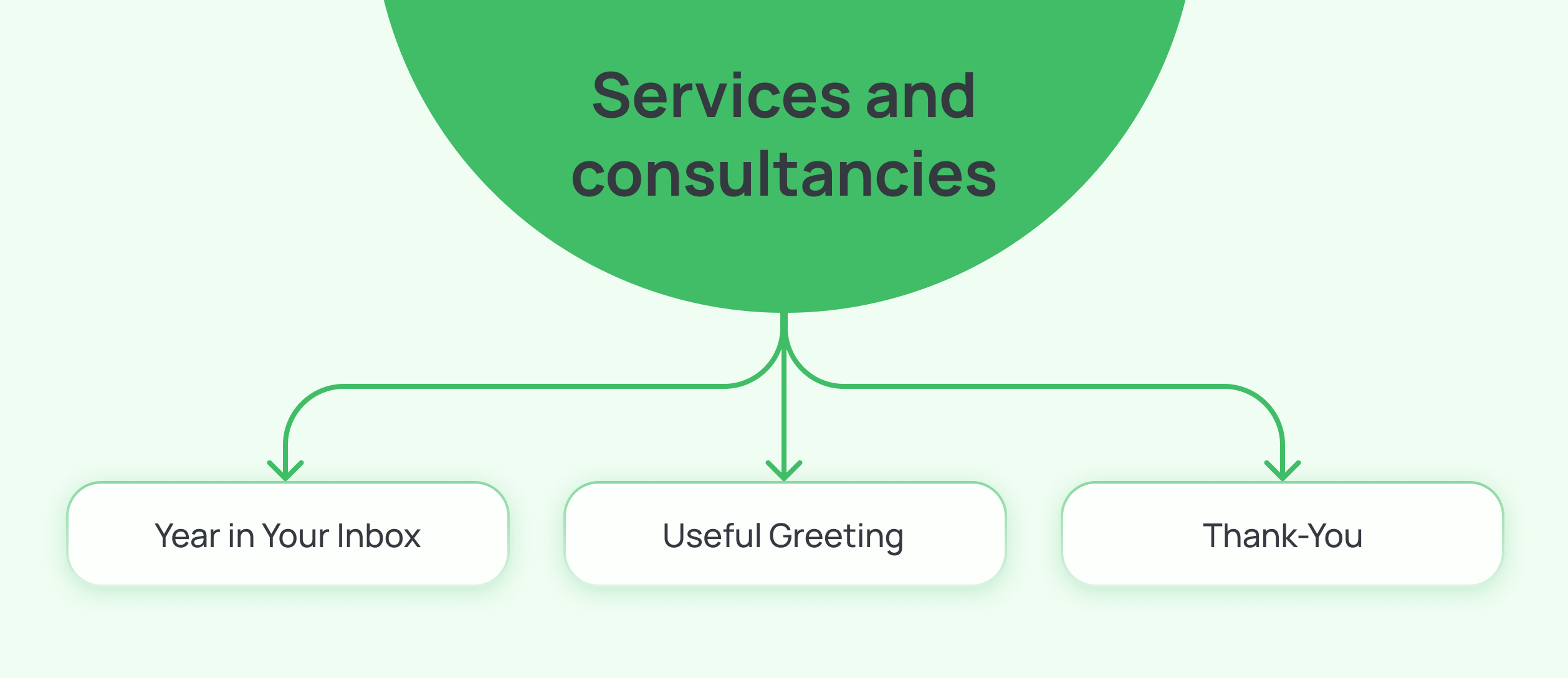
Make your expertise useful before asking for another conversation. Focus on helping clients understand what happened this year and what deserves attention next.
Best-fit play | What to do |
Year in Your Inbox | Send a client-specific recap of outcomes, lessons, and unfinished priorities. Keep the focus on their business, not a list of everything you delivered. |
Useful Greeting | Share a year-end diagnostic or January planning checklist tied to the problems you solve. Make it useful without requiring a discovery call to decode it. |
Thank-You | Send a personal note acknowledging the relationship and what you appreciated about working together. No booking link required. |
Holiday marketing tips on when to start and what to avoid
Start with the action you want someone to take, then work backward.
A thank-you note and an annual subscription offer should not have the same production timeline or the same success metric. Setting the objective and audience first also makes it easier to choose relevant messaging and timing.
Plan backward from your holiday moment
Here’s a working timeline you can use for planning.
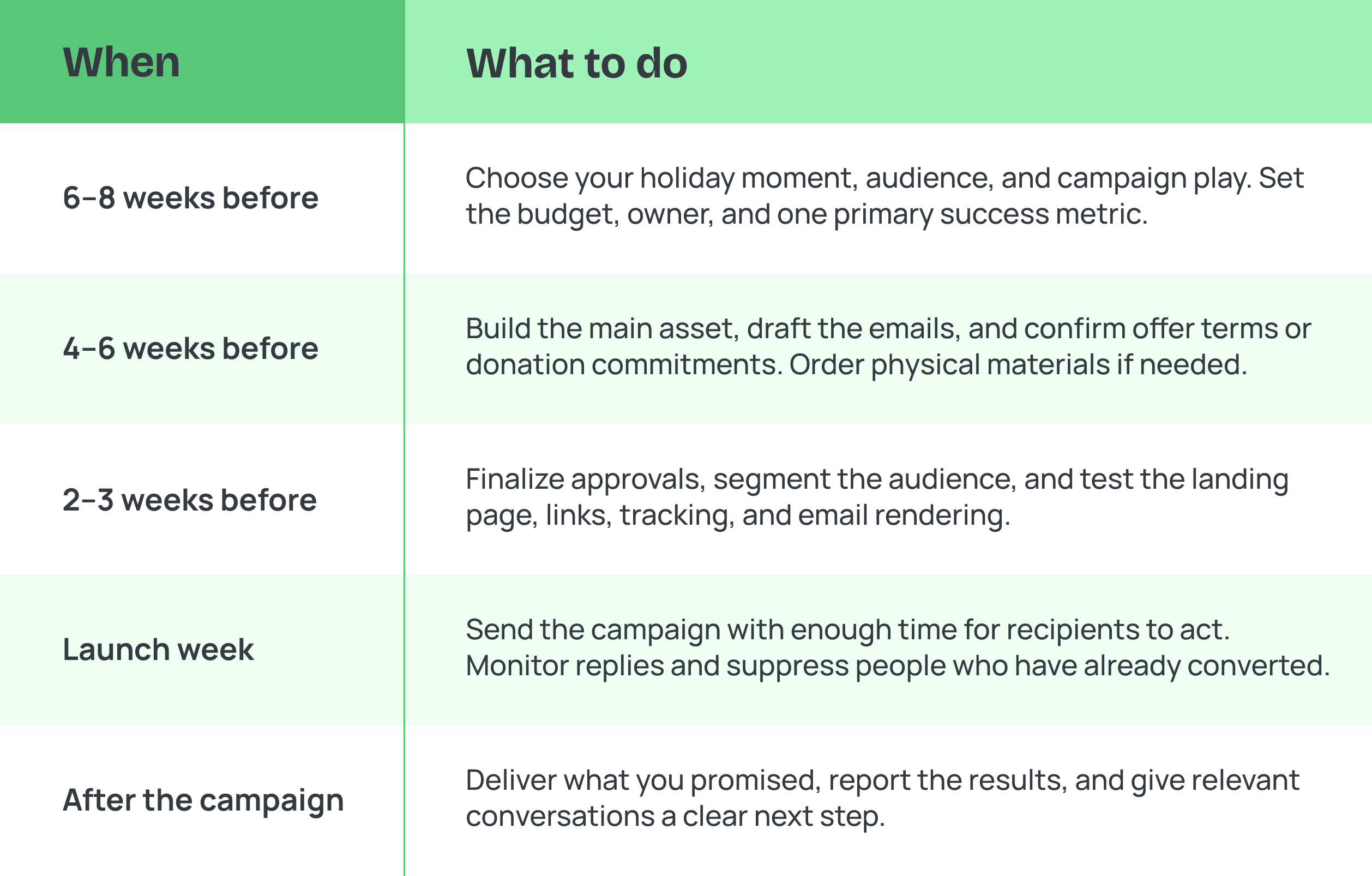
Don’t let the holiday date choose your send time
Your announcement, reminder, and deadline do not all need to land on the holiday itself. Black Friday is a calendar event, not proof that Friday is your audience’s best buying day.
Check previous campaigns, recipient time zones, and when people are likely to have time to respond.
Avoid these holiday marketing mistakes
- Discounting by default. First decide whether you’re trying to drive purchases, demonstrate value, or thank someone. Only one of those necessarily needs an offer.
- Sending everyone the same message. An active customer, an expired trial user, and a prospect who downloaded one guide have different relationships with you. Segment accordingly.
- Adding a pitch to every thank-you. If the message is about appreciation, let it be about appreciation. Your January availability does not need a cameo.
- Assuming everyone wants holiday content. Give subscribers a way to control seasonal messages.
- Forgetting your automated emails. A thoughtful greeting loses its charm when a pushy nurture email arrives ten minutes later. Review scheduled workflows alongside the campaign.
- Measuring the wrong outcome. Judge an upgrade offer by purchases or revenue, not just clicks. Judge a relationship campaign against its relationship goal, not a sales target.
How to plan your B2B holiday marketing campaigns in 5day.io
A holiday campaign has the same problem as any other campaign but with a hard deadline. Content, design, email and ad work all must land before the due date.
That’s what a marketing project management platform like 5day.io is for. Here’s how to run a Q4 holiday marketing campaign in it:
- Build each festive campaign as a template
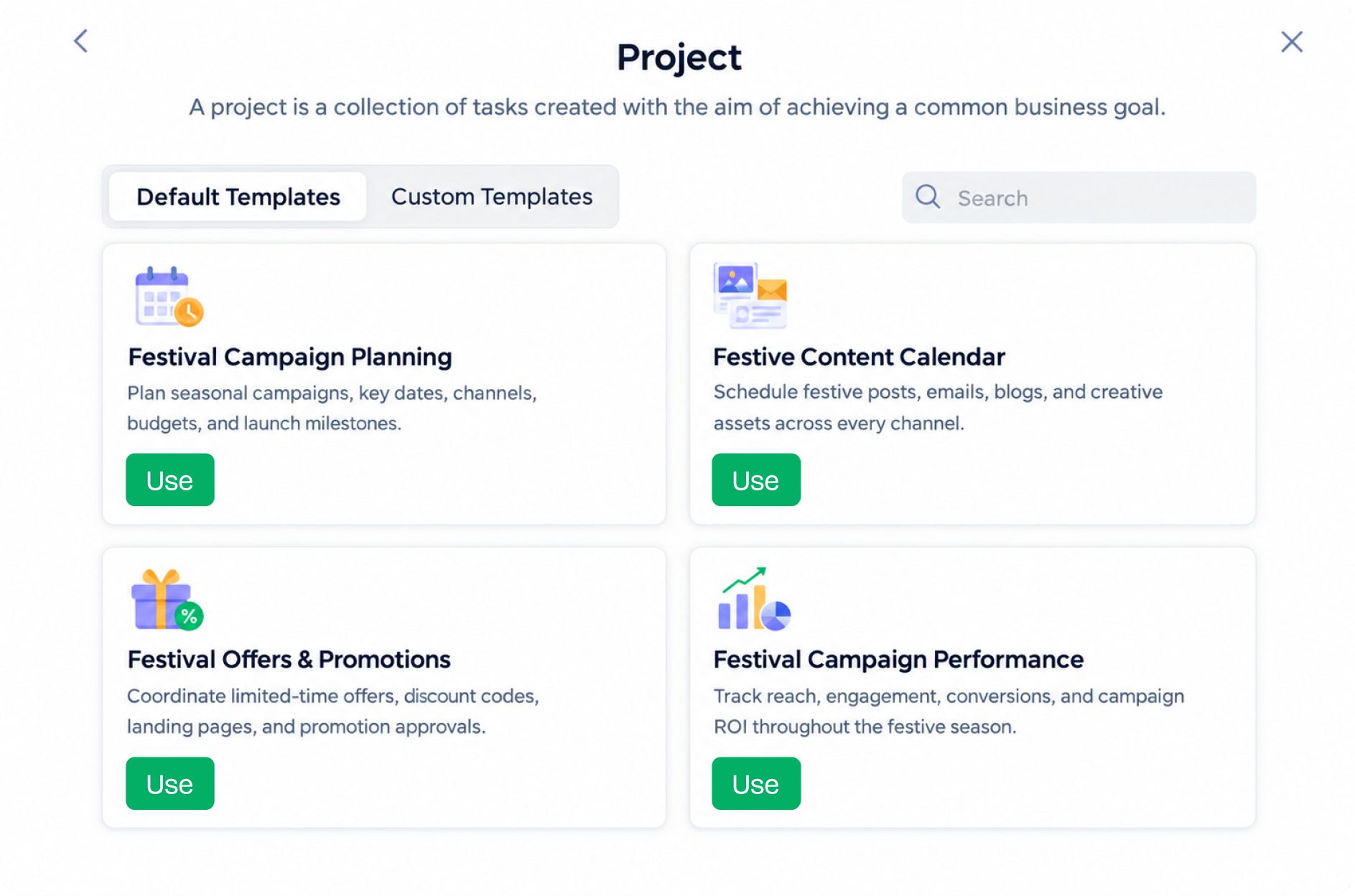
Set up one template festival with the tasks, owners and handoffs already in it. Next year, you start from the template instead of from scratch.
- Work backward from the holiday date
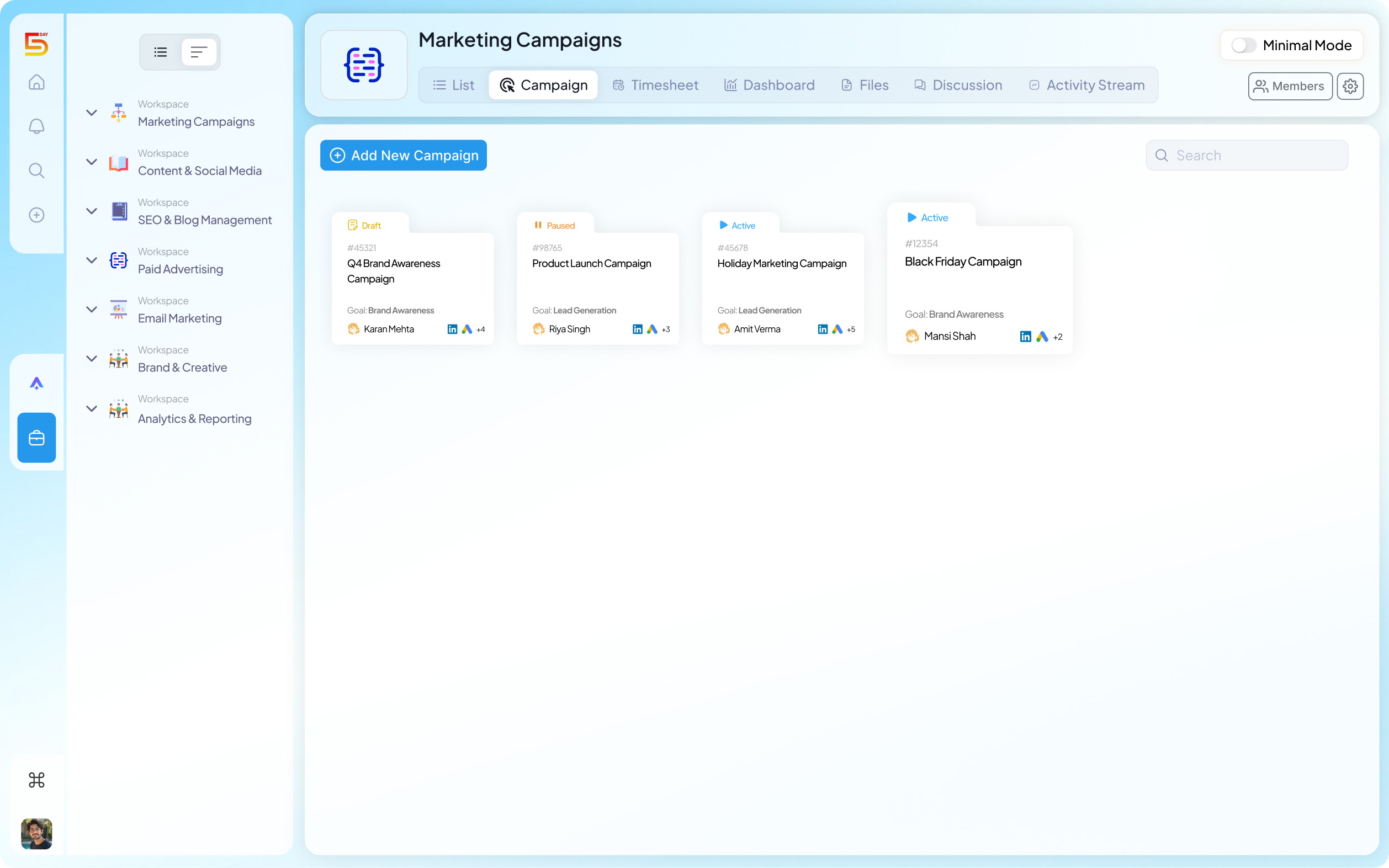
Use the timeline from the tips section, choose the moment and play 6–8 weeks out, build the asset 4–6 weeks out, test 2–3 weeks out. Put each stage on the plan with a clear owner and due date, so no one has to ask who is writing the emails or who is checking the links.
Callout box: In 5day.io, you can use Ace AI to outline your task and campaign launch date, and it will back track the date of tasks for you.
- Track campaign details in custom field
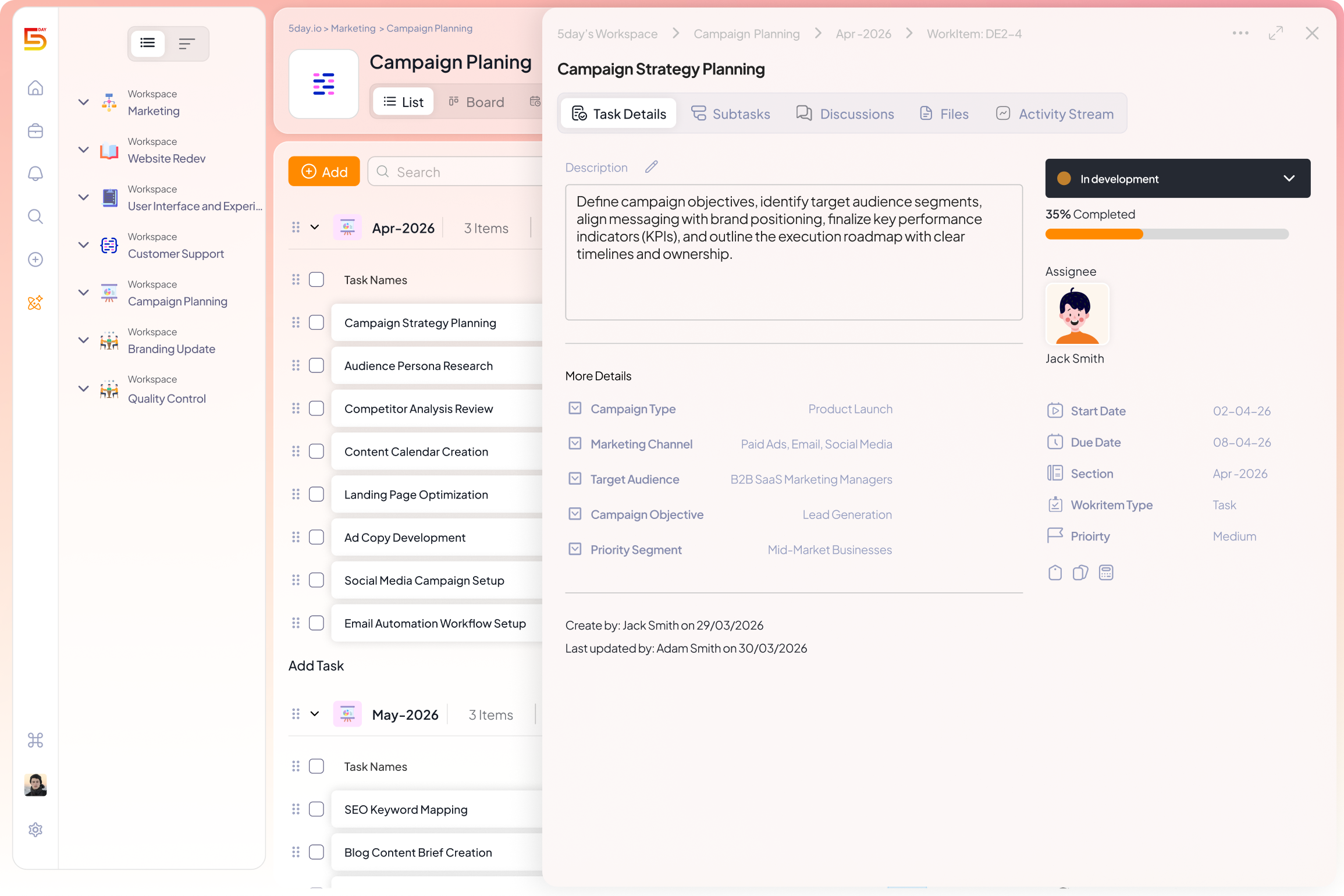
Add fields such as holiday moment, play, audience, offer and success metric, so you can see every Q4 campaign in one view.
- Automate the repetitive handoffs
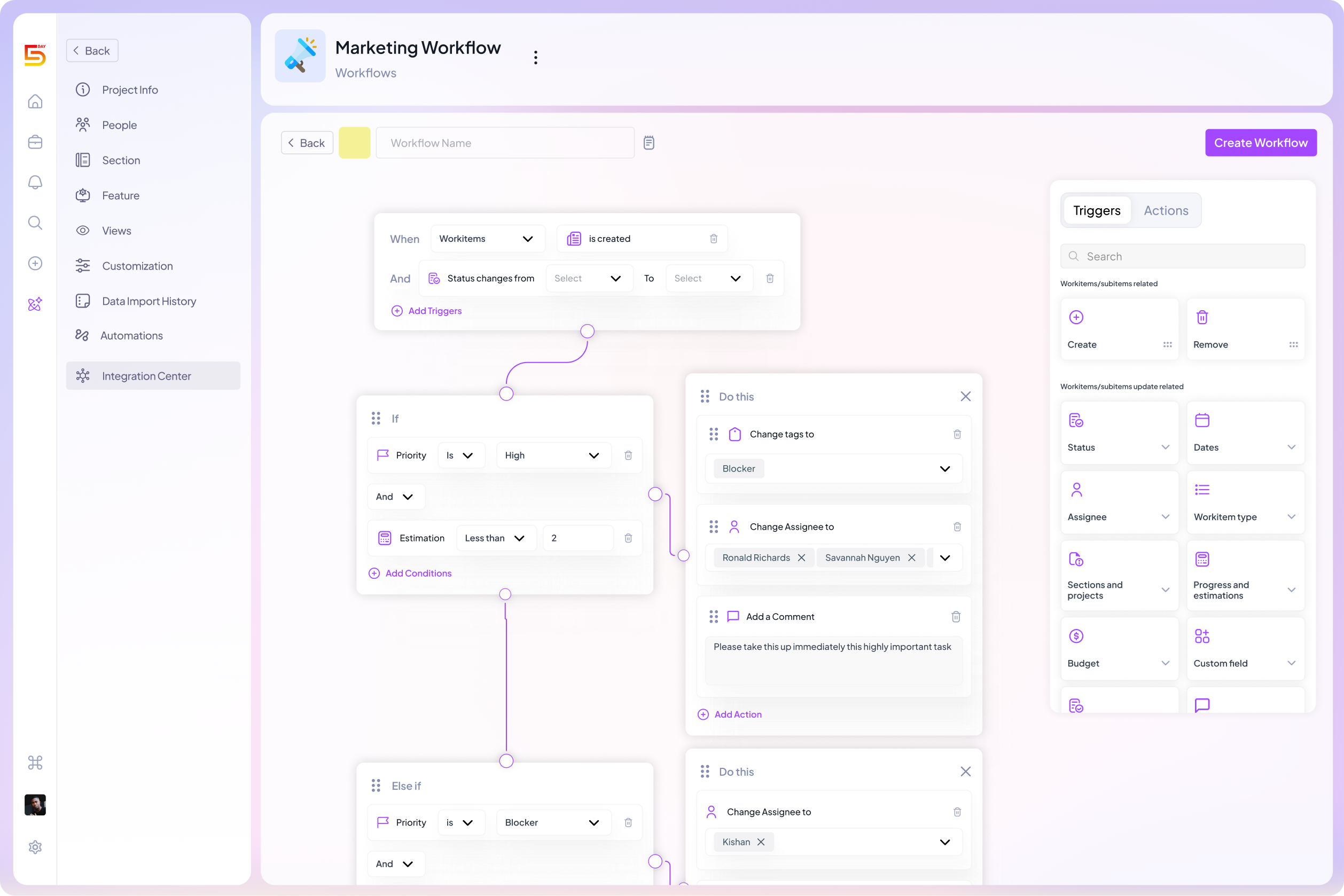
Let routine steps, like moving a draft to review, run on their own, so the pre-launch checks don’t depend on someone remembering.
- Connect your channels

5day.io integrates with HubSpot, LinkedIn and Meta, Google and LinkedIn Ads, so the planning, launch and results stay linked instead of scattered across tabs.
Holiday work only gets harder when it lives in scattered docs and chat threads. Put it in one plan and reuse it every year.
Start your free trial of 5day.io and set up your Q4 campaign plan before the first deadline hits.